• …
  • About
  • Vampire Month Alumni
  • World Book Night

Lurking Musings

~ Musings of a newly published writer

Lurking Musings

Tag Archives: Star Trek

[Guest Post] Why Spy by Aaron Smith

22 Thursday Aug 2013

Posted by D.A Lascelles in Guest posts

≈ Leave a comment

Tags

Aaron Smith, Edward Snowdon, Espionage, Game of Thrones, Ian Fleming, James Bond, John Lecarre, JRR Tolkien, Liam Neeson, Nobody Dies For Free, Spy, Spy Genre, Star Trek, The Walking Dead, Tom Clancy, True Blood


The last time I did a guest post here at Lurking Musings, the subject was horror and some of the ways in which I find it to be a rewarding genre to write within. I’m still writing horror stories, with a few new ones coming out this year, but I’ve never been one to stick to the same thing all the time, so today I’m here to talk about a different genre and how I became interested in it and how all the pieces recently came together for me to participate in it.DSC00358

There are certain things that I suppose it was inevitable that I would eventually do once I took my first steps on the road of being a writer. Looking back on my life and the interests I’ve always had, the sort of books and movies I’ve enjoyed, I had to eventually write something in the espionage genre. On one hand, I’m surprised it took this long, but on the other, I’m glad it did. I didn’t rush into it. I waited (though not consciously) until the pieces came together and the time was right, and I’m quite happy with the result.

Looking back on my life, I can pinpoint the exact event that made me a lifelong fan of the spy genre. It was a flood.

The year was 1984, I was seven years old, and we lived in Paterson, New Jersey, just across the park from the banks of the Passaic River. It was April and it rained constantly. That grimy old river could only take so much and it overflowed, vomiting dirty water up into the park, drenching the baseball field, submerging Totowa Road, intruding on our street, and filling our basement to within an inch of coming onto the main floor. In fact, it was so bad that the mayor of the city had to come in a rowboat and coax the old lady next door out of her house! We had to get out of there.

So we packed our suitcases and escaped. It was me, my parents, my four-year-old sister and my toddler brother. We ended up spending a week at my grandparents’ house. Grandma and Grandpa had something we didn’t. At the time, they were still pretty new and quite expensive: the amazing technological wonder known as the VCR!

My father, happy to be in the presence of one of the marvels of the modern age, wasted no time running out to the local lawnmower shop/ video rental place (I’m not making that up. Somebody actually ran that very odd combination of businesses, as there weren’t too many places yet that concentrated solely on renting out movies) to get his hands on something he’d been wanting to see but had missed when it ran in theatres a year earlier.

So, despite the protests of my violence-hating mother, that night I encountered a character who would become one of my favorite fictional heroes: Bond. James Bond. The film was Never Say Never Again, the “unofficial” Bond movie, which was a remake of Thunderball and not part of the Eon Productions series, but it featured Sean Connery, making his return to the role after more than a decade away, so it certainly counts as a real Bond movie in my book.

That was it. I was a lifelong Bond fan, not just of the movies but of the original Ian Fleming novels and some, though not all, of the continuations written by later novelists.

Bond was my gateway drug into the world of spy fiction and I discovered many other such characters over the years, in books, in movies, and on television. There were the books of Tom Clancy and John LeCarre, the Jason Bourne movies, and Taken, starring Liam Neeson.

Eventually, I started writing seriously and began to have work published. I wrote in genres including mystery, horror, fantasy, science fiction, and even did some war and western stories. Occasionally, one of my stories would include elements of the spy genre, but it took a long time before I finally set my sights on penning a true espionage novel.

It was a convergence of three events that I think—now that I look back on it—finally got me to try writing in the spy genre. I found a big bargain and managed to acquire the first twenty James Bond movies on DVD for under a hundred dollars, so I was able, for the first time in my life, to watch them all in order and relive many of my favorite 007 moments. I discovered a wonderful British series called Spooks, which ran for 86 thrilling episodes and turned out to be one of the most addicting and also heartbreaking TV series I’ve ever watched. And I said—and I have no idea where this particular combination of words came from—“Nobody dies for free,” which I immediately knew was going to eventually be the title of a spy novel. So the ball started rolling and it didn’t stop until I’d written the book.

But, strangely, for all the years that I loved the spy genre and all through the time it took me to write Nobody Dies For Free and then go through the process of editing it and eventually seeing it published, it never occurred to me to really sit back and ponder the question of just why stories of secret agents and clandestine missions have been so popular for so long. In writing this blog entry, that’s the very question I’ve decided to attack, and I’ve come up with four answers that I suspect are quite valid. I know they apply to me and I’d be curious to hear what others have to say about it once they’ve read this little essay.

Secrets and Scandals

When it comes to most aspects of life, but especially when the government is involved, many of us understand the need for some degree of secrecy. Certain things must remain classified, for the more we in the public sector know, the more those who are currently considered our enemies also know. But despite this, many of us wish we could personally know everything. The recent Edward Snowden business is evidence of this. We want to know exactly what our government (and all the other governments in the world) are doing, especially the dirtier business. Realistically, we can’t have access to this information. But in the world of the spy novel or movie, we can. For the time it takes to watch a film or read a book, we are insiders, seeing the world in all its intricate ugliness and backstabbing brutality as we share an adventure with the protagonist. Human beings are curious creatures who can’t resist an opportunity to inspect the president’s dirty laundry or sneak a peek at the sins of the king. Spy fiction satisfies our need to be part of the shadow realm.      

Patriotism

The world is a mess. It always has been and it probably always will. Most people seem to have mixed feelings about the countries in which they live. I’m glad to have been born American, I respect what the ideals behind the nation’s founding stand for, but that doesn’t mean I have to like everything my government does. For example, I’m currently quite irritated by the fact that the president’s new health care system is going to cost me several thousand dollars in wages this year. If I polled a thousand other Americans, I’m sure I’d get hundreds of different complaints about the way the country is run and how it interacts with both its allies and its enemies. And I’m sure my friends in Europe and Japan and Canada and various other places have conflicted feelings about their own countries. But I think most of us want our nations to be the best they can be. Spy stories, with their heroic government operatives, give us this courageous, honorable (and sometimes ruthless in that honor) side of the nation’s activities. Regardless of party affiliations or political opinions, we can all root for a James Bond or a Jack Ryan to do the right thing and act in the best interests of his fellow citizens, rising above the political mess to save the nation and maybe even the world.

A Socially Acceptable Mythology

Fans of certain genres of fiction are lucky to now live in a time when Game of Thrones, The Walking Dead, and True Blood are among the most popular series on television, when superhero movies are hugely successful, and when some of the world’s most popular authors are writing about vampires and teenaged wizards. But this wasn’t always the case. It wasn’t so long ago that people of certain ages might be laughed at if they publicly admitted enjoying Star Trek or comic books or the works of JRR Tolkein. So I’ve come to suspect that one of the reasons for the success of the spy genre for most of the twentieth century may have had something to do with the way it contains the very same elements as classic adventure fiction and mythology but puts it in a setting that seems to be a bit more adult-oriented, thus making it all right for a grown man in the 1950s and 60s (including President Kennedy) to be seen reading Casino Royale or From Russia With Love. As for those elements I just mentioned, let’s look at some of the basic ingredients of some of the most popular science-fiction and fantasy stories and compare them to what you might find in a secret agent movie.

Someone is chosen to go off on a quest to stop a great evil from causing harm to the world. They’re sent by an older, wiser person, usually an intermediary between them and a king or other such ruler. They are given some sort of special weapon which will aid them in their mission. They travel through many exotic locations, encountering strange beings, until they finally come face to face with the great evil and its frightening minions.

So was I just talking about Frodo Baggins being guided by Gandalf to put an end to Sauron’s plans, with a ring in his possession as he travels from the Shire to Rivendell and eventually to Mordor, meeting Aragorn and others along the way? Or did I mean James Bond being handed a mission by M, given a gadget-enhanced car by Q, and sent across the globe from London to Istanbul to the Caribbean to the Swiss Alps to face various henchmen with the help of a few beautiful women and Felix Leiter, until he finally confronts Blofeld in a final showdown? Or I could have meant the plot of Star Wars, or an episode of Spooks. The façade shifts, but the classic storytelling elements remain the same.

The Hero in his Prime

If you really want to narrow the types of heroes in fiction down to the least number of possible types, I’d say there are three. On one hand, you have the young hero being thrust toward destiny and fumbling his way along the path while struggling to make sense of the new point of view that’s been forced upon him. Luke Skywalker, Frodo Baggins, Harry Potter, Neo from The Matrix.

On the other hand, you have the old wizard/ guide, an older character, maybe worn out from decades of trying to keep evil in check, but possessing great experience and wisdom. Obi-wan Kenobi, Merlin, Gandalf, Van Helsing.

And then, smack in the middle of the two extremes, you have a balance between age and youth, action and experience. These are characters old enough to know how to handle a dangerous situation, but still young enough to do the fighting themselves rather than sending in a young apprentice. Captain James T. Kirk, Han Solo, Indiana Jones, and Batman, to name a few examples. This might be the sort of hero who readers and viewers most often dream of being. In the spy genre, particularly the more action-oriented espionage stories, this is the category into which many of the primary protagonists fall: James Bond, Jason Bourne, the Saint, the Mission Impossible characters, and the various lead field agents throughout the 10 year run of Spooks.

So there we have four big ideas about what might be responsible for the ongoing popularity of the spy fiction genre. As I said earlier, I hadn’t really thought about those things until I started to write this essay, but I now realize that I included all those elements in my own spy novel, the recently released Nobody Dies For Free. I hope readers of my book will enjoy it as much as I’ve enjoyed some of the other spy stories I’ve mentioned here today.  
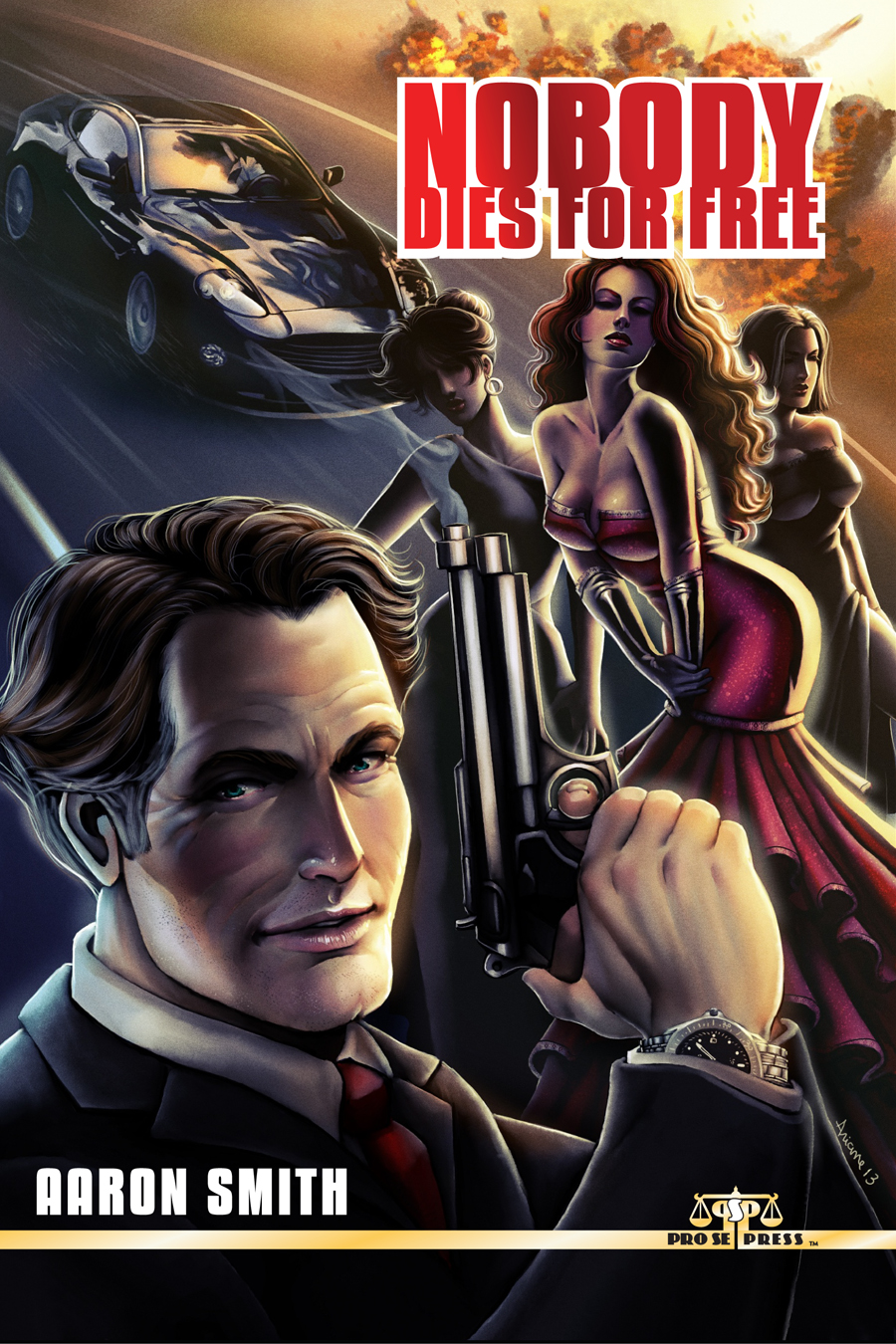
Nobody Dies FCHere’s a look at the cover of Nobody Dies For Free, along with the back cover blurb.

After years of loyally serving his country in the CIA, Richard Monroe wants nothing more than early retirement and a peaceful life in Paris with the only woman he’s ever truly loved. But when an assassin’s bullet takes his happiness away, Monroe embarks on a quest to find the man responsible for the tragedy. Monroe is soon recruited back into the clandestine services, but with a difference. Now he’s a lone agent reporting to a supervisor so mysterious that the official agencies don’t even know he exists. In his new position, Monroe will deal with situations too delicate and too dangerous for the CIA or FBI to handle. On his first assignment, he discovers a connection between the mission and the criminal mastermind behind his wife’s killing. Business becomes personal again and Richard Monroe sets out to teach his enemies a brutal lesson: NOBODY DIES FOR FREE!

Nobody Dies For Free is available in print or for Kindle or Nook.

At Amazon: http://www.amazon.com/Nobody-Dies-Free-Aaron-Smith/dp/1490367586/ref=sr_1_7?s=books&ie=UTF8&qid=1374860949&sr=1-7

Amazon UK: http://www.amazon.co.uk/Nobody-Dies-Free-Aaron-Smith/dp/1490367586/ref=sr_1_1?ie=UTF8&qid=1374861049&sr=8-1&keywords=nobody+dies+for+free

Barnes & Noble: http://www.barnesandnoble.com/w/nobody-dies-for-free-aaron-smith/1115568615?ean=9781490367583

For further information on Nobody Dies For Free and all my other books, visit my Amazon author page at http://www.amazon.com/Aaron-Smith/e/B0037IL0IS/ref=sr_tc_2_0?qid=1374366653&sr=1-2-ent

Or visit my blog at http://godsandgalaxies.blogspot.com/


The truth is out there?

11 Thursday Jul 2013

Posted by D.A Lascelles in Musings

≈ 2 Comments

Tags

alien civilisations, aliens, Close Encounters of the Third Kind, Douglas Adams, Dyson sphere, E.T the Extra-Terrestrial, Eukaryotes, Europa, images of aliens, Independence Day, Io, NSA, Prokaryotes, Pulsars, Science, SETI, Spring-Heeled Jack, Star Trek, Terry Pratchett, UK SETI, Vulcans


I used Grammarly to grammar check this post, because even primitive, prokaryotic parasites should display good grammar.

My trawlings of the internet brought this article to my attention:

http://uk.news.yahoo.com/new-hunt-for-aliens-who-%E2%80%9Cmove-stars%E2%80%9D-150112482.html

It seems that the British version of the SETI project (UK SETI research network) is focusing its efforts on finding evidence of aliens capable of moving stars or building giant structures in space. This being in addition to SETI’s usual activities of eavesdropping on potential alien communications like some interstellar version of the NSA*.

This sort of research is great for reporters. It makes good copy and impresses the readers with lots of imaginative images of alien civilisations and the advanced technology their no doubt superior intelligence has created. As a society, modern humanity has been brought up on the Hollywood stories of E.T, Close Encounters of the Third Kind and Independence Day. Aliens in these stories are intelligent with highly advanced technology including ships that are capable of achieving the near impossible (according to current human understanding of physics) speeds necessary to travel the vast interstellar distances needed to get here from our nearest neighbour. They also have some form of interest in Earth – whether as a target for conquest, often to mine for our plentiful resources, or as a potential ally (however junior) in some form of galactic federation (for example the Vulcans in Star Trek). They can also be obsessed with capturing and probing helpless humans either for scientific research or, according to Terry Pratchett and Douglas Adams, as the alien equivalent to Cow Tipping. These are our common held beliefs about alien life, mired in stories of the fantastic that range back even so far as the tales of Spring Heeled Jack.

There are, however, a lot of assumptions in those images of aliens. They assume that not only are they sentient and civilised but that they are infinitely more intelligent and civilised than we are. Why should this be the case? Given that the greatest chance we have of identifying life on other planets might currently be finding bacteria or even just the remnants of bacteria deep in the oceans of Europa or hidden in the rocks of Io, why should we expect any other alien species to be any more than that? These alien bacteria are unlikely to blow up the Whitehouse or give us access to the secrets of eternal life or warp drives. Even if an alien race were more complex than our own earthborne prokaryoates**, to the extent of being multicellular and sentient, then why should they be necessarily more advanced? Could there not be a race of quiet, unassuming aliens out there somewhere in the universe, sitting in caves, drawing on walls and hitting rocks together in the vague hope of one day discovering fire? Given that our entire strategy for finding aliens is predicated on the assumption that they are at least as advanced as we are (to the extent of using EM radiation to communicate and entertain) there is very little chance we’d find any evidence of our extraterrestrial cavemen. Considering that there has been, to date, approximately two hundred thousand years of human existence on earth and we have only been transmitting EM waves from our televisions and radios for just over 100 of these, how likely do you think it is that some other civilisation is going to be producing such waves themselves or picking up on ours? Assuming, of course, that they do utilise EM radiation in the same way we do and don’t communicate using some other method that we have never considered. While the chance of alien life actually existing are a lot higher than previously believed, the universe is so vast in both time and space that the chances of us picking up on each other are very low indeed.

There are, of course, several reasons why we have these assumptions about alien life. The main practical ones revolve around the fact that we basically have no hope of finding any form of life more primitive than 20th century humans. Until we ourselves get to the point of being able to travel to other planets to look for ourselves, we are somewhat limited by our ability to detect things like EM waves and interpret them in some way. Sometimes we can’t even do that right and mistake something like a pulsar for evidence of alien life. There are potentially hundreds of thousands of years worth of alien development that lack such obvious signs but we cannot detect them unless there is a major shift in our technology. So we are limited to what we can detect and that assumes aliens with technology at least as advanced as our own. Also, any alien civilisation that came to visit us would be definitely more advanced because they would have to have developed the appropriate methods of interstellar travel.

However, these prosaic reasons pale in comparison to those based on human nature and wish fulfilment. We have always looked to the

An artists idea of what a Dyson sphere may look like. For scale consider that the yellow thing in the middle is a star like our sun.

stars and wondered about them. In the past we made them the home of the gods, now we consider them the home of aliens. Some theories even conflate the two by stating that the aliens came to earth and became our gods. A number of science fiction franchises are even based on this theory including both the original and more recent Battlestar Galactica series. Psychologically, humanity appears to feel the need to have something bigger than it out there to look up to. Having risen to the top of the foodchain on earth, we offset our responsibility for the planet and all who live on it by deferring it ‘upstairs’ – to superior beings be they gods, aliens or even abstract ideals such as the Fates.

Also, aliens with vastly superior technology and intelligence make for far better stories than quiet ones who just want to get on with discovering fire or inventing the printing press. When we defeat the former we look like epic heroes valiantly battling against impossible odds and a superior foe***. Defeat the latter and we are colonialist dicks imposing our ‘superior’ ideals and technology on the poor defenceless natives and frankly we have done enough of that in our time. In the absence of any other concrete evidence at all about aliens, we will naturally tend to default to an assumption where they are bigger and better than we are. All in all, it is far better for our psychological well-being for aliens to be more advanced than we are.

So, while scientists are busy out there trying to eavesdrop on alien telephone conversations or looking for Dyson spheres, spare a thought for the simple prokaryoates potentially clinging to a semblance of organic life on some volcanic vent deep on an extrasolar planet or the spear wielding, eight armed, crocodile headed people of Arachnia who have not yet heard of Marconi or Alexander Graham Bell and wouldn’t even know how to build a Dyson vacuum cleaner never mind a Dyson Sphere.

* All this talk of the NSA eavesdropping on the internet and not one person thinks to stand up for the rights of aliens to their privacy. Typical humanocentric attitude. Someone should seek to regulate SETI’s privacy invading practises.

** Prokaryotes, for those without knowledge of A level Biology, is a posh science word for the group of organism that include bacteria. It refers to a Kingdom of living organisms that lack a nuclear membrane among other features I won’t go into here. Eukaryoates, which is what we are, do have a nuclear membrane. It is generally considered that Prokaryotes are a more primitive form of life in evolutionary terms. Certainly all the multicellular creatures on earth have nuclear membranes, though as this grouping includes several humans who believe in some very silly political ideas it may seem a little disingenuous to call them ‘advanced’.

*** Or at least having superior pathogens, as in the case of War of Worlds. We humans may not have interstellar travel or heat rays but we sure know how to cultivate a deadly cold virus.

[AW Blog Chain] Thirteen

11 Friday Jan 2013

Posted by D.A Lascelles in Musings

≈ 29 Comments

Tags

Absolute Write, action roleplay, Agatha Christie, aliens, Babylon 5, Buffy the Vampire Slayer, classical cultures, Doctor Who, Farscape, Featherstone Castle, Jane Austen, Joss Whedon, Masquerades and Massacres, Mayan Prophesy, Odyssey LRP, Photography, Predator, Roleplaying games, roman priest, Serenity LRP, Star Trek, Stargate, Steampunk, Strange and Norrell, Temeraire, Thirteen, Victoriana LRP, Waypoint LRP


With the year we are just starting having a ’13’ in it it is probably of no surprise that January’s Blog chain topic would link to this rather maligned number. It occured to me that every single article in the chain will mention Triskaidekaphobia so I thought I would get that out of the way now and not mention it again. There would also likely be many many discussions on bad luck, evil spirits and maybe even a Mayan prophesy or two (apparently, this is also the 13th Baktun which contributed to the recent ‘end of Mayan calandar means end of the world’ debacle). With this in mind, I decided not to go with the obvious topics.

Instead, I would like to celebrate the number 13 by posting here 13 photographs of something I love… Live Action Roleplay. Some of these are photos I have taken, others are taken by other more talented people. Full credit will be given where needed.

dying in the arena

First up is this shot I took at a Mythic Age LRP game called Odyssey in summer 2012. The concept behind that game is that there are a number of classical cultures (Romans, Greeks, Egyptians, Persians and Carthiginians initially but there is another one now) who coexist and in order to maintain peace on earth, the gods have restored the sunken city of Atlantis to act as a place where territory disputes can be settled in an arena rather than on the battlefield. Before each contest, the priests of each nation perform a blessing, dedicating the fight to one of their gods. Here we have the wonderful Lizy Townsend as a Roman priest sacrficing herself as she screams out a dying curse on the enemy.

side by side

From the same system, here we have two Romans fighting side by side against some Carthiginians and finally for Odyssey we have a photo that gives you some indication of how large some of the arena battles can be.

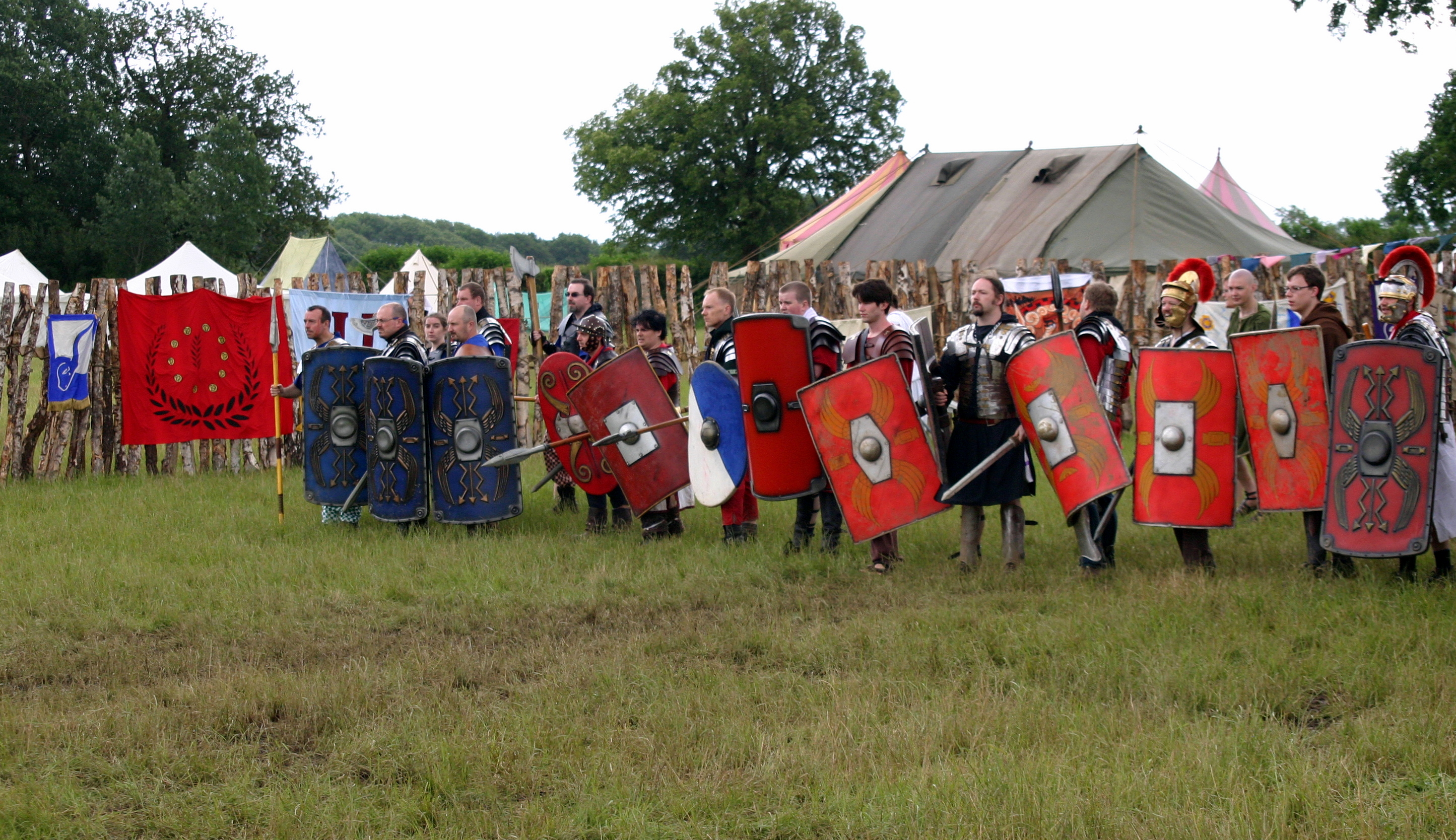
roman line up

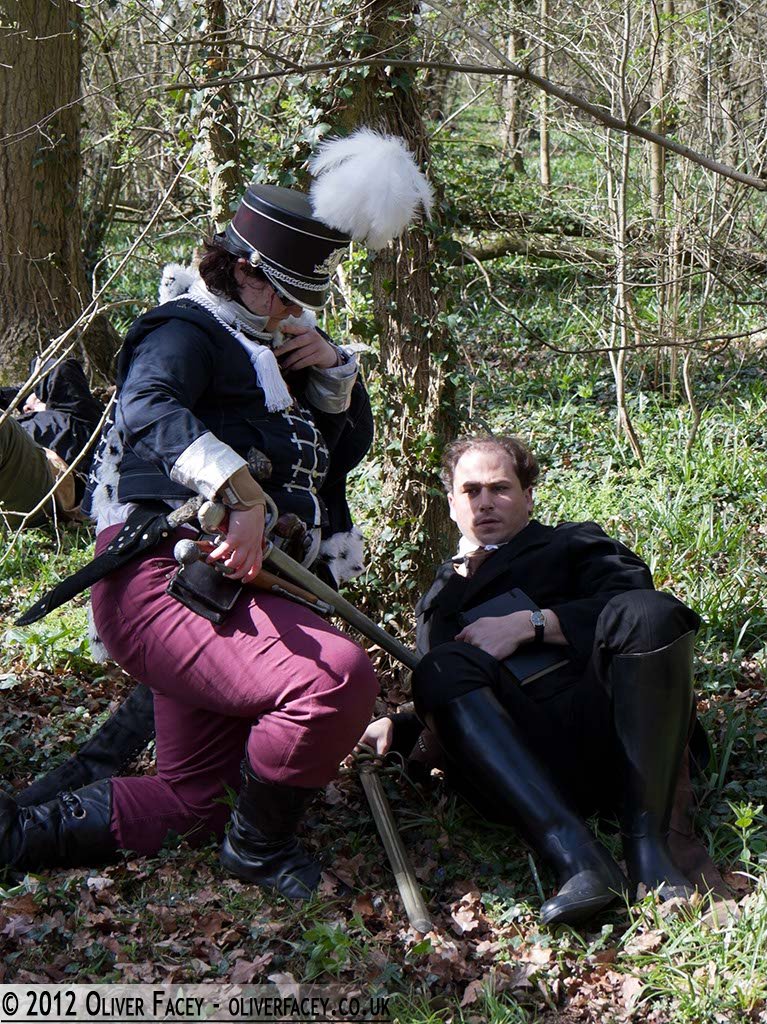
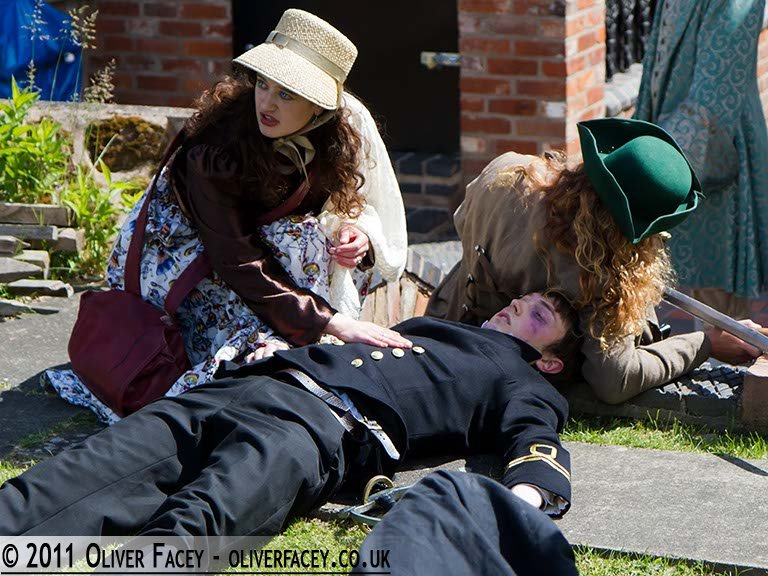
Another system I played this year was called Masquerades and Massacres or M&M (or, fairly often, Jane Austen and Aliens). This game is set in the Regency period (1820’s to be precise) and incorporates elements of Jane Austen, Strange and Norrell, Naomi Novak’s Temeraire stories, Buffy the Vampire Slayer and the Alien/Predator universe among others (seriously, there was a character who was an industrialist arms manufacturer by the name of Sir Anthony Stark, recently escaped from a Turkish prison…). It is a bizarre mix but it strangely seems to work and allows a lot of ballgowning… Here are some photographs from several events taken by the inestimable Oliver Facey

RnR-1154

wounded

Waypoint was a LRP game I ran for a good few years, up until 2008 when I stopped because I needed time for other things. It was a Sci Fi system which largely riffed off a lot of things like Star Trek, Babylon 5, Farscape and similar and also inserted some elements of Doctor Who and Stargate.

DSC00657 Gate 1 assassination

The top photo shows some sci fi post apocalyptic gangsters apeing the Reservoir Dogs walk. The middle one show some techie types trying to repair a hyperspatial gate while defending themselves from attakc and the bottom one shows an assassination attempt on one of the characters…

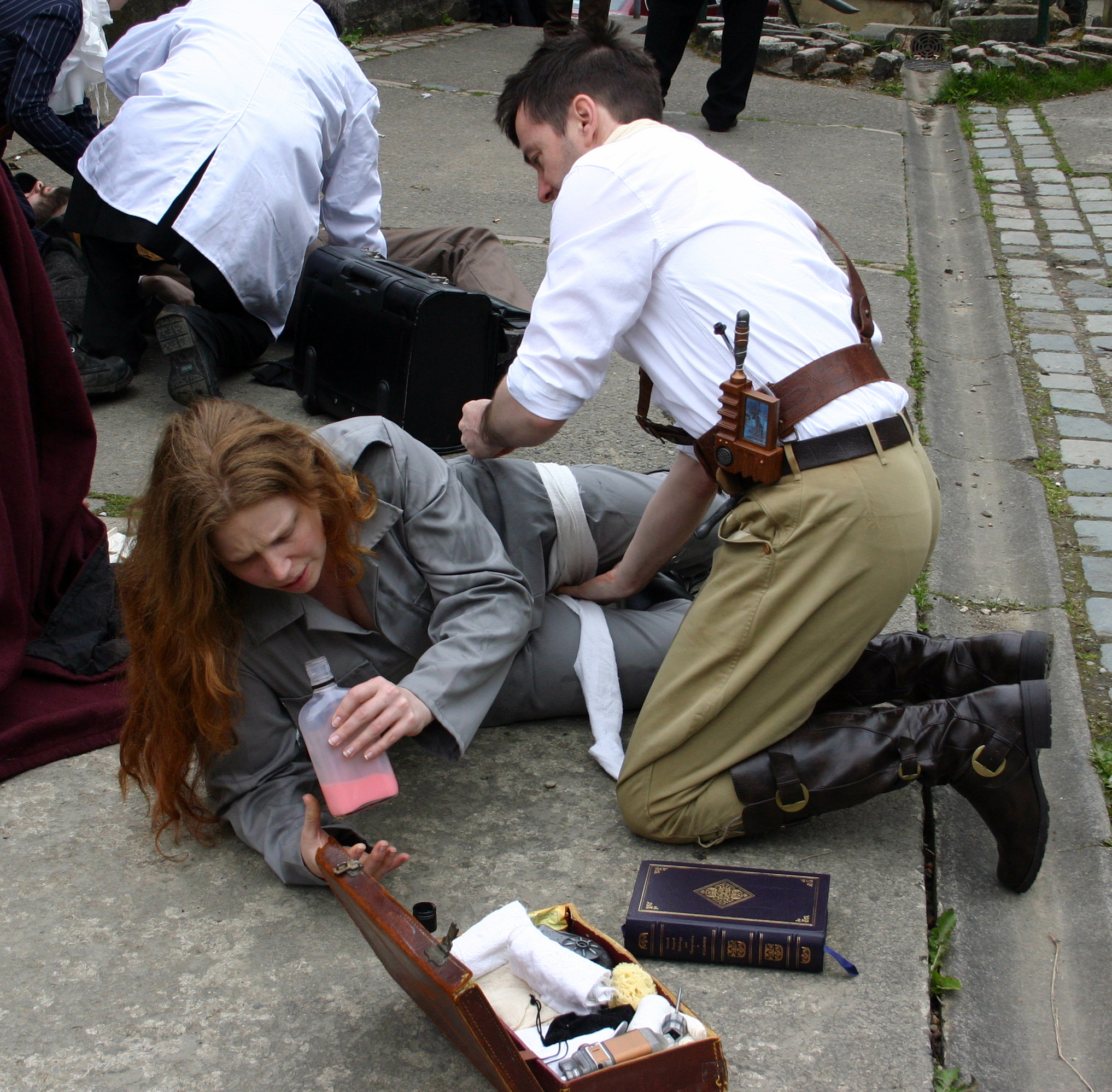
Another game I am involed in is called Victoriana LRP which is, predictably enough, set in a Steampunk world. Here are two photos from that game:

IMG_4281

This shows the aftermath of a fight with various injured characters being patched up with bandages.

This next one shows a scientist demonstrating a steampunk weapon….

194

The patch of dust on the ground is actually not the remains of someone who has been shot by the big gun. That was there for an entirely different purpose.

The next two photos are from a system based on Joss Whedon’s Firefly universe – Serenity LRP. These are all taken by the talented Ali Hancock, who was able to take them because she was playing a journalist in the game. All done in glorious black and white.

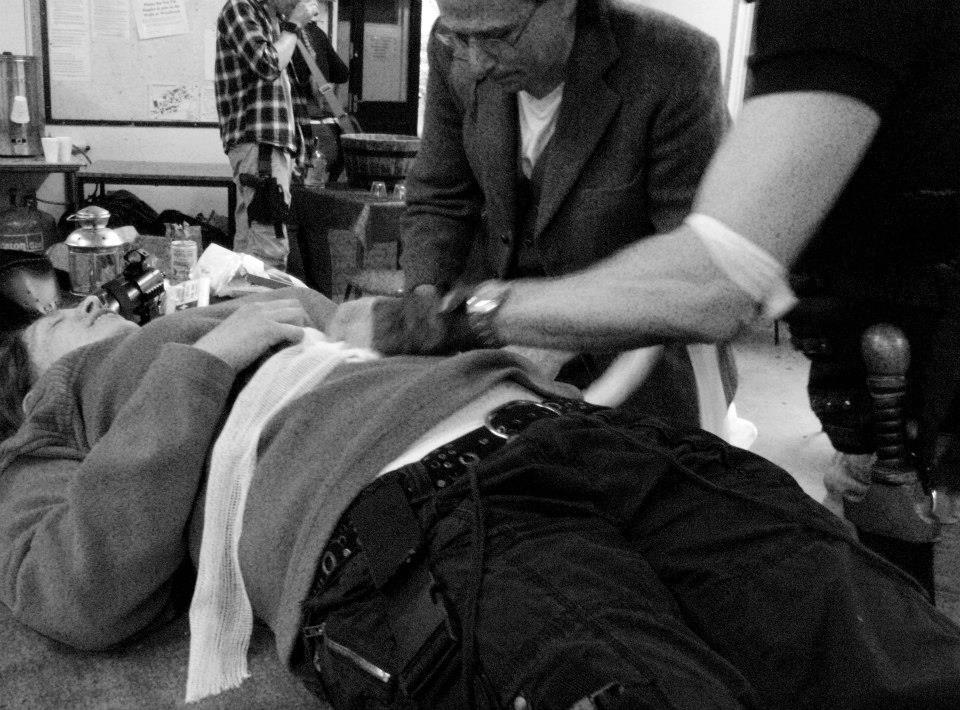
serenity medical

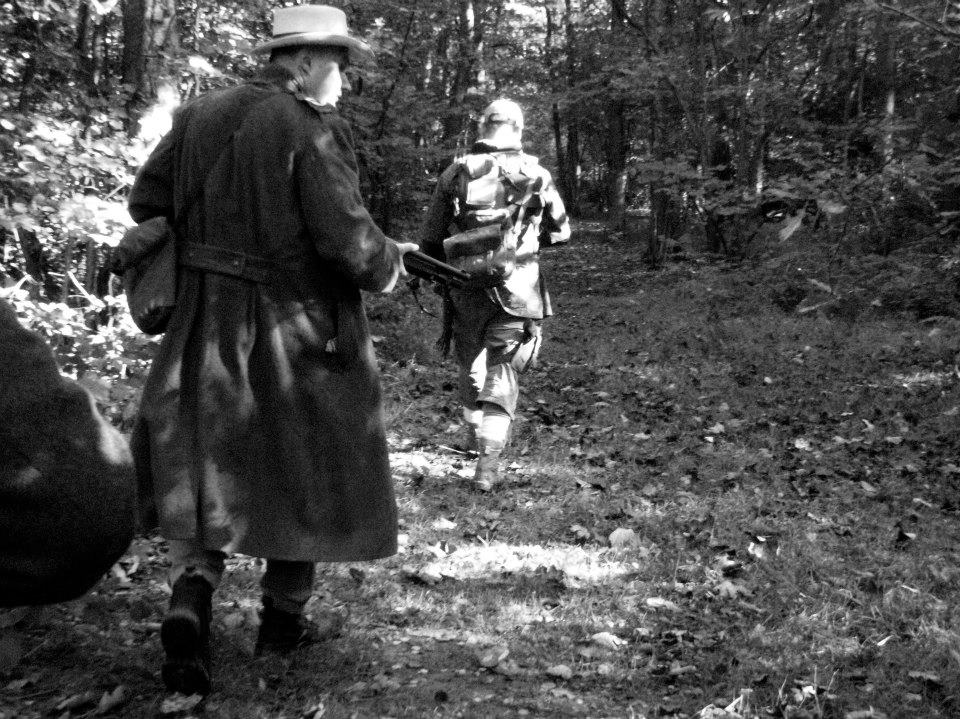
This first one is me helping to perform surgery. The second shows some players stalking through the woods looking for trouble.

serenity soldiers

Finally, a few years ago we went to a 1930’s themed event called An Uncommon Affair. There was intrigue, Egyptian Archeology, an Agatha Christie style murder (which we had to cover up for the good of the crown) and Nazis (who had the audacity to disturb dinner). There was also a photographer with a modern digital camera subtly hidden inside the body of a box brownie. This is their portrait of my character from that game…

doctor benton and dog

Of course, for this game it was possible to take our dog along. He even had a character. He was a dog. It was a bit of a stretch for his thespian talents to play this character. The location, by the way, is a Youth Hostel called Featherstone Castle which is a gorgeous building set in the wonderful wilds of Northumberland.

So, there you have it. Thirteen photographs of Live Action Roleplay to celebrate the thirteen in this year… And at no point did i mention bad luck or the day Friday… Feel free to check out the sites I have showcased above as there are more photographs to be seen on all of them…

The usual rules of the blog chain are in force. So, you have to go check out the other members of the chain or else I will send copies of those photographs we discussed on the phone last week to you know who… you do not want anyone to find out about *that* do you?

Participants and posts:
orion_mk3 – http://nonexistentbooks.wordpress.com (link to post)
Ralph Pines – http://ralfast.wordpress.com (link to post)
SRHowen – http://srhowen1.blogspot.com/ (link to post)
areteus – https://lurkingmusings.wordpress.com/ (link to post)
bmadsen
– http://hospitaloflife.wordpress.com/ (link to
post)
pyrosama – http://matrix-hole.blogspot.com/ (link to post)
angyl78 –
http://jelyzabeth.wordpress.com/ (link to post)
gell214 –
http://gelliswriting.blogspot.com/ (link to post)
randi.lee
– http://emotionalnovel.blogspot.com/ (link to
post)
ConnieBDowell – http://bookechoes.com/ (link to post)
writingismypassion –
http://charityfaye.blogspot.com/ (link to post)
Araevno –
http://www.simonpclark.com/ (link to post)
Briony-zisaya –
http://fantasywriterwannabe.blogspot.com/ (link to
post)
Kewii – http://kellyneeson.blogspot.com/ (link to post)
katci13 –
http://www.krystalsquared.net/ (link to
post)
MsLaylaCakes: http://www.taraquan.com/ (link to post) [Jan 9-10,
24-]
Amanda R.: http://www.twoamericansinchina.com/ (link to post) [Jan
14-]

Twitter Updates

Tweets by areteus

Like me on Facebook

Like me on Facebook

Enter your email address to follow this blog and receive notifications of new posts by email.

Join the Lurkers

  • Alex James's avatar
  • D.A Lascelles's avatar

Enter your email address to follow this blog and receive notifications of new posts by email.

Join 909 other subscribers

Recent Posts

  • I’m (apparently) a cover designer!
  • Release day! Coch a Gwyn
  • Cyberpunk look
  • Eastercon Artshow
  • Interview: Gillian Polack

Create a free website or blog at WordPress.com.

  • Subscribe Subscribed
    • Lurking Musings
    • Join 129 other subscribers
    • Already have a WordPress.com account? Log in now.
    • Lurking Musings
    • Subscribe Subscribed
    • Sign up
    • Log in
    • Report this content
    • View site in Reader
    • Manage subscriptions
    • Collapse this bar
 

Loading Comments...