Tags
Book Review, books, cassius station: heist, Cover design, Fiction, guardbridge books, gustavo bondoni, photoshop, publishing, Science Fiction, seattle worldcon, spacestation, writing

So, back in April this year, I had a stall (along with a bunch of other indie authors) in the Dealers room at Eastercon in Belfast. Our table was positioned right next door to Guardbridge books, a small press publisher. The publisher spent some time looking at my postcards and prints for sale and took a fancy to one of them (which he bought) because it had a particular look he liked. We discussed cover designs and he asked if I would be able to do a cover for an upcoming book.
I said yes… and started making plans. This included, on the way back home through the airport, taking a photo of something that I would later use…
There was a slight delay while he sorted things out with the author but we finally got round to discussing plans. I would recruit some models to portray characters from the book (descriptions helpfully sent) and we would do a photoshoot at Frameworks Studio in Ancoats, Manchester. I would then do a composite image.

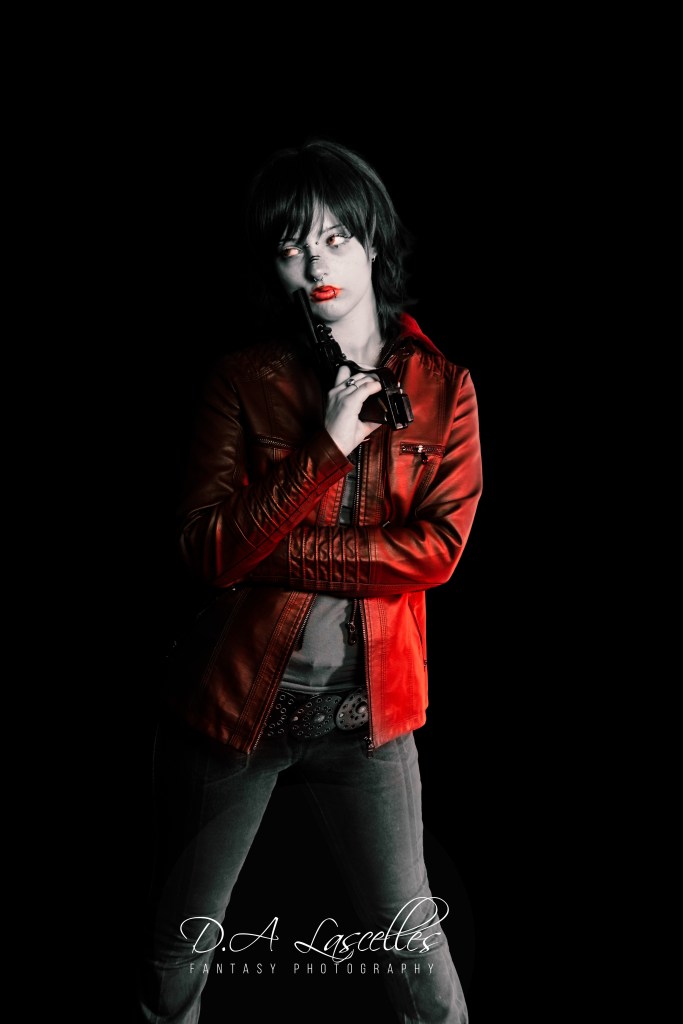
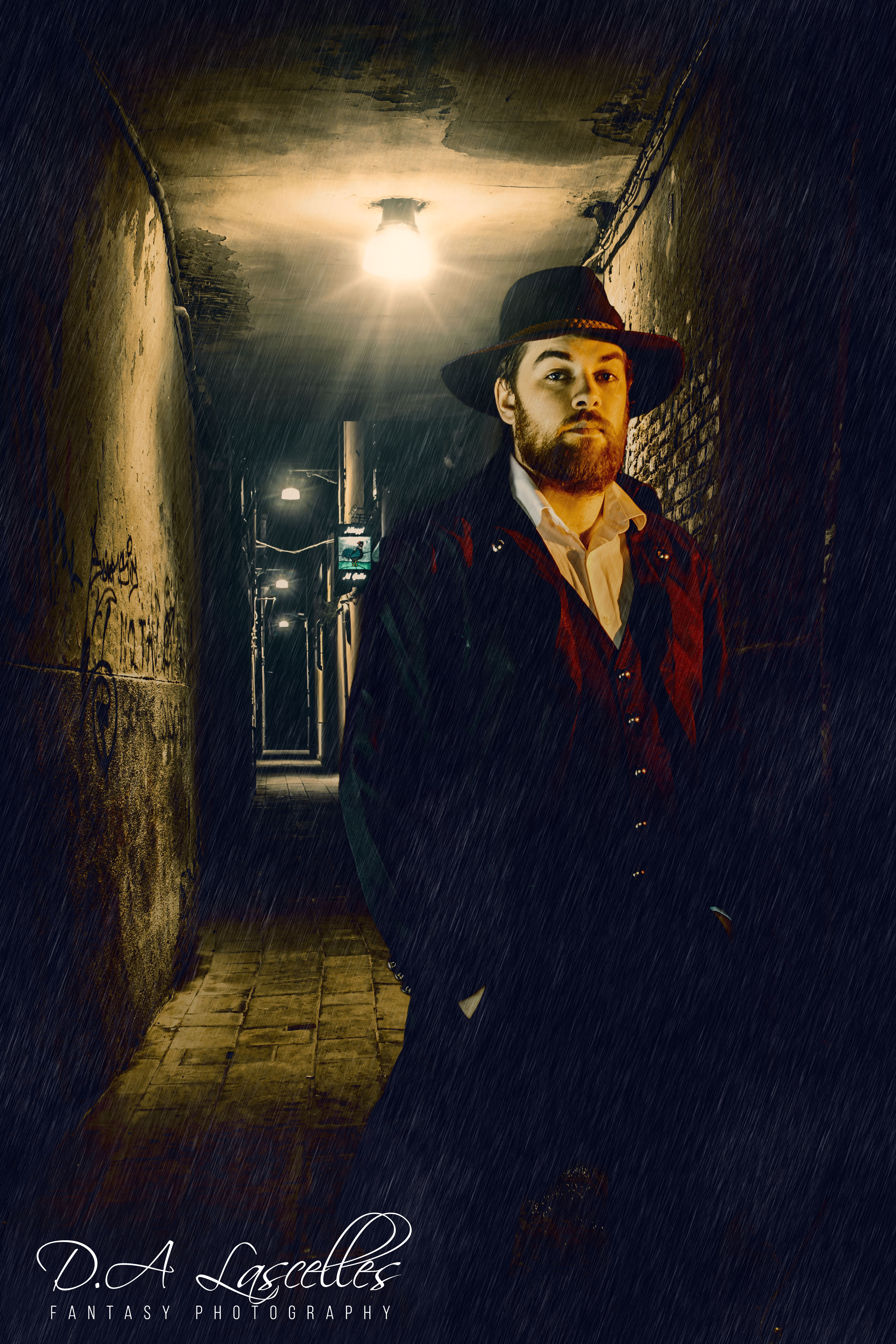
The two models I picked were Gregg (AKA Demonsloth modelling) and Saskia Collinson. Both were briefed on what the characters looked like and we discussed things like make up, props and clothing. Some of these we had between us, other things we had to buy. But we had a budget to work with. I set this up with three lights – a large studio light as main light, a speedlight to light up the background to allow good separation in post processing and a second speedlight with a red filter. This was added because, in the planned layout, there would be a red sun outside the spacestation window.
We did a number of different poses, both together and apart to see what worked best. We also shot some images for the models to use for their own purposes. A few of these are shown below.


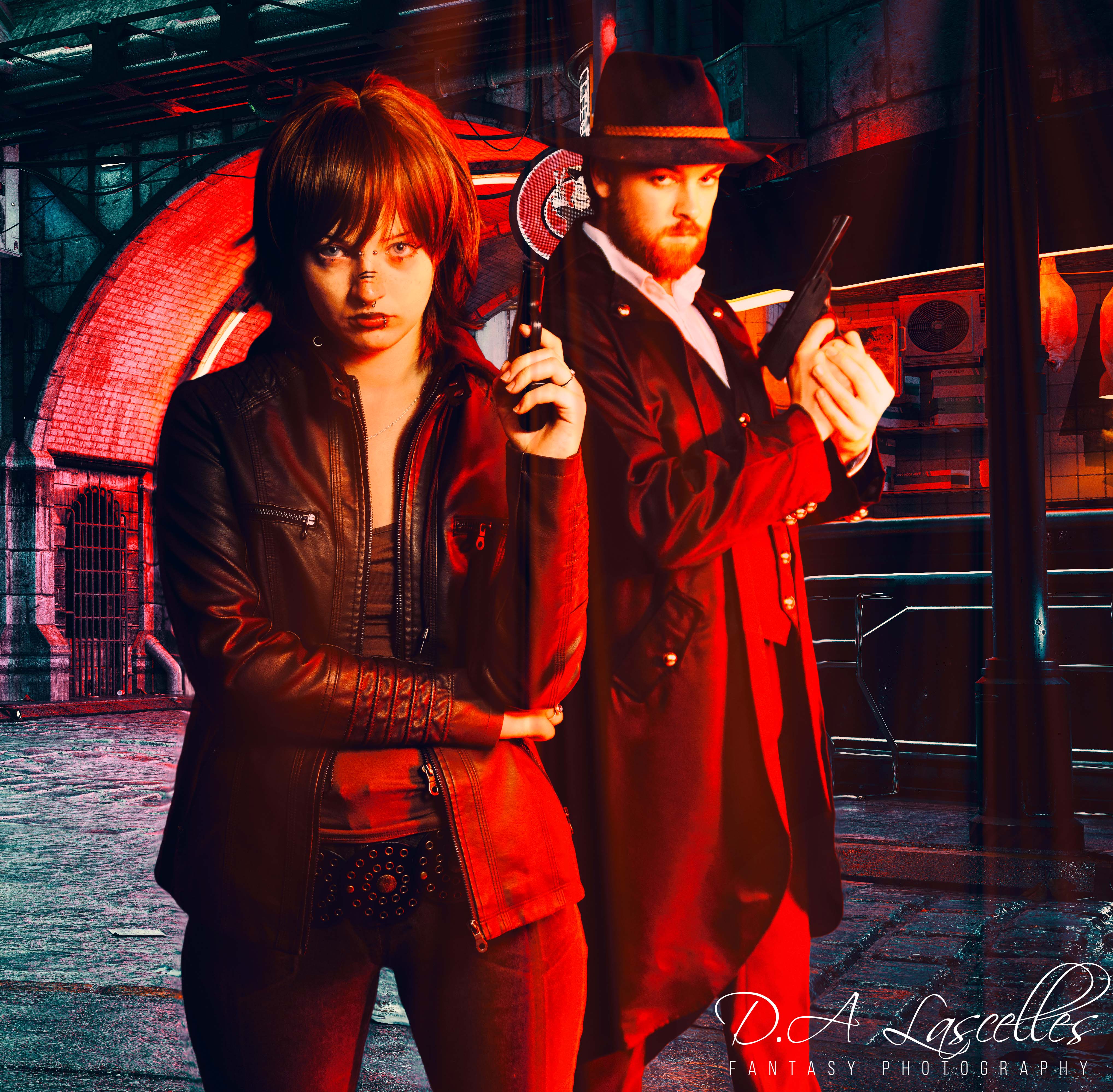
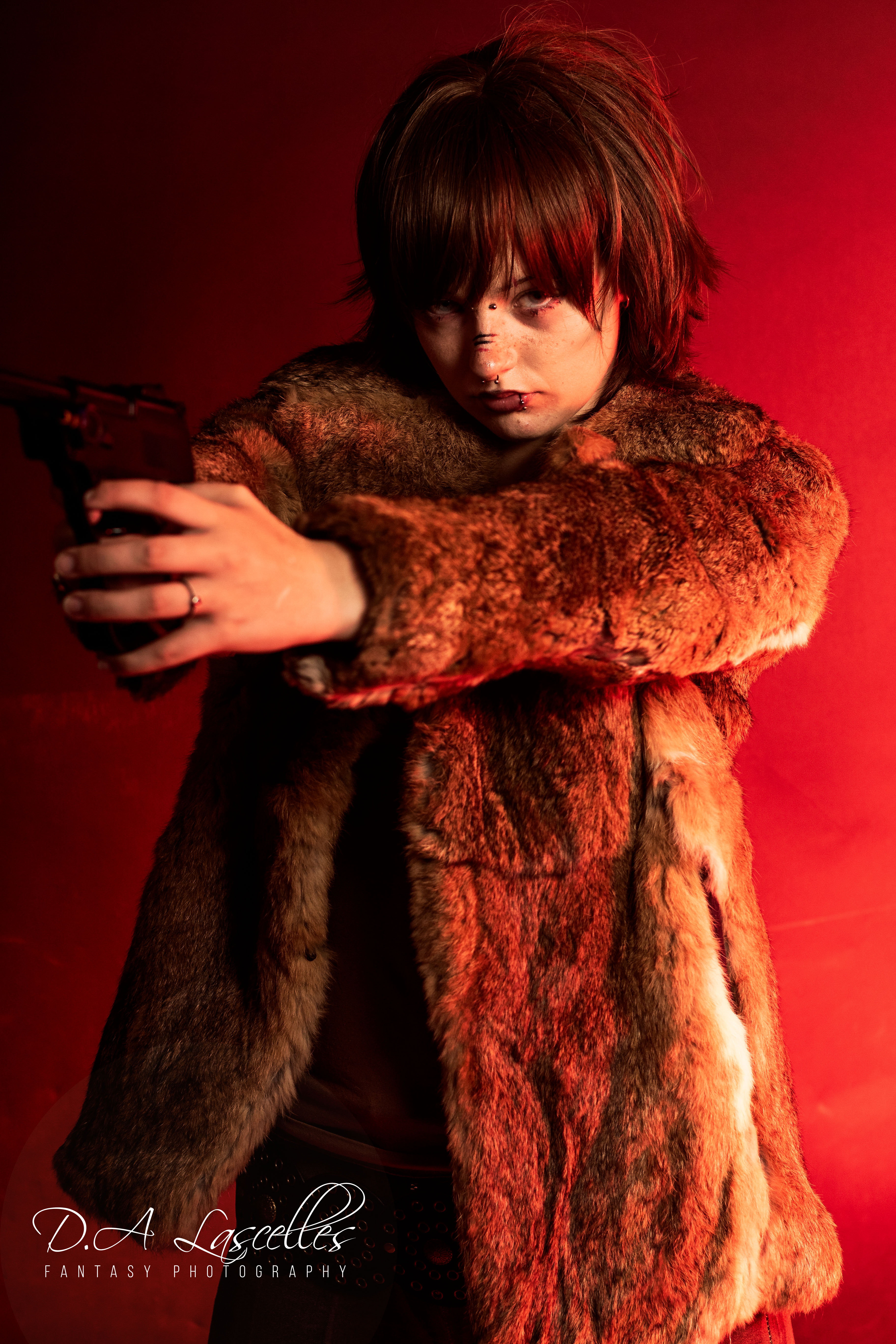

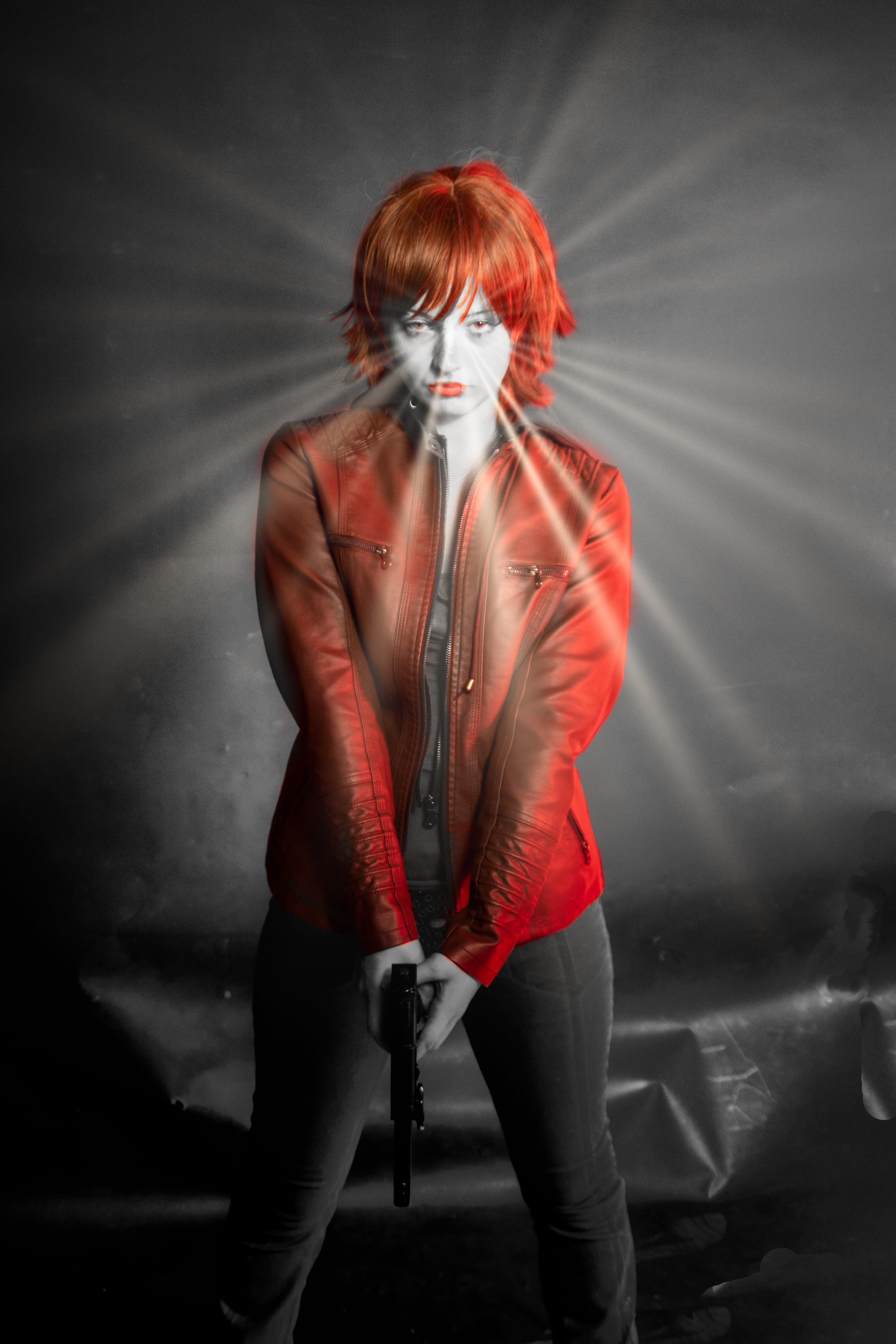


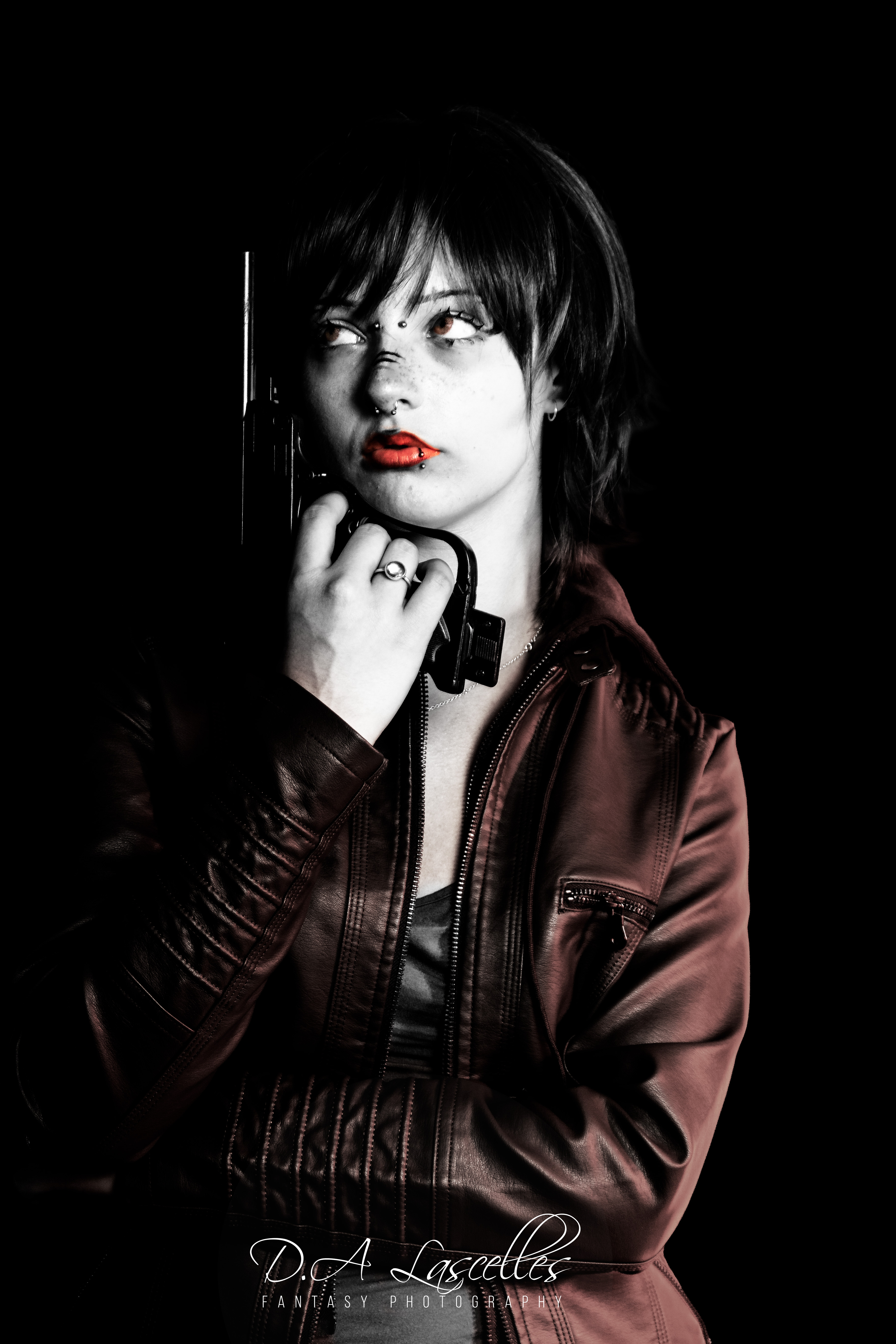

Finally, I had the process of putting together the final image.
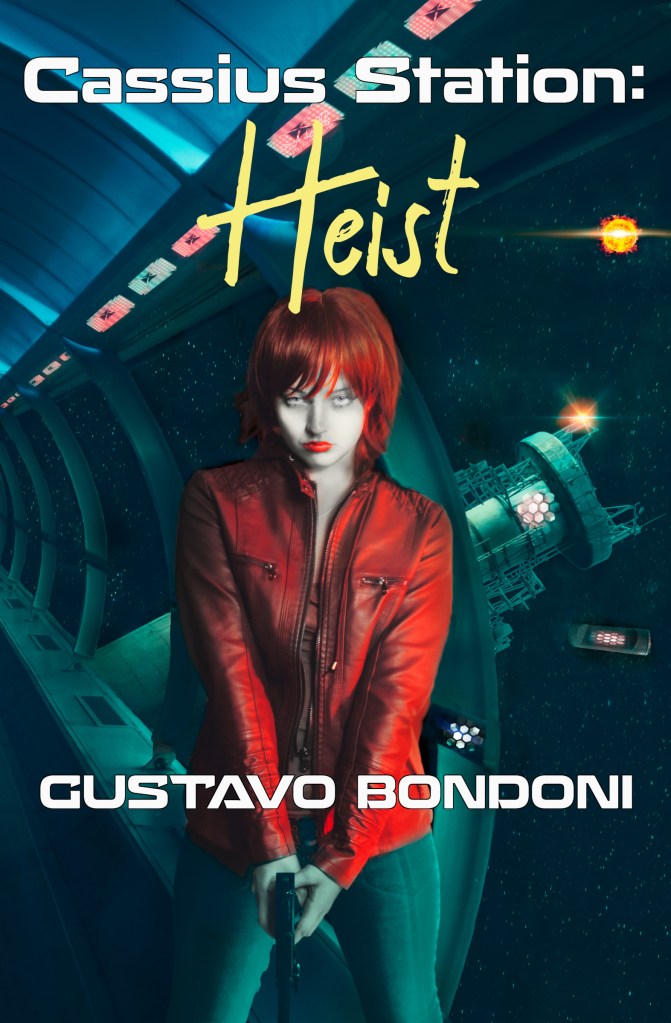
For this, I used the models from the shoot and a number of other elements. I started with a standard book template after discussing with the publisher what the dimensions of the final book would be. This allowed a back and front cover as well as an idea of the size of the spine of the book. The first thing I added to this was a photograph of a walkway. This was to be our spacestation. I replaced the scene from the windows with a starscape and added some features like LED lights that I had photographed in one of my regular weekly camera club nights. I also added some other features outside the space station. These were all blended in to look like part of the scene. In the initial draft, I used an image of both models…
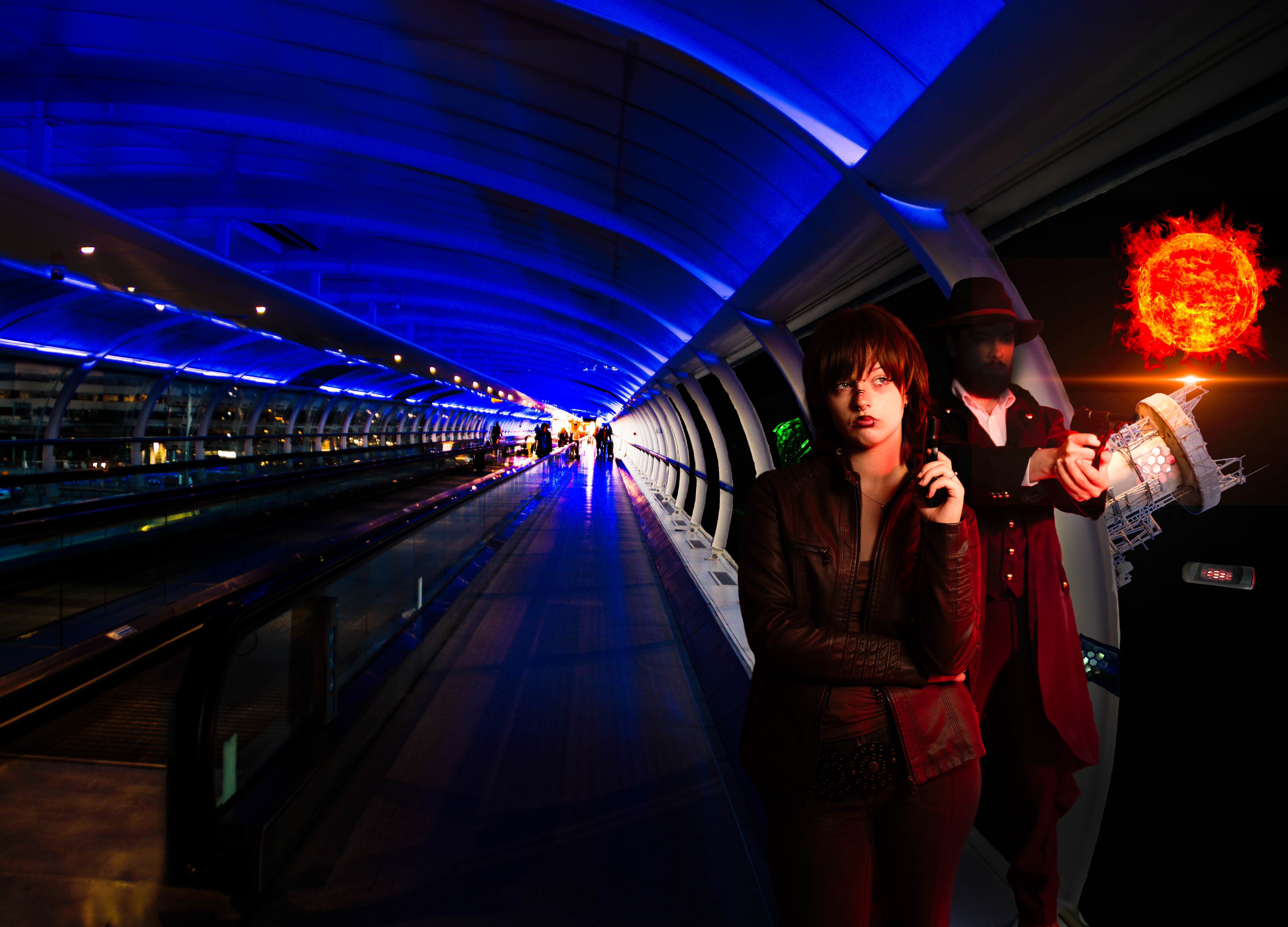
However, this didn’t work for a number of reasons. The first was that the male character is the poV character and this is written in the style of a classic detective noir story which means you never really know what the main character looks like. The publisher and author were keen we don’t see his face. However, the attempts to anonymise him didn’t really work well. The second was that the publisher felt the female character looked too passive in this – very bored and disinterested. So, we discussed options and decided that our main character detective would be moved to the back cover and be more or less entirely blacked out – full ‘man of mystery’ mode. Like the image below.

At the same time, I selected a more dynamic single pose of Saskia from the selection and that would become the sole subject on the front cover.
Once the draft for that was approved, I went ahead and finalised the image. We had some discussion about saturation levels and a strange green tint on skin but we finally had a completed image which was sent off to the printers with the rest of the book…
Cassius Station: Heist by Gustavo Bondoni will be released at the Seattle Worldcon later this month with Gustavo doing signed copies for sale at the Guardbridge stall. it will then be on wider release by the 1st of September…
And I guess I am a cover designer now. Might have to explore doing this more in the future.
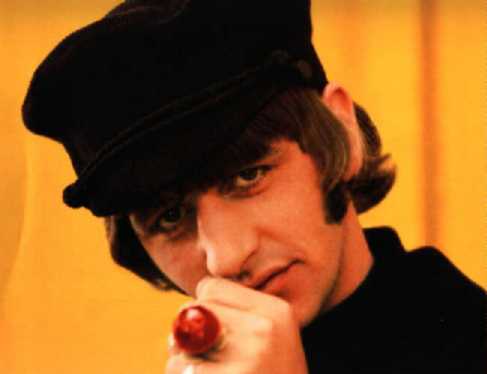 When John, Paul, George and Ringo appeared in the films A Hard Day’s Night and Help! they basically played themselves – the four cheeky lads from Liverpool – quick witted, dressed in collarless suits performing the best music of the day (and beyond actually) crafted by their own fair hands. But of course the plots that entwined the Beatles in those movies were fictitious: Paul’s fictional grandad in the form of Wilfred Brambell accompanying the boys on the train journey in A Hard Day’s Night and Ringo’s ring being sought after by an exotic cult in Help! Because they maintained their characters in fiction as in real life it opened up a door for their fans to somehow get an authentic insight of their idols, and no matter how absurd the storyline may be, it became a believable journey for the viewer (except perhaps the pursuit of Ringo’s ring!).
 The first time I personally took note of a firm intention to mix fact with fiction in the literary world was through Dan Brown’s novels featuring the fictional character Professor Robert Langdon, a Harvard University professor of religious iconology and symbology. Brown’s novels Angels & Demons, The Da Vinci Code and The Lost Symbol introduces us to mind opening themes such as a bloodline of Jesus Christ, secret societies, the Masons, Opus Dei, the Illuminati and the Knights Templar. Some of these exist or existed. Fact. But as one reads Brown’s undoubted page turners it is often difficult to fathom exactly which is fiction and which is fact. And there you have it – suddenly the story is believable no matter how extreme the journey may take us. The reader can connect on an emotional level yet still be wildly entertained.
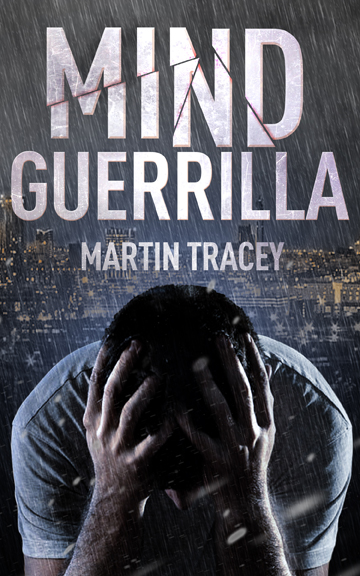 reality and I weave in facts with fiction to assist with that journey remaining believable. In Beneath the Floodlights I introduce the concept of vampires merging with a football team. Pretty random huh? One injection of fact I use in that particular novel is setting much of the book in Sutton Park, 2000 acres including ancient woodlands. Sutton Park is the seventh largest urban park in Europe and it is soaked in history. By the 10th century Sutton Park was established as a Royal Forest by the Anglo Saxon kings of Mercia and by the early 12th century, the Normans used it as a deer park. The land was then given to the people of Sutton Coldfield by King Henry VIII in 1528 and it had been used by that very same king for hunting. A bonafide roman road also cuts through a section of the park. So by using these facts, straight away I had a solid foundation to create a gripping tale.
 Lurking Musings