Tags
Agents of SHIELD, computerised voice, Doctor Who, Female Doctor Who, Firefly, Joss Whedon, Jules Verne, Lenora Crichlow, Moffat, Osgood, Phil Coulson, The Doctor, Torchwood
I had meant to post about this not long after the final episode of the last series of Doctor Who aired. However, real life intervened and made my life a hell of busy days and frantic brain goblins. I’ve finally got some time now to get back into blogging and today saw me spot two articles online which triggered me to revisit some thoughts I had following the last episode.

Osgood: Phil Coulson for the Whoniverse?
First there was this one:
The Doctor could be female
Yeah, I feel it was fairly obvious that Moffat was using the gender switch with Missy as a way of basically setting a precedent to be used to allow the Doctor to one day have a similar switch. He also did the same with River Song – showing a regeneration from a young woman of colour to a middle aged, white woman. You can dredge up even earlier references to Time Lords even changing species, though Romana’s regeneration into several alien forms in Destiny of the Daleks is largely considered controversial for a number of reasons, it still shows the possibility exists. Not that this has triggered a similar change in the Doctor yet (unless you count Scottish as a change of race?) but the indication that Gallifreyians are basically blind to gender (and also likely race and species) is an encouraging thought and I hope that it is acted on sometime soon. Could this be an indication that Lenora Critchlow now has a good chance of being picked next?
If it should happen that the Doctor becomes female I do hope that it is handled with sensitivity rather than being merely a gimmick. It needs to be done in such a way that the viewers can believe it is the same character and this is not always possible even with a male actor. As for any casting, it needs to be based on who can do the job well rather than focussing on any criteria like ‘has to be female’.
Next there was this little gem:
Bad news for Osgood fans
Now, when I first saw Osgood’s death (and man that hurt…) I did have a little suspicion. You see, the whole set up seemed remarkably familiar. Ancient, evil nemesis of one of the heroes is captured by secretive, government sponsored agency keyed to battling alien threats. Said nemesis escapes and in the course of their fiendishly clever plan to get out, manages to kill a high ranking, popular and geeky member of that agency. Was I the only one who was thinking ‘Avengers’? Whether it was deliberate tribute or unconscious copying, you cannot deny there is a link there between Osgood and good old Agent Coulson.

The British version has a better scarf
Which did make me wonder if the plan wasn’t to kick off a spin off series in which a mysteriously resurrected Osgood is put in charge of a rag tag group of UNIT agents and set to fly around the world in a converted jet solving problems and fighting HYDRA… erm, I mean, Daleks… who have infiltrated their organisation. Just picture it, the complicated spy games as they try to figure out which UNIT agents are actually Daleks in disguise (hint: if they can answer a question without using the word ‘Exterminate’ they are probably safe) and the big twist when they realise that one of their own is actually a traitor (they probably should have realised that Dr. Darian Alek was dodgy from his computerised voice and the sink plunger attached to his chest) and the emotional fallout that emerges from that. Has to be compelling viewing.
Though, wait a minute… Doctor Who has already had a popular character killed by a nemesis who mysteriously came back to life to lead a rag tag group of agents of a secretive organisation… Could Torchwood’s Captain Jack have actually been the inspiration Joss Whedon used for Phil Coulson in Agents of SHIELD?
I guess we could trace tropes ad infinitum and claim that all modern SF is actually derived from a stone tablet found in Babylon (probably written by Asimov or Jules Verne) because there isn’t really anything new anymore, just different ways of presenting the same ideas. But I suppose it is not too much of a stretch to wonder if Joss Whedon was familiar with the concept of Torchwood before he developed Agents of SHIELD.
So, in all, I think it is a shame that Osgood has been declared as ‘officially dead’ by Moffat. She was a wonderful character with a lot of potential. Certainly far better companion material than some that have been in that position in recent years. While as a writer I can see the benefit in killing off a popular but not critical character, I feel Osgood’s death was maybe a step too far.
Though, despite all this, I think Moffat is still being beaten by Whedon in the bastard of the century competition. After all, he did kill Wash. You have to be far more brutal in killing off your beloved characters to beat that.
###
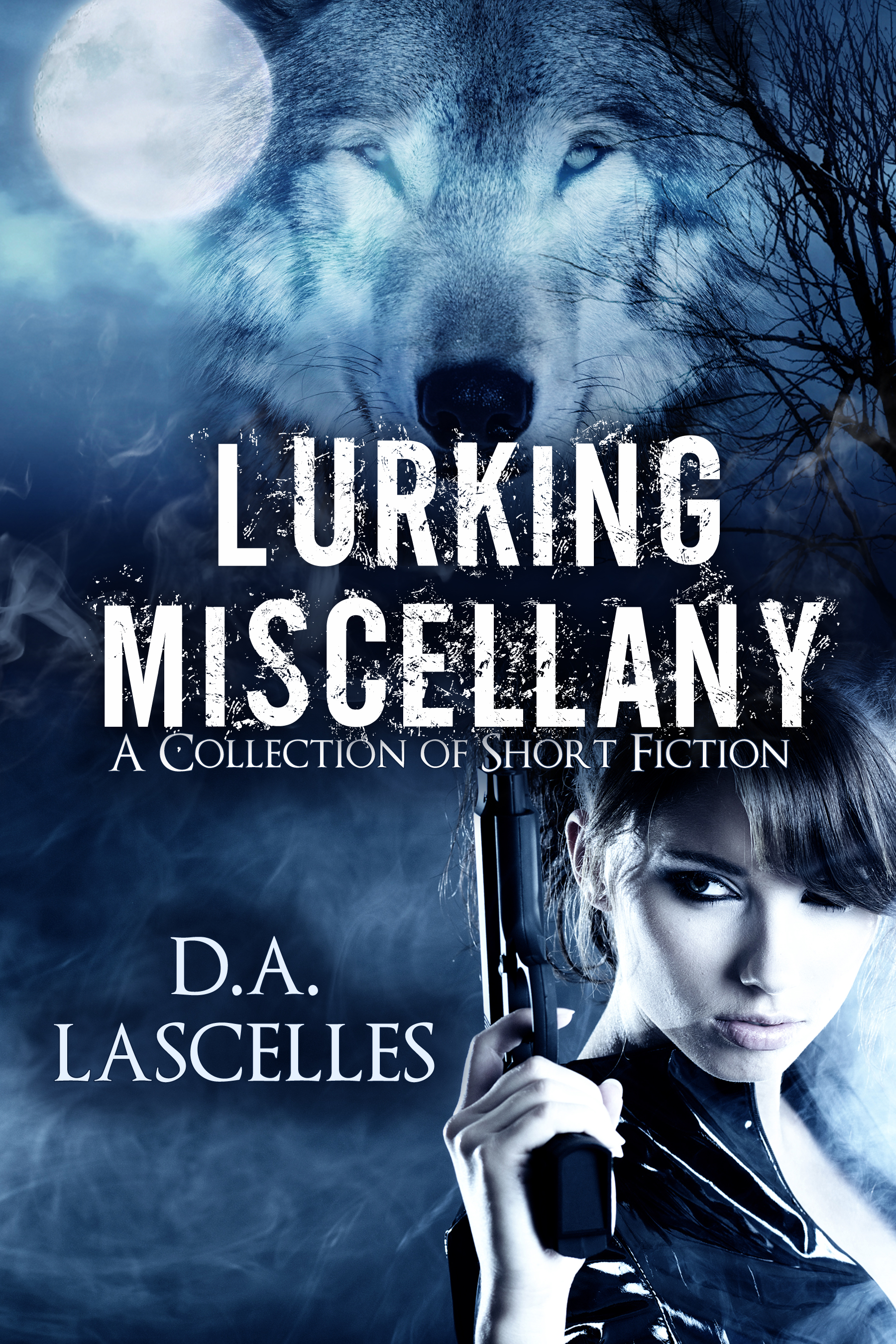
D.A Lascelles is the author of Lurking Miscellany, Transitions (Mundania Press) and Gods of the Sea (Pulp Empires). He lives in Manchester UK. You can sometimes see him writing about Zombie porn on https://lurkingmusings.wordpress.com/ but he mostly blogs about books, vampires, science fiction and Terry Pratchett. He is inordinately proud of the fact that one of his Pratchett articles was referenced on the French version of the author’s Wikipedia page.
Facebook: https://www.facebook.com/DaLascelles
Twitter: @areteus
Buy Lurking Miscellany (paperback)
Buy Lurking Miscellany (Kindle)

 The 300+ page novel will be available on Kickstarter beginning October 18th, and will include illustrations throughout by a number of notable artists:
 Northcott. “Without these books, I don’t know where I’d be today. I owe everything to the amazing artists who have contributed to the series, and the fans who believed in this crazy idea.”


 I am guessing that most people out there have watched the recent episode (
 Another example is the trial by combat in this week’s episode. To be honest, I was a little sceptical of Tyrion managing to get away with the same trick twice.** Remember, he used trial by combat to get out of a previous murder rap and honestly no writer would allow a character to get away with something that audacious again. So I was sort of expecting there to be an ending that did not include Tyrion’s champion walking away unscathed. However, that combat threw another revenge based cliché at us – the brother of a murdered woman seeking vengeance on the man who killed her. Again the story imprinted in our bones screams at us ‘of course he is going to win!’ and I don’t know about you but I was certainly seeing good old Mandy Pantinkin in his most famous role as Inigo Montoya in that scene and we all know how that works out rather well. And for a moment it looks as if he will win. He actually does win, in fact. His enemy is down and helpless. Then there is a sudden change in fortune… Again, he makes a critical error, an error based on his human nature. Had he merely killed his enemy he would have won. Instead he had to gloat and therefore lost spectacularly.
 Both examples given show how characters are being set up by the author (and in some cases the script writers of the series in some of the material that is newly added) to apparently be following a clichéd path. They even get some way down that path, enough for our minds as readers or viewers to spot the pattern (however consciously or subconsciously) and expect a particular outcome. Then something happens, often a very human mistake, which completely throws that pattern out of the window and the nature of the plot changes – we are horrified by this because the person set up as the hero cannot lose and yet they do. This, I feel, is the main reason these scenes cause such outcry. It is not just because of the gore, it is because of the cognitive dissonance of our well trodden clichés being suddenly wrenched from under us. This is also why it is seen as innovative, despite being riddled with tropes. The places where the expected outcomes are subverted are ones that stick in the mind and suddenly the writer is a genius for doing it. Even an occasional scene like this can be enough to plaster over the many occasions where the writer does follow the standard tales. These scenes also increase the tension because, dammit, even characters you previously believed safe because of some perceived ‘hero’ status can die. Its been happening in SF TV for a while now. A famous example is Mal’s innovative method of resolving the infamous Mexican standoff (clue: Mal definitely shot first, no Han Solo/Greebo confusion here) and recent series like Battlestar Galactica have been constantly violating our expectations with respect to the relative safety of those afforded supposed hero status.