
Tags
author, conspiracy theory, cult, Dan Brown, Fact, Fiction, Football, Illuminati, King Henry VIII, Martin Tracey, secret society, serial killer, Sutton Park, The Beatles, Vampire Month
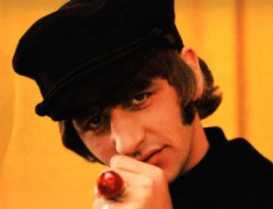 When John, Paul, George and Ringo appeared in the films A Hard Day’s Night and Help! they basically played themselves – the four cheeky lads from Liverpool – quick witted, dressed in collarless suits performing the best music of the day (and beyond actually) crafted by their own fair hands. But of course the plots that entwined the Beatles in those movies were fictitious: Paul’s fictional grandad in the form of Wilfred Brambell accompanying the boys on the train journey in A Hard Day’s Night and Ringo’s ring being sought after by an exotic cult in Help! Because they maintained their characters in fiction as in real life it opened up a door for their fans to somehow get an authentic insight of their idols, and no matter how absurd the storyline may be, it became a believable journey for the viewer (except perhaps the pursuit of Ringo’s ring!).
 The first time I personally took note of a firm intention to mix fact with fiction in the literary world was through Dan Brown’s novels featuring the fictional character Professor Robert Langdon, a Harvard University professor of religious iconology and symbology. Brown’s novels Angels & Demons, The Da Vinci Code and The Lost Symbol introduces us to mind opening themes such as a bloodline of Jesus Christ, secret societies, the Masons, Opus Dei, the Illuminati and the Knights Templar. Some of these exist or existed. Fact. But as one reads Brown’s undoubted page turners it is often difficult to fathom exactly which is fiction and which is fact. And there you have it – suddenly the story is believable no matter how extreme the journey may take us. The reader can connect on an emotional level yet still be wildly entertained.
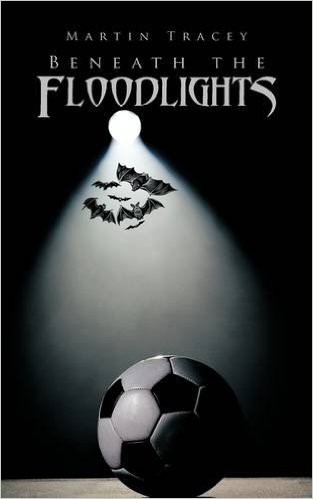
I write novels in the hope that they too are page turners. I like to stretch the boundaries of reality and I weave in facts with fiction to assist with that journey remaining believable. In Beneath the Floodlights I introduce the concept of vampires merging with a football team. Pretty random huh? One injection of fact I use in that particular novel is setting much of the book in Sutton Park, 2000 acres including ancient woodlands. Sutton Park is the seventh largest urban park in Europe and it is soaked in history. By the 10th century Sutton Park was established as a Royal Forest by the Anglo Saxon kings of Mercia and by the early 12th century, the Normans used it as a deer park. The land was then given to the people of Sutton Coldfield by King Henry VIII in 1528 and it had been used by that very same king for hunting. A bonafide roman road also cuts through a section of the park. So by using these facts, straight away I had a solid foundation to create a gripping tale.
In my latest book Mind Guerrilla, I perhaps put a toe in Brown’s water by introducing the perfectly legitimate Institute of Noetic Science, but also the ‘secret’ activities of mind control programmes, groomed assassins and murders of famous people. Much already speculated in the public domain, often coupled with compelling evidence – yet often unproven in a court of law – dismissed as far-fetched conspiracy theories. Or, perhaps there really does exist a hidden force or hierarchy that are simply untouchable controlling such matters. Do societies and protocols really exist that never see the light of day for the unassuming Joe Public? There’s a lot of thought provoking stuff out there, take a look via google and You Tube, but I’ll let you be the judge. But again what a great basis for my story. My hero Detective suffers from a very real illness in Multiple Sclerosis yet he can perform acts of mind over matter – again not something we come across everyday yet acts of telekinesis are documented as long ago as 1890 by Russian psychical researcher Alexander N. Aksakof. My serial killer, ‘The Crucifier’, is likened to a number of well-known serial killers. Charles Manson and his Family is likened to my Religious Cult, the Adonijah Truthsters, and Manson’s fictional offspring in the form of two evil twins continue his vision of interpreting Beatles songs as a green light to perform acts of evil.
So when mixing facts with fiction it provides a conundrum for the reader. The crossover of the two worlds doesn’t altogether provide clarity of what is fiction and what is truth, which means that the page turning and engaging story could… just could…happen.
And when an author can connect with the reader his/her work is done.
Both Beneath the Floodlights and Mind Guerrilla can be found at my Amazon author page:
http://www.amazon.co.uk/Martin-Tracey/e/B009ANTBWG/ref=sr_ntt_srch_lnk_1?qid=1456774555&sr=8-1
Martin’s Blog: https://martintracey.wordpress.com/
Twitter: @MartinTracey1
Email: martinpaperbackwriter@yahoo.co.uk

 4) Tell us about the place where you live. Have you ever derived any inspiration from your home or from anywhere you have visited?
 me I think it opens up temptation in the mind. ‘Lust’ and even ‘Love’ seem to always be connected to the ‘sexy’ vampires and the reader falls into that world of, ‘well I shouldn’t but I probably would!’ There is a magnetic quality about vampires -they have the X Factor.
 * Still not as bad as
  and the motivations have the quality of myths; they have that do or die edge to them. It’s possibly why The Wire is one of my favourite TV shows, and Omar my favourite character in it. With a clear nod to Achilles, he pushes his revenge to the edge of insanity for his Patroclus. Characters in these stories tell themselves they have a code, that their world is run according to rules, but in the end, no one else is playing their game, and they meet tragic ends. It’s a hyper-real, exploded version of reality, of our emotions thrown up against the nonsensical blocks of existence. If we delude ourselves that there are rules, that we can feel so strongly without compromise, we’ll come to a sticky end.
 I realised, when I started writing my vampire story, that there’s the potential to do either, or both. That writing gothic fiction can provide a larger than life mythic edge. But that, in the ambiguous potential of eternity, there could be one hell of a long time spent staring into the void.
 magical in some way. I remember being obsessed with witches, as well as Narnia and Robin Hood. I think I was a bit of a goth, even then. I had a secret magic club in my mum’s garden shed, which I shared with my friend. I wrote a lot of poems as a kid, and in my teens, but I’ve lost my bottle for it as an adult.
 I’ve taken influences from a lot of places. I’m a pretty avid reader. My biggest influences are probably Chandler, Camus and Conrad. Heart of Darkness is definitely an important one for me. I love empty spaces, howling holes and rotten hearts in stories, and characters that are strangers to their emotions.

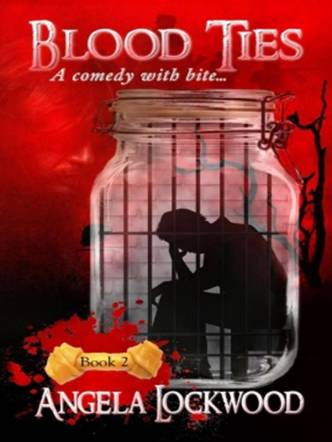
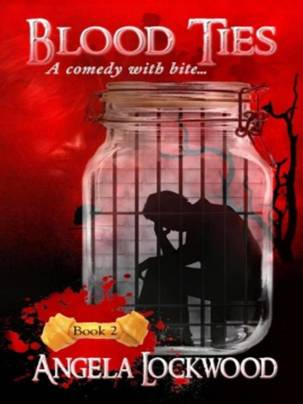
 I soon realised I was out of my depth. The best decision I’ve made, probably, is joining an independent writers’ group. This group was very open with sharing their experiences and when I saw some of the covers my colleagues were using I knew I had to change mine. My group recommended several avenues and after a few emails I went with Paradox Book Covers. If you shop and ask around you’ll find that professional is not always expensive. People really do judge a book by its cover, so make sure yours stands out.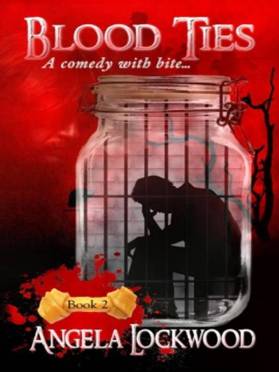


 Language in the Blood
  a century coming to terms with his new vampire identity. Along with a taste for human blood and lapdogs, he has acquired the linguistic skills of his victims and learned to survive in the shady underbellies of Europe’s great cities. The end of Language in the Blood sees Cameron facing a dilemma when blame for one of his kills gets laid at his best friend George’s feet. Cameron discovers a deeply buried vestige of humanity and surrenders to the French authorities – a decision he soon regrets as it becomes clear they don’t have quite the same heroic role for a vampire agent in mind that his own vivid imagination does. Locked up, his needs denied, misunderstood and plagued by an unhealthy obsession with his friend’s daughter, the bored vampire edges close to insanity. Before long, Cameron starts plotting his escape.
 cool.” I decided that epic items, like swords, are cool. And then those epic items being needed for something completely unexpected. It was around the swords Fury and Serenity that the entire Kingdom City universe grew. Admittedly, it’s a much more manual thought process than i’ve had with most of my other story ideas; they usually just come to me. But I don’t think that Kingdom City is any less rich or exciting for that.
 9. Given unlimited resources, what would be your ideal writing environment?
 Lurking Musings