• …
  • About
  • Vampire Month Alumni
  • World Book Night

Lurking Musings

~ Musings of a newly published writer

Lurking Musings

Tag Archives: books

I’m (apparently) a cover designer!

06 Wednesday Aug 2025

Posted by D.A Lascelles in Musings, Photos, Publications

≈ Leave a comment

Tags

Book Review, books, cassius station: heist, Cover design, Fiction, guardbridge books, gustavo bondoni, photoshop, publishing, Science Fiction, seattle worldcon, spacestation, writing


So, back in April this year, I had a stall (along with a bunch of other indie authors) in the Dealers room at Eastercon in Belfast. Our table was positioned right next door to Guardbridge books, a small press publisher. The publisher spent some time looking at my postcards and prints for sale and took a fancy to one of them (which he bought) because it had a particular look he liked. We discussed cover designs and he asked if I would be able to do a cover for an upcoming book.

I said yes… and started making plans. This included, on the way back home through the airport, taking a photo of something that I would later use…

There was a slight delay while he sorted things out with the author but we finally got round to discussing plans. I would recruit some models to portray characters from the book (descriptions helpfully sent) and we would do a photoshoot at Frameworks Studio in Ancoats, Manchester. I would then do a composite image.

The studio set up with the two models in place. In the background you can see the set that was being made for an Alice in Wonderland themed shoot in August.

The two models I picked were Gregg (AKA Demonsloth modelling) and Saskia Collinson. Both were briefed on what the characters looked like and we discussed things like make up, props and clothing. Some of these we had between us, other things we had to buy. But we had a budget to work with. I set this up with three lights – a large studio light as main light, a speedlight to light up the background to allow good separation in post processing and a second speedlight with a red filter. This was added because, in the planned layout, there would be a red sun outside the spacestation window.

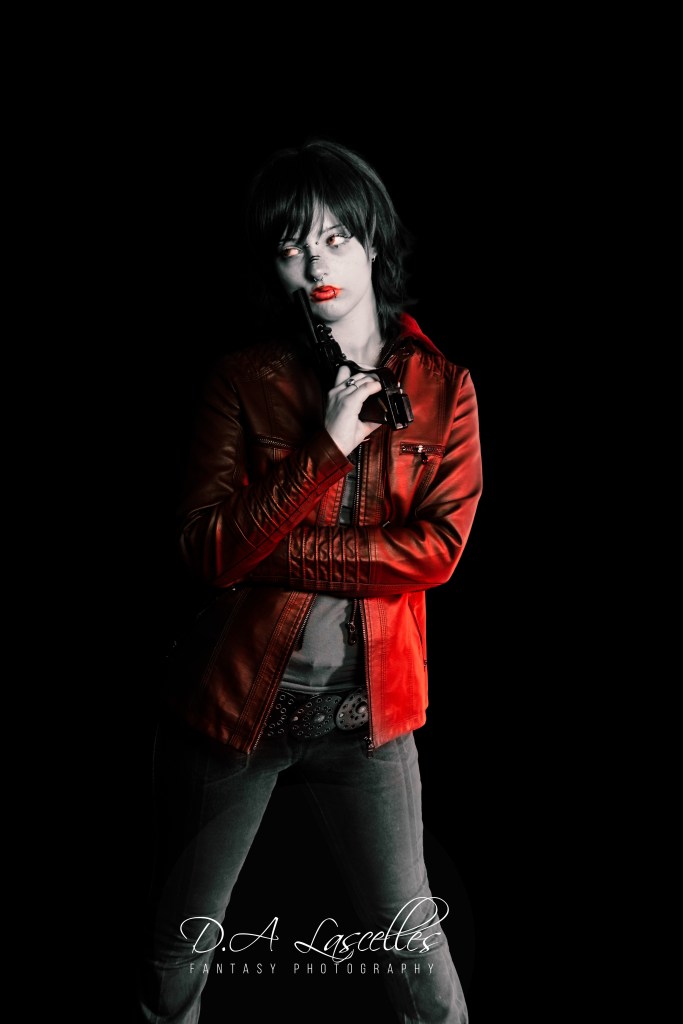
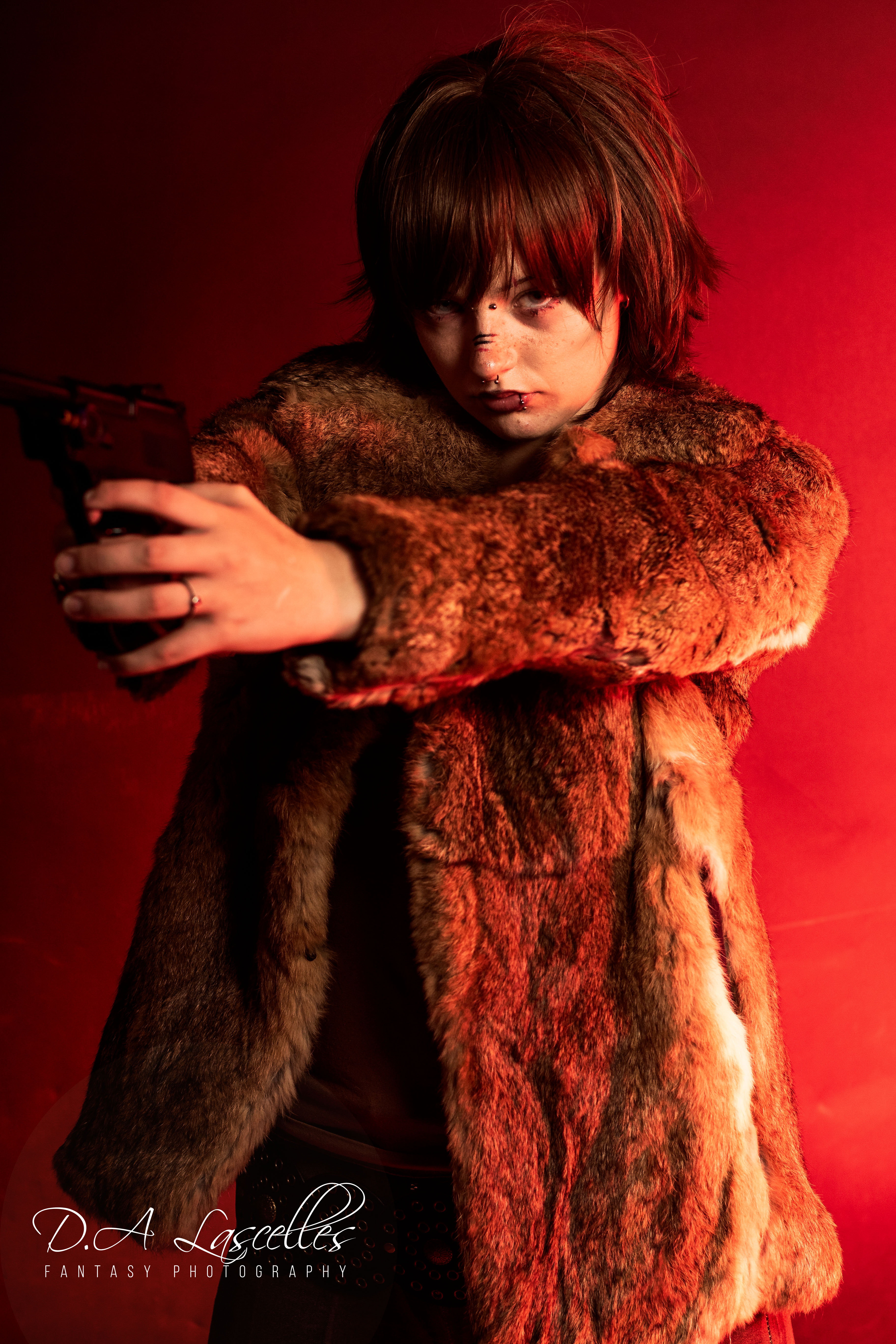
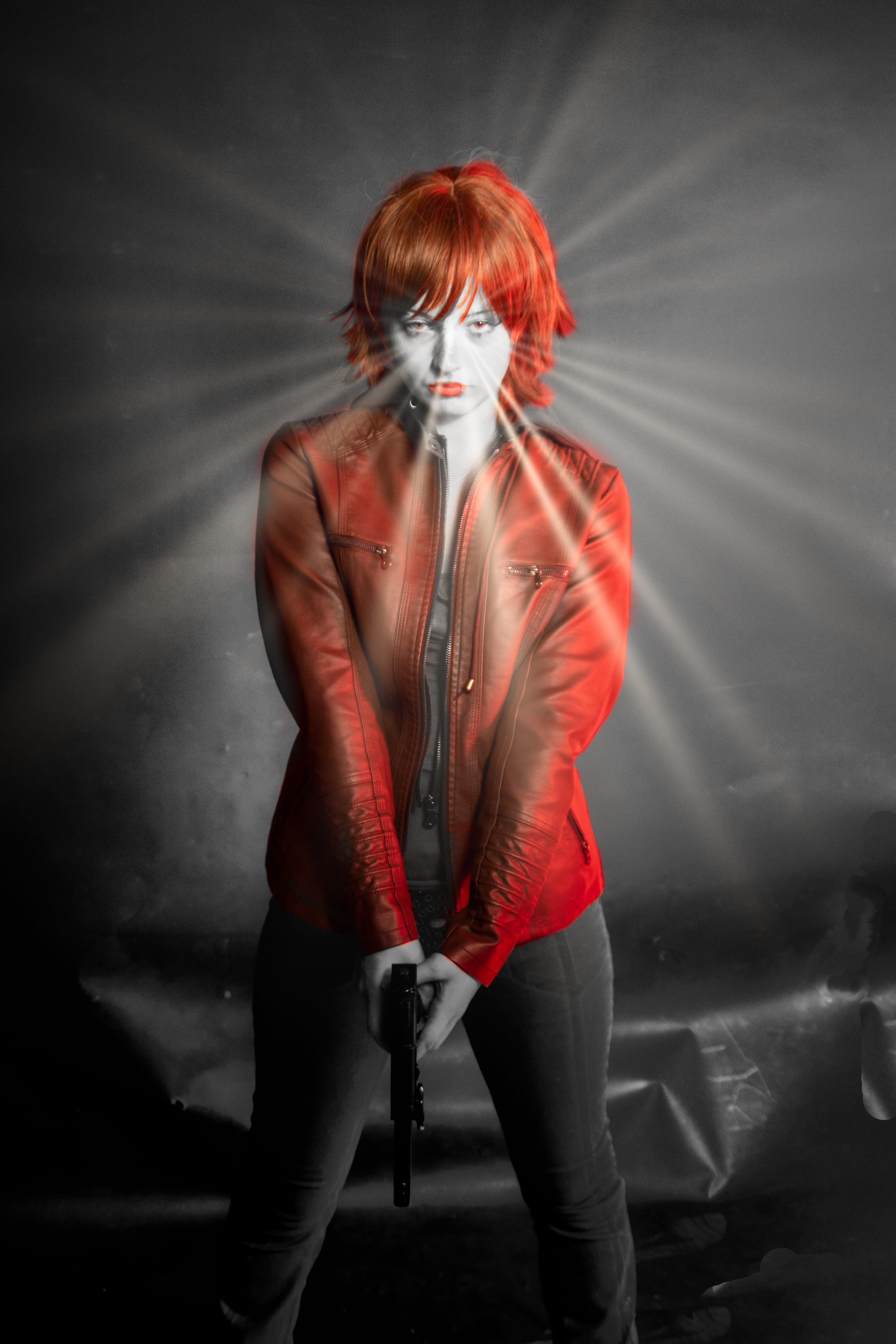
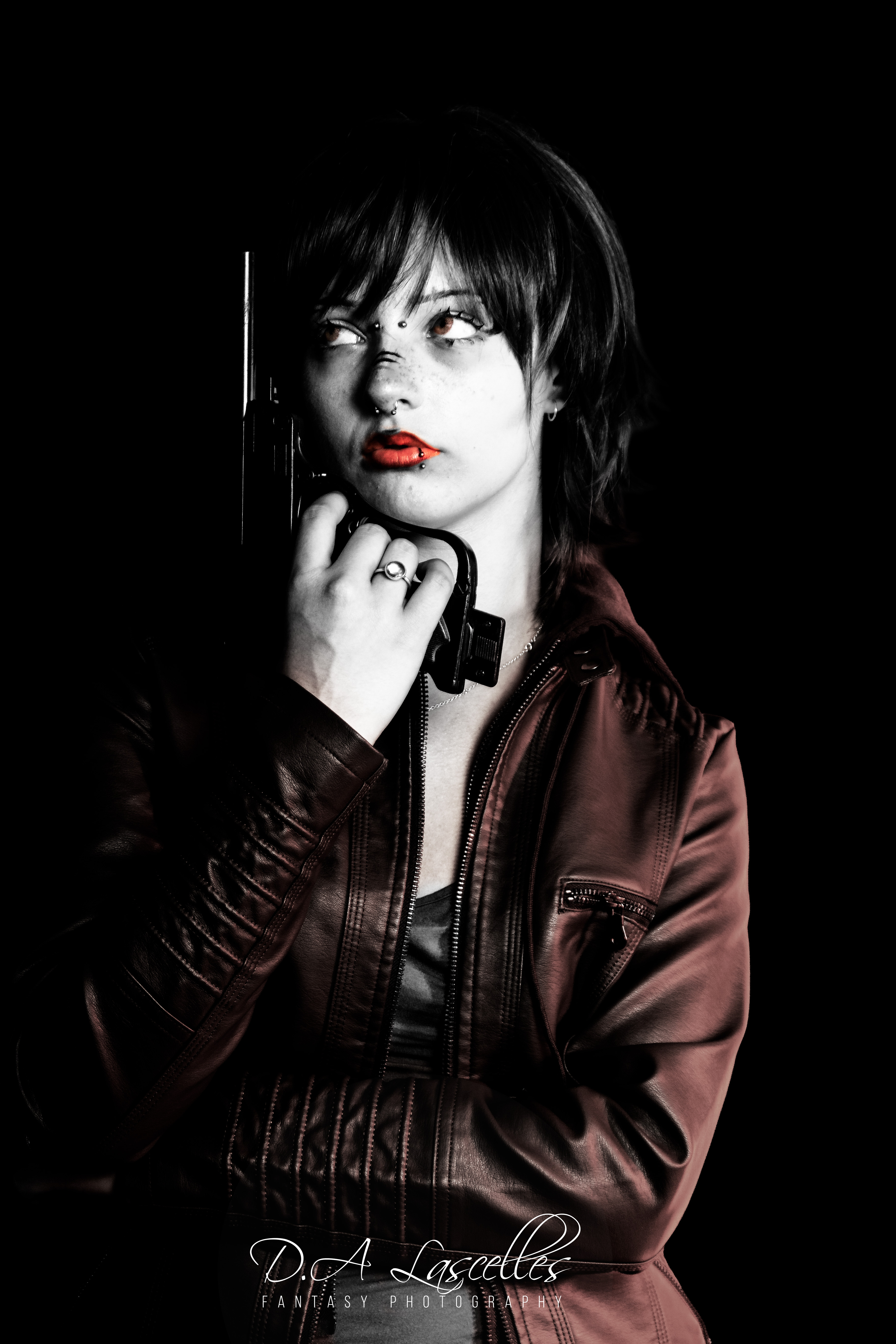
We did a number of different poses, both together and apart to see what worked best. We also shot some images for the models to use for their own purposes. A few of these are shown below.

Finally, I had the process of putting together the final image.

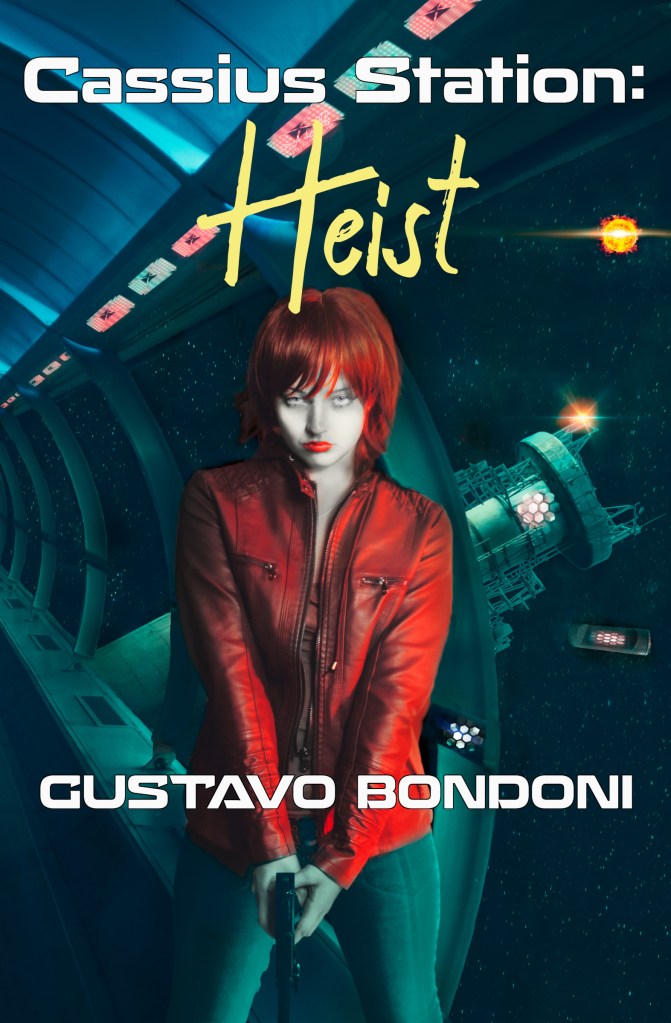
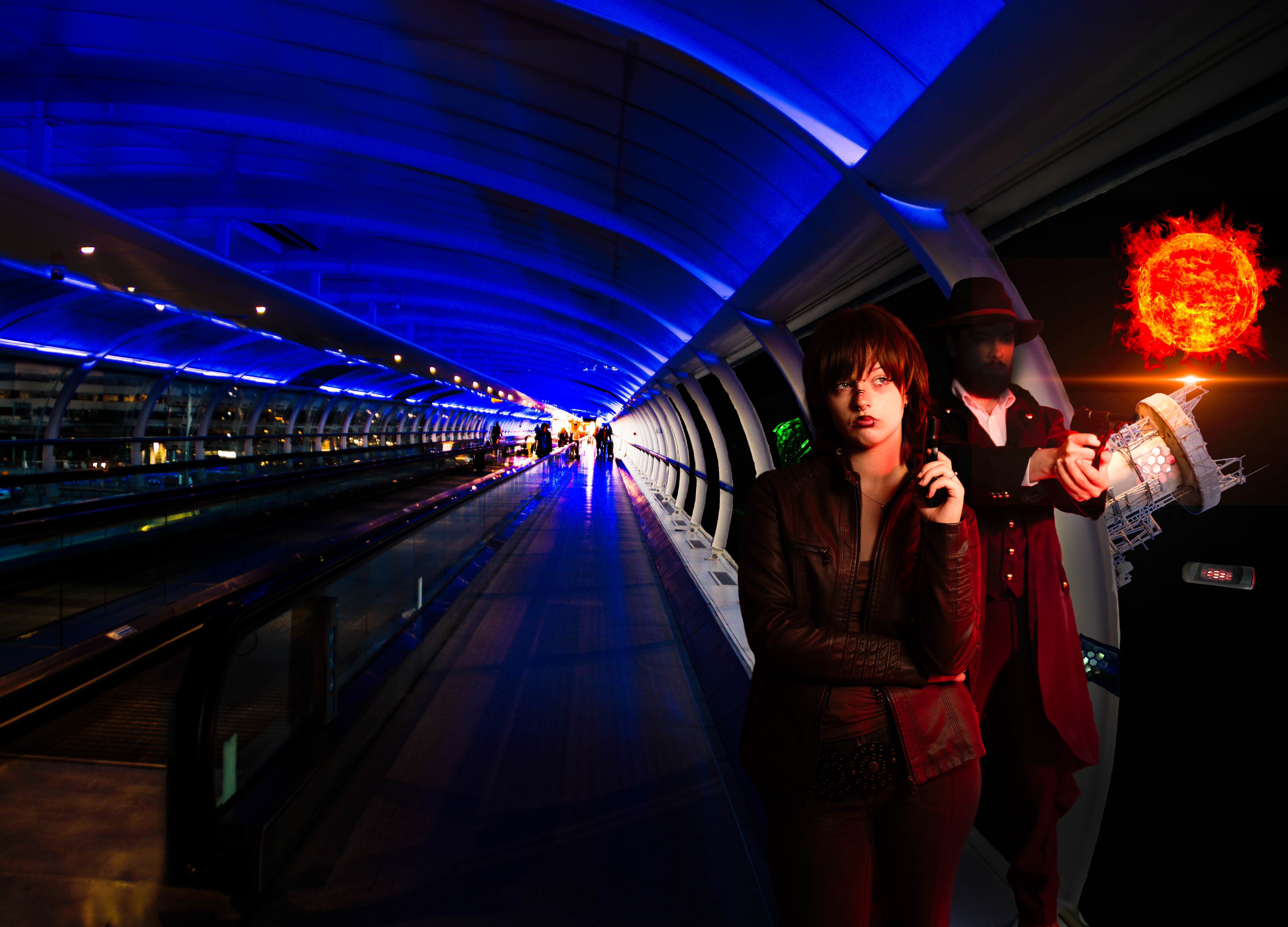
For this, I used the models from the shoot and a number of other elements. I started with a standard book template after discussing with the publisher what the dimensions of the final book would be. This allowed a back and front cover as well as an idea of the size of the spine of the book. The first thing I added to this was a photograph of a walkway. This was to be our spacestation. I replaced the scene from the windows with a starscape and added some features like LED lights that I had photographed in one of my regular weekly camera club nights. I also added some other features outside the space station. These were all blended in to look like part of the scene. In the initial draft, I used an image of both models…

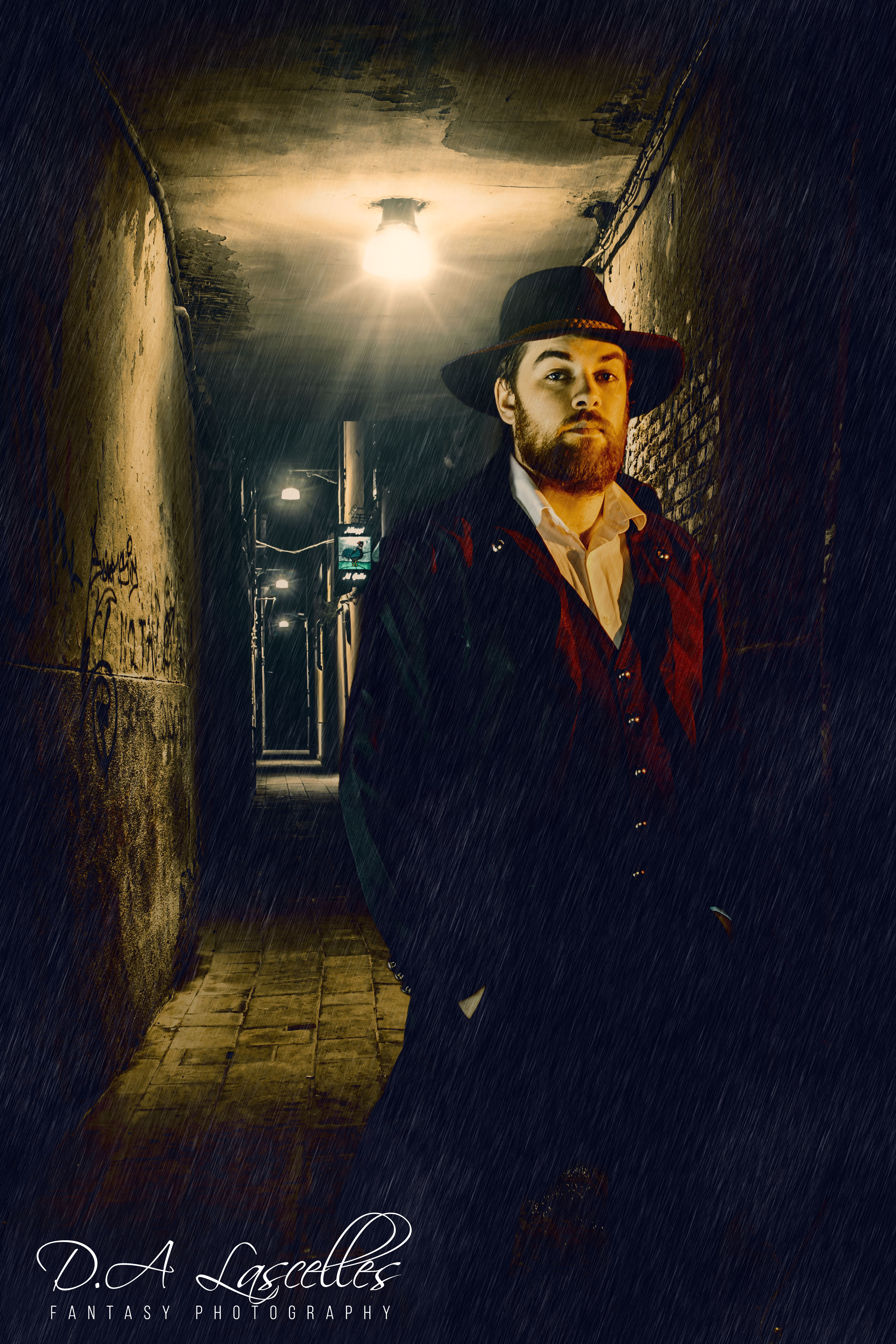
However, this didn’t work for a number of reasons. The first was that the male character is the poV character and this is written in the style of a classic detective noir story which means you never really know what the main character looks like. The publisher and author were keen we don’t see his face. However, the attempts to anonymise him didn’t really work well. The second was that the publisher felt the female character looked too passive in this – very bored and disinterested. So, we discussed options and decided that our main character detective would be moved to the back cover and be more or less entirely blacked out – full ‘man of mystery’ mode. Like the image below.

At the same time, I selected a more dynamic single pose of Saskia from the selection and that would become the sole subject on the front cover.

Once the draft for that was approved, I went ahead and finalised the image. We had some discussion about saturation levels and a strange green tint on skin but we finally had a completed image which was sent off to the printers with the rest of the book…

Cassius Station: Heist by Gustavo Bondoni will be released at the Seattle Worldcon later this month with Gustavo doing signed copies for sale at the Guardbridge stall. it will then be on wider release by the 1st of September…

And I guess I am a cover designer now. Might have to explore doing this more in the future.

[Review] Children of Time by Adrian Tchaikovsky

06 Monday Jul 2015

Posted by D.A Lascelles in Reviews

≈ Leave a comment

Tags

Adrian Tchaicovsky, Arachnophillia, books, Children of Time, Planet of the Apes, Science Fiction, Shadows of the Apt, Spiders, Terraformed planets


Children of Time

Written by Adrian Tchaicovsky

Published by: PanMacMillan

Children of Time opens with a rather neat concept. An obsessive scientist, Dr Avrana Kern, an excellent characterisation of the very definition of hubris, is seen at the culmination of her life’s work – about to release a colony of apes and a gene modifying nanovirus onto a terraformed planet. Her goal is to create a species of sentient ape and to collect data on their evolution and cultural development from a satellite in orbit. Clearly this is a universe in which ‘Planet of the Apes’ was never created otherwise she may have thought twice… However, a terrorist group who are opposed to such experimentation* target the experiment leading to the apes being destroyed, the nanovirus infecting a colony of insects and our arrogant professor trapped in the monitoring satellite slipping in and out of suspension as the centuries pass.

What follows are two separate stories. In one we see the development of the insect cultures created by the virus, in particular the species of spider who form the dominant lifeform on the planet. They go from primitive creatures not too different from our own earthly spiders to establishing a complicated society with religion, social issues and technology. Each iteration of this story sees a new leap in evolution as the spiders learn new tricks, helped by the virus, and make attempts to commune with their ‘god’, the AI in the satellite which is set to find evidence of sentience.

The other thread follows the last remnants of the human race, asleep in a generation ship called the Gilgamesh, travelling through the centuries in search of a new home. Here we have our hero, Holsten Mason, a mild mannered classicist – an academic who studies the ancients. Just as a modern day classicist would study the culture of the Romans or the ancient Greeks, Mason is an expert on the languages and cultures of the long dead culture who were capable of terraforming planets.

The story set in the Gilgamesh is fairly standard SF fare. Generation ships, light years of travel, changes in the crew each time the PoV character comes out of suspension. There is very little here that has not been seen before, though I am enamoured of the concept of the equivalent of a modern day Latin master – an expert in the culture and language of a civilisation millennia old – being used to translate documents and transmissions that could be vital for humanity’s survival. Mason is an entertaining and sympathetic ‘everyman’ who interacts well with the other characters on the ship, being the unwitting participant in the mutinies and insane plans that happen around him as the others vie for power when all he really wants to do is carry out his studies and conduct his somewhat understated and pathos filled affair with the ship’s chief engineer.

Where this book really shines, however, is in the wonderful treatment of the spider culture.

Tchaikovsky clearly has a thing for insects, in particular spiders. You can tell that simply by reading the fantasy series, Shadows of the Apt, for which he is more well known. All of that Arachnophilia also comes out in this. Indeed, I did harbour suspicions that Children of Time could very well end up as a prequel to that series. When reading Shadows of the Apt I did sometimes wonder how a planet could be populated by races descended from insects and here is a plausible explanation. In the end, however, this seems to not be the case but you do have to wonder if the author was riffing off his previous ideas and trying to justify them in some way? Certain plot events make this idea less likely but it was still an entertaining thought for a while. Whether linked to the Apt books or not, the spider culture in this novel is fascinatingly established with a clear line of development from primitive savages to a modern culture that explores some modern societal issues in an interesting way. For example, gender equality is given a lot of time, which is understandable in a species where the females traditionally eat the males after mating, and there are debates about religion and the ethics of survival. These sections of the story have an unusual feel to them, being written from the PoV of characters who do not communicate via speech but rather via vibrations on webs and a complicated body language involving multiple limbs. This means little or no dialogue in the traditional sense and this adds a little edge of ‘uncanny valley’ to the feel of these parts of the story.

The spider story could have faltered due to lack of characterisation. After all, each time we see them we are progressing several generations in their development. However, the author neatly avoids this by following set lineages of spider as they progress – the representative of each one being called the same name. So the story follows successive Portias, Biancas and the males that serve them which adds a false sense of continuity to the characters. This works well and allows the reader to gain a greater sense of empathy with the characters.

In all there is little not to like about Children of Time. It hits a number of SF concepts that have been revisited before but does so in an entertaining and novel way. Speaking as a biologist, the science aspects of the fiction are well represented and while on the edge of what may be possible, do not feel too far fetched with even the blatant deus ex device of the nanovirus to paper over any cracks in the evolutionary biology being not all that obvious. Definitely recommended.

*Maybe they have seen Planet of the Apes?

###

D.A Lascelles is the author of Lurking Miscellany, Transitions (Mundania Press) and Gods of the Sea (Pulp Empires). He lives in Manchester UK. You can sometimes see him writing about Zombie porn on https://lurkingmusings.wordpress.com/ but he mostly blogs about books, vampires, science fiction and Terry Pratchett. He is inordinately proud of the fact that one of his Pratchett articles was referenced on the French version of the author’s Wikipedia page.

Facebook: https://www.facebook.com/DaLascelles

Twitter: @areteus

Buy Lurking Miscellany (paperback)

Buy Lurking Miscellany (Kindle)

Review: Cuckoo Song by Frances Hardinge

03 Wednesday Sep 2014

Posted by D.A Lascelles in Review

≈ Leave a comment

Tags

2014, amazon link, books, Centenary, Cuckoo Song, Downton Abbey, First World War, Flappers, Frances Hardinge, Jazz, Neil Gaiman, Oxfordshire, Self Publishing, The Great War, writing


You may recall way back in April that I went to the Fashionably Late World Book Night party with author Frances Hardinge in tow? Well, there was talk of there being copies of her latest book, Cuckoo Song, available for buying and signing but due to a post office snafu those books never appeared.

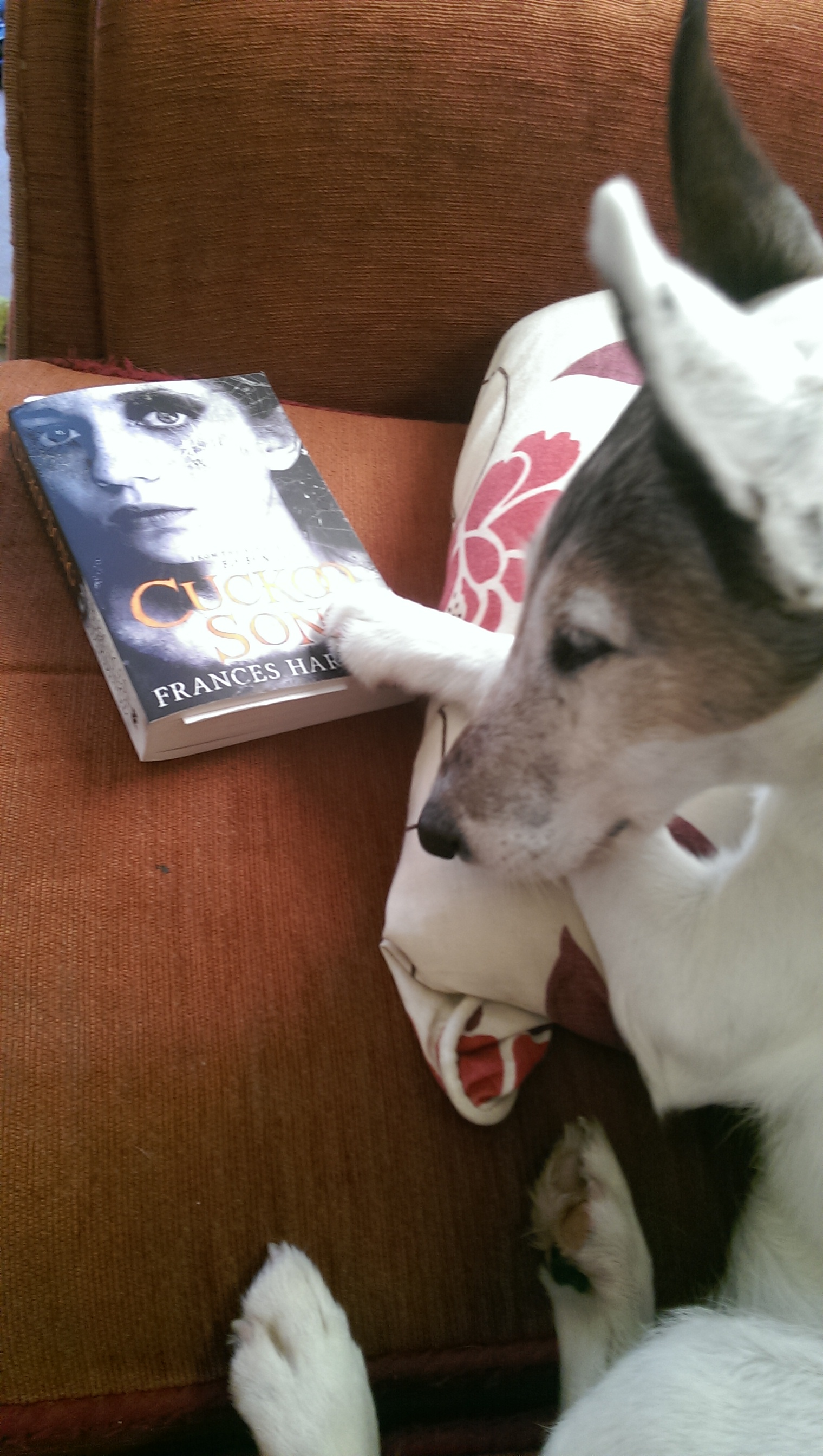
Of course every author wants Eddie to pose with their book now...

Of course every author wants Eddie to pose with their book now…

Well, not long after this I was contacted by her publisher and asked if I wanted a copy for review. Of course I said yes…

Unfortunately, being a very busy person, I have lately been very slow to get reviews out so here we are in September and I am only just getting round to putting my thoughts on this book down in a readable form.

Cuckoo Song is set in the fictitious English town of Ellchester, somewhere in Oxfordshire during the early 1920s. The post Great war vibe portrayed here is perfect for release in a year that sees the centenary of that war and the setting is vividly portrayed. Triss is a young girl who lives with her father (a famous architect credited with designing much of the town they live in), mother and younger sister (Penny). Her brother, Sebastian, died in the Great War leaving a fiancée and a grieving family behind.

The story begins with Triss having been rescued from almost drowning in a lake while the family are away on holiday. Following this incident, strange things begin to happen to her. She has gaps in her memory and a bizarre hunger that can only be satisfied by devouring her own toys and clothes. As time goes on, this strangeness tests her relationship with her parents and sister and her investigations into what has happened to her lead her to discover that there is more to her brother’s death than she had been told. She also delves into a hidden underbelly of the town ruled by a sinister being known as ‘The Architect’ and encounters the strangeness of that world, learning its secrets and dangers.

Hardinge deftly presents both the setting and the plot in a skilful manner, peeling back layers of world building and mystery in a way which has the reader slowly become aware of what is going on. This approach maintains the mystery as subtle clues you did not consider relevant slot into place and trigger small ‘ah ha’ moments at intervals. The setting starts out with a Downton Abby feel, all stiff gentlemen and upper middle class pomposity overlaid with a quaint olde worlde children’s book vibe, but soon develops hints of a world beneath that which is related more to Neil Gaiman’s Coraline – a dark, fey world of hidden evil and whimsy. The characters are also mostly well drawn and some, particularly Sebastian’s fiancée Violet and the Tailor Mr. Grace, are striking in their presence – the bold and adventurous, jazz loving  Flapper with the hidden sorrow and the quirky, friendly tailor with a sinister undertone. You come to care for Triss and the other characters, though Triss in her early appearances seems selfish and whiny she soon gains a backbone that turns her in to a true hero.

In all this was a very enjoyable read and one which I am sure children of all ages will enjoy.

D.A Lascelles is the author of Lurking Miscellany, Transitions (Mundania Press) and Gods of the Sea (Pulp Empires). He lives in Manchester UK. You can sometimes see him writing about Zombie porn on https://lurkingmusings.wordpress.com/ but he mostly blogs about books, vampires, science fiction and Terry Pratchett. He is inordinately proud of the fact that one of his Pratchett articles was referenced on the French version of the author’s Wikipedia page.

He would like to point out that having Eddie pose with a copy of your book is a special privilege reserved for those who have met Eddie and given him a stroke.

Facebook: https://www.facebook.com/DaLascelles

Twitter: @areteus

Buy Lurking Miscellany (paperback)

Buy Lurking Miscellany (Kindle)

Exit pursued by a Dalek… A tale of a fashionably late World Book Night

27 Sunday Apr 2014

Posted by D.A Lascelles in Musings

≈ 7 Comments

Tags

After the Funeral, Agatha Christie, Anna Percy, Ben Aaronovitch, books, Dalek, Dermot Glennon, Doctor Who, Ed Fortune, Fab Cafe, Flapjack Press, Frances Hardinge, free books, Jackie O'Hagan, Manchester, Manchester Museum, Ninfa Hayes, Poetry, R.A Smith, Rivers of London, Sarah Grace Logan, Starburst Magazine, TARDIS, Tony Curry, Transitions, World Book, World Book Night, Zach Roddis


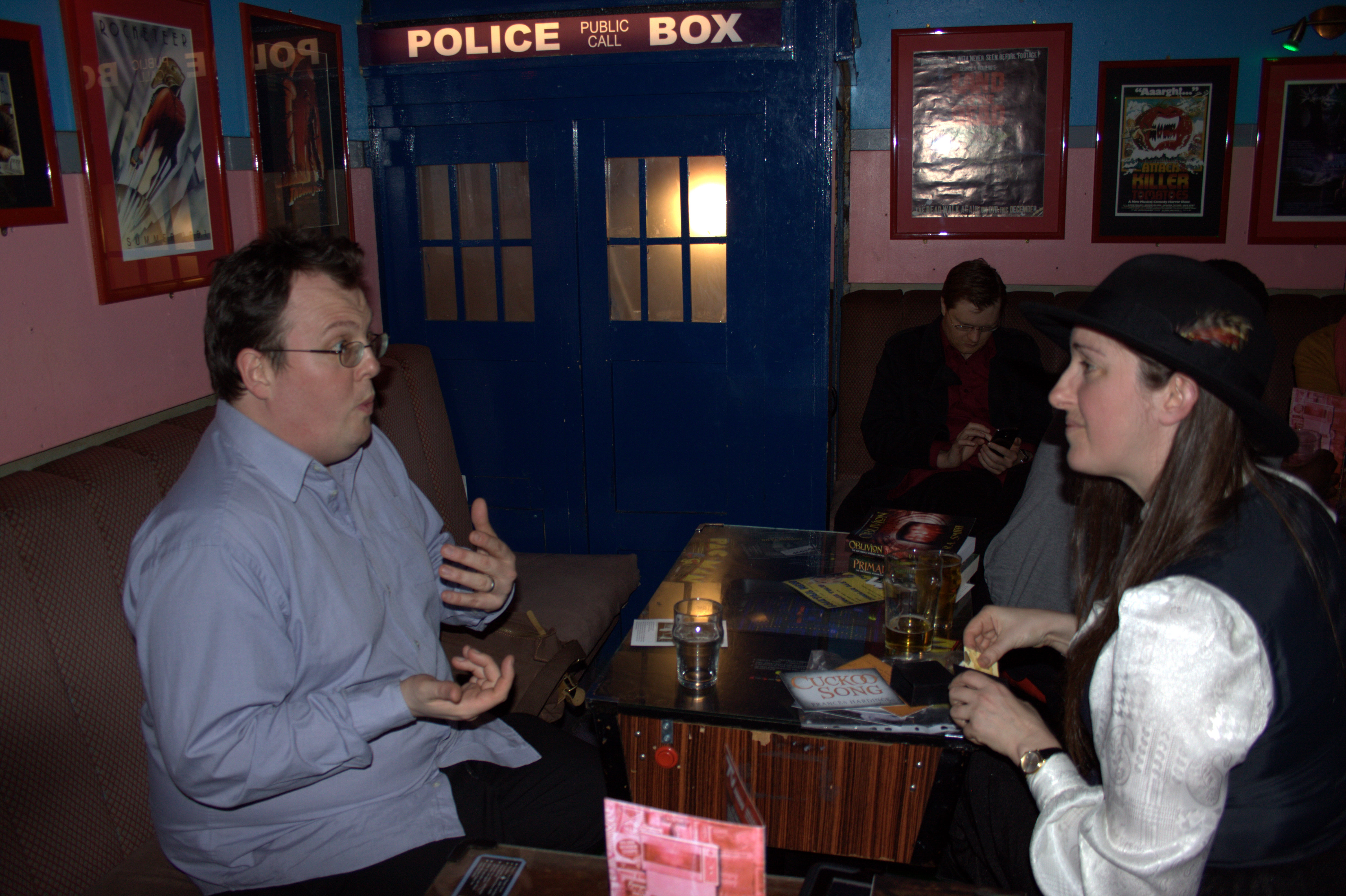
Myself and Ed Fortune sat in front of a TARDIS. Picture taken by Frances Hardinge

Myself and Ed Fortune sat in front of a TARDIS. Picture taken by Frances Hardinge

World Book Night happens annually on the same day as Shakespeare’s Death, the 23rd April. On this day, volunteers give out free books in order to encourage reading in those who do not read much. Being a World Book Night giver I was of course giving out books on that night…

Except I wasn’t. Because I was giving them away on the 24th April. A day late… Damned temporal distortions again.

That was the base concept behind the Fashionably Late World Book Night party at the Fab Café in the city centre of Manchester. To be fashionably late in giving away our books. So, I turned up at a Geek themed basement bar with a bag full of books and author Frances Hardinge in tow for a night of poetry, prose and free books.

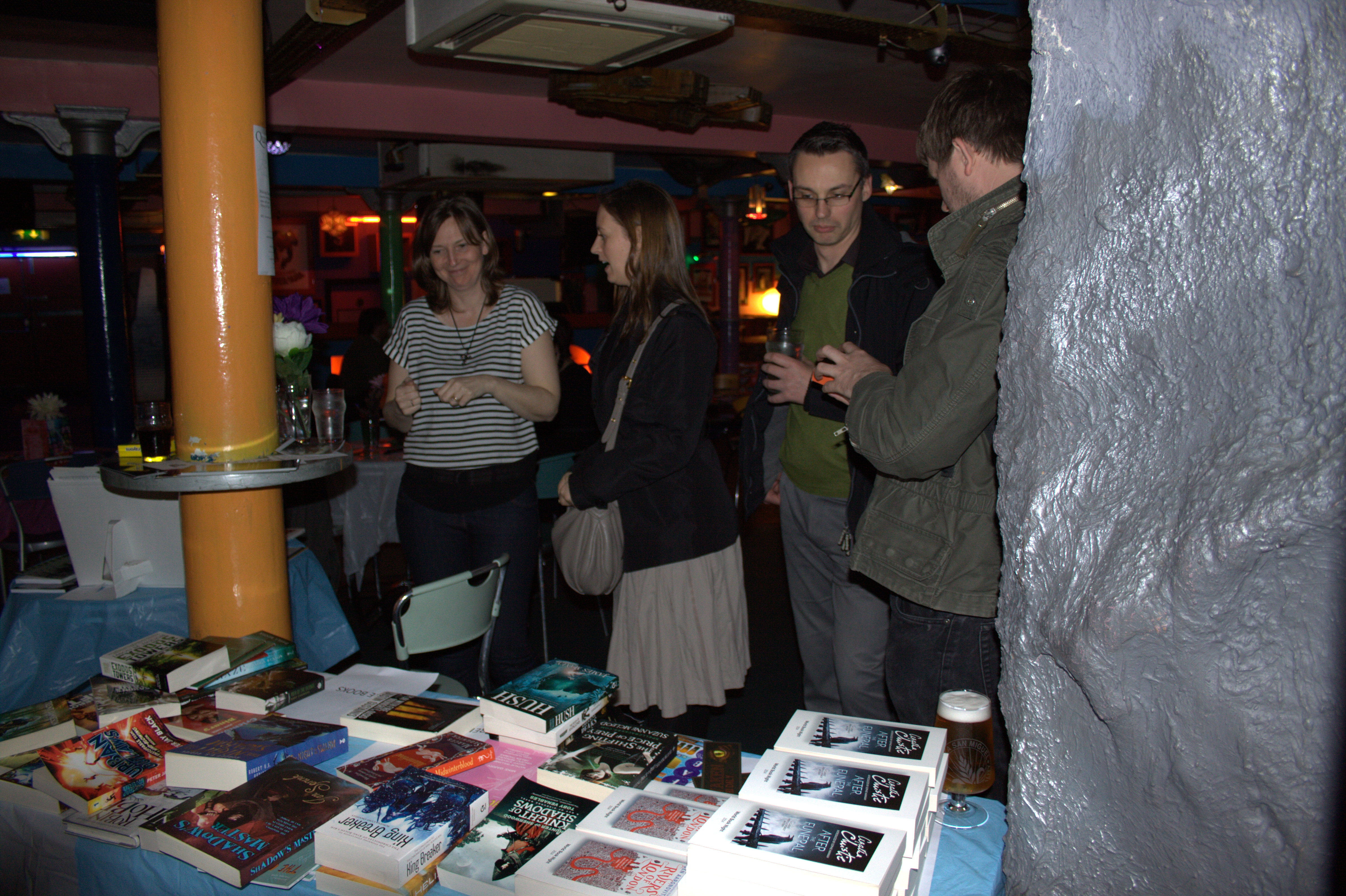
And there were a lot of free books:

freebooks6

Not only were there the 18 copies of Ben Aaronovitch’s Rivers of London and the 36 copies of Agatha Christie’s After the Funeral provided to our givers by the World Book Night charity but also a large collection of ex review copies of books that had been sent to the Starburst offices and which were now no longer needed. This meant that any SF or fantasy fan could walk out with quite a haul if they so chose and the murder mystery fans were not ignored either. The books proved very popular with the crowd in the venue. Some of them had come here just for the books, some of them had been drawn by the promise of readings by local writers and poets and the chance to hob nob with them. Many more had come because it was a Thursday night and they always went to Fab on a Thursday.

The readings and guest writers were also popular. Everywhere you went there were conversations between writers, poets and their fans in topics ranging from their latest books to why it is not possible to do a decent film version of Lovecraftian horror. The bar was doing a roaring trade and the atmosphere was friendly and open. The SF theme decorations added to the unique nature of the venue and had at least one contributor (who shall remain nameless) running around gleefully with a camera taking shots of Daleks, Cybermen and TARDIS’s left right and centre. I was also taking photos, of course, but in my case it was, um, for professional reasons.


hobnobbing7interview2


Even the presence of some of TVs most intimidating and scary villains did little to dampen the mood.


There was only one critic present at the event but he was notoriously brutal...

There was only one critic present at the event but he was notoriously brutal…

Though they did seem to lurk menacingly off stage whenever a writer was up doing their reading…

reading6

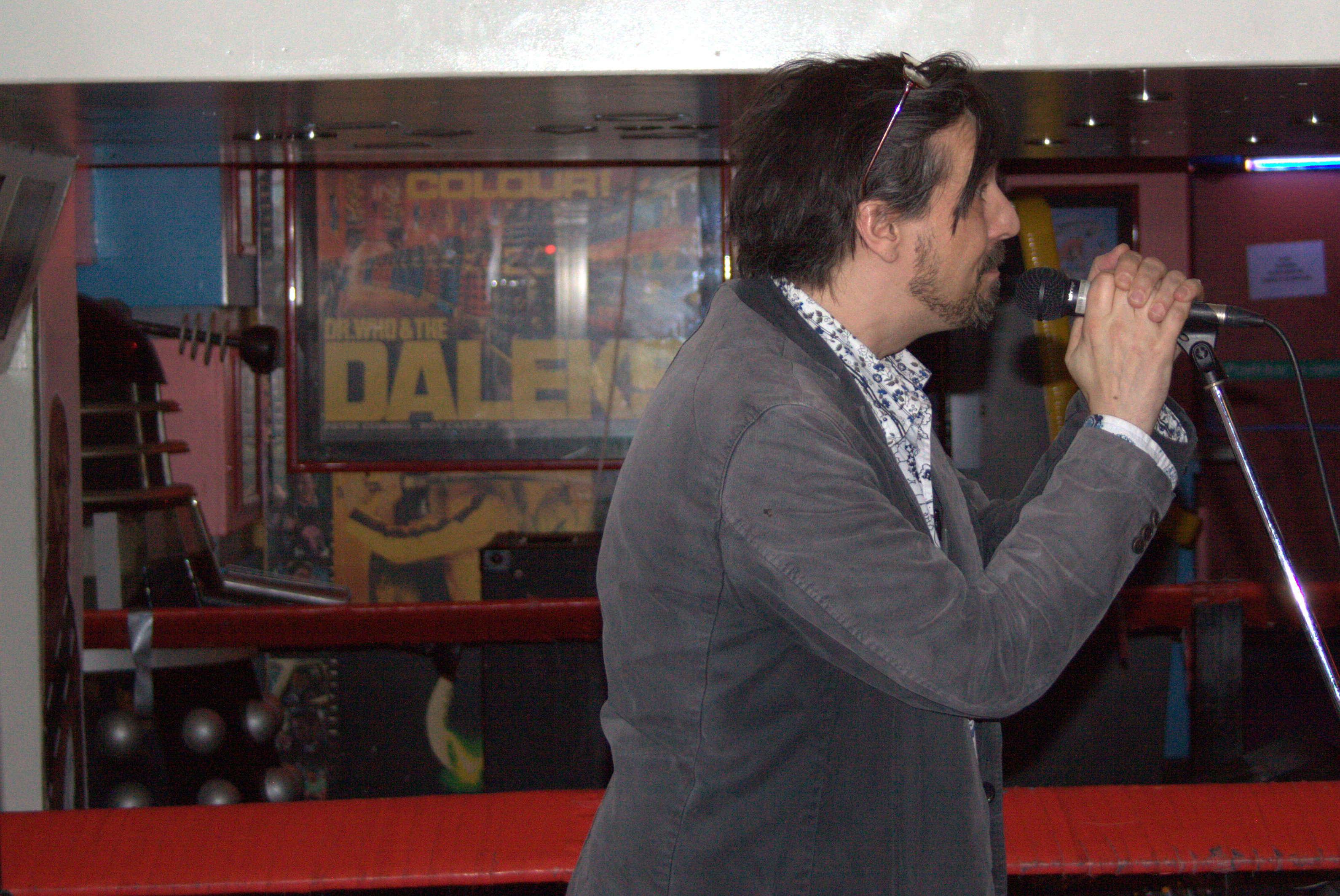
reading3However, the presence of the resident critic from the Skaro evening Chronicle (tagline ‘News to exterminate to’) did little to deter the performers. We opened with R.A Smith who read an extract from his debut novel, Oblivion Storm. It went down well, he got applause and was not exterminated.

This was followed by, um, me… reading an extract from Transitions. This was my first ever public reading and I was petrified. Yeah, I know, I’m a teacher as well as a writer and yes speaking in public (sometimes in front of very hostile audiences) is part of the job. It’s practically all the job (well, apart from the planning, marking, admin and occasional public appearances for publicity) so I shouldn’t have been so scared. Shouldn’t but I was. You see, there is a difference between standing there and talking freely about a topic you know a lot about and reading something out loud. With the former there is room for improvisation and the chance to have discussions and take questions from the audience – to get them involved and active in the process. Reading aloud is more static and you have to stick to the script. It is not the time to start subconsciously editing your own work and reading out this new edited version instead of the published one (which I may have done a little bit). Also, the lack of light made reading difficult (thankfully the representative of Flapjack Press was able to supply a reading light to those who came after me to solve this problem). Despite all these issues I managed to struggle through the section where Gaius Lucius meets the mad old man in the cave and got my own round of applause and absence of extermination.

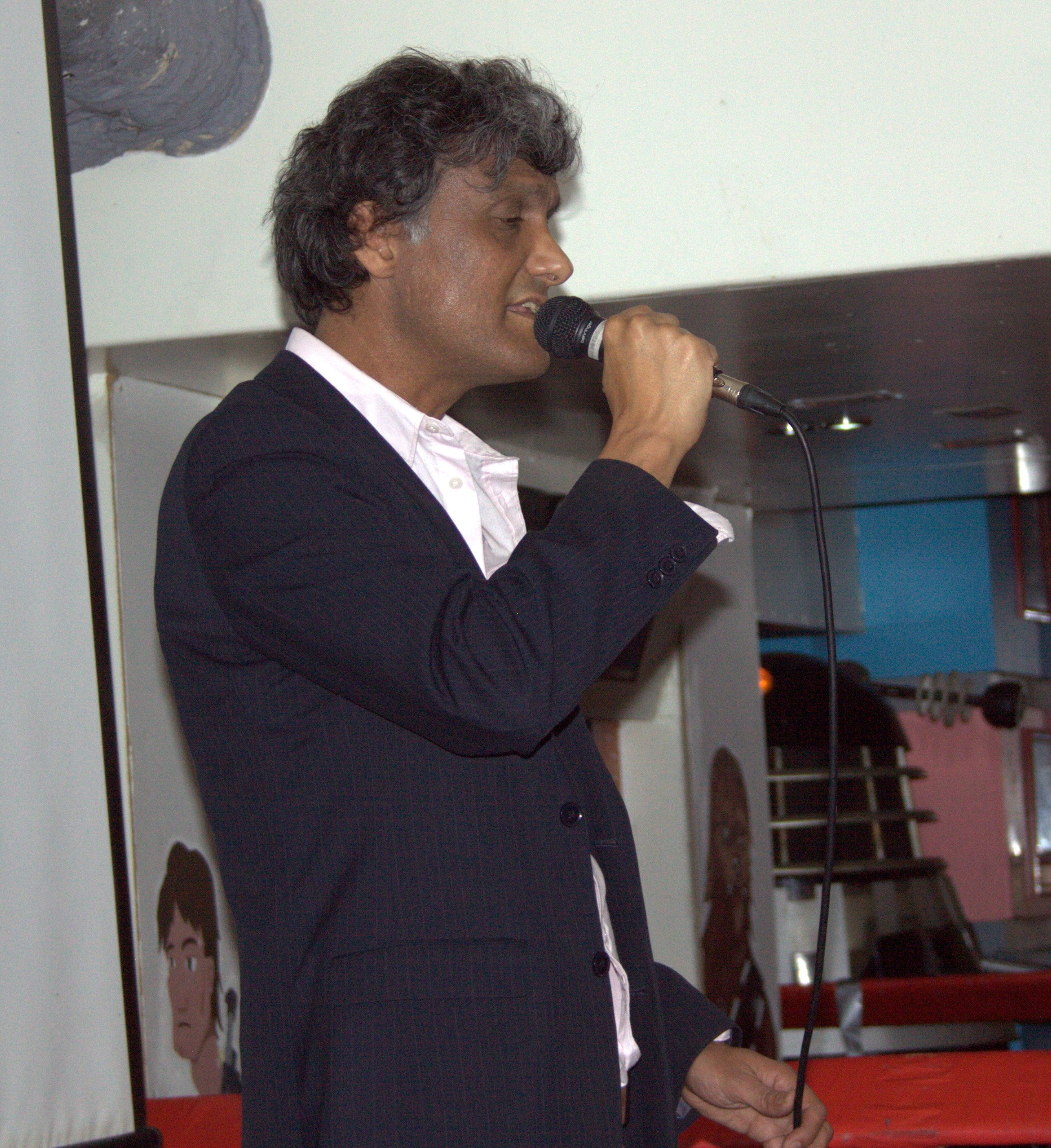
The poets and writers of Flapjack Press then took the stage in turns and wowed the audience with their poetry and prose. They included Tony Curry who read out poems relating to what it was like to be a man and Sarah Grace Logan whose poetry contrasted nicely with its more feminist vibe and her works based on the objects she sees daily in her work at the Manchester Museum.

reading10 reading11This was followed by Frances Hardinge who read out a chilling extract from her latest and as yet unreleased novel, Cuckoo Song. It was unfortunate that due to a postal service snafu there were no copies of this book available for sale or signing. If the expected parcel from her publisher had actually arrived that night would have been the first time and place that book would have been on sale in the reading15world – a true exclusive.

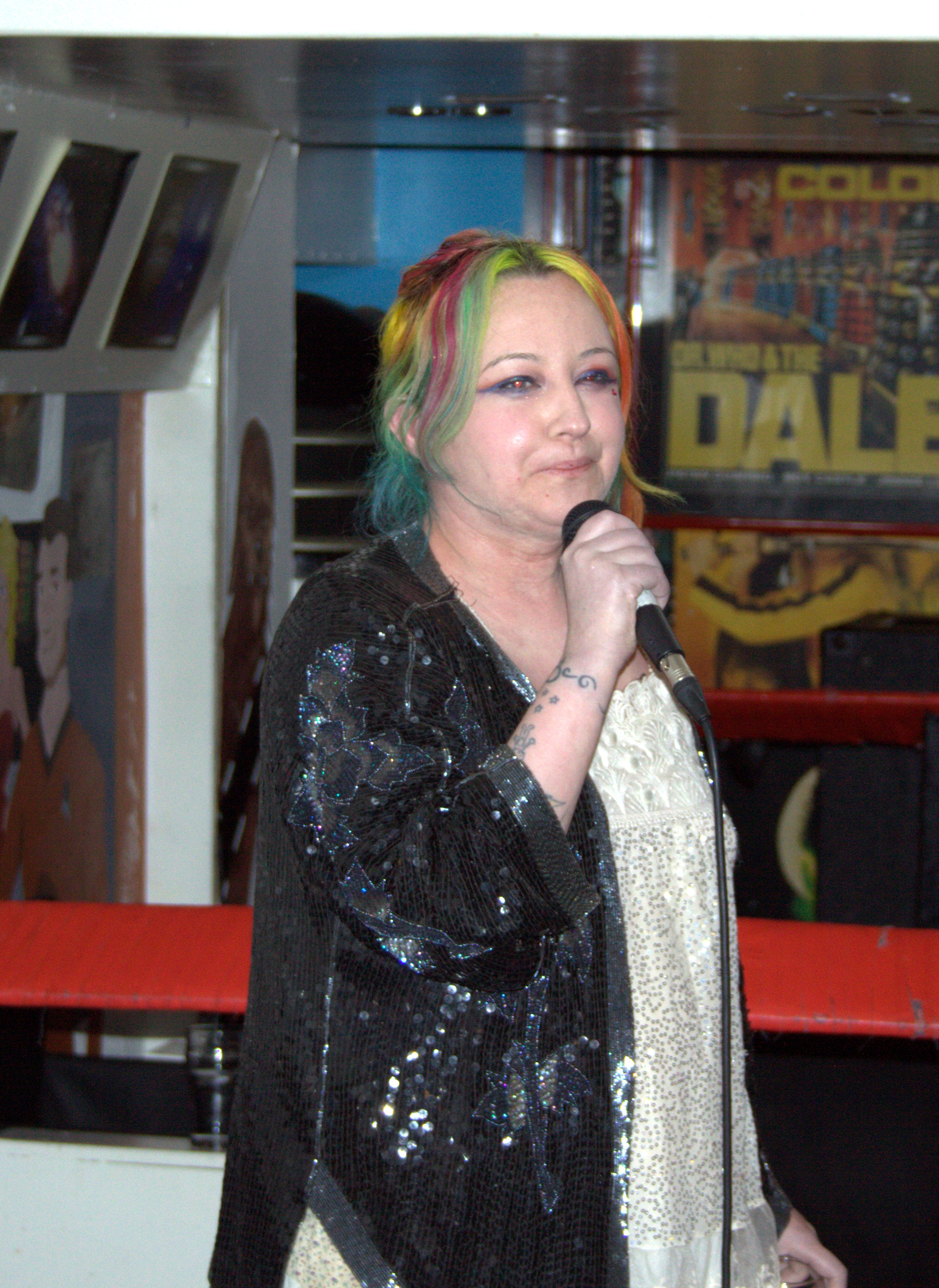
There was then a short break before the second half of the evening, this compered by another local poet, Anna Percy who also performed her own poetry. She was joined by Dermot Glennon, Zach reading25Roddis and the wonderfully anarchic comedy poetry of Jackie O’Hagan making this night a truly North Western literary occasion. All performers were well received by the audience and did sterling sets that ended in applause. More importantly, none of them were exterminated by the resident critic, for which I am sure they were all grateful.

Unfortunately we had to leave before the end, though I hear that the evening ended with dancing to nineties classics which I am sorry we missed. On the free book table as we left there were no more copies of Rivers of London and only a handful of copies of After the Funeral. The Starburst review copies were also much reduced, presumably meaning that there is now much more room in their offices for future ARCs. I grabbed a handful of the Agatha Christies as we said our final goodbyes to Anna Percy and the other contributors. Those copies were offered to students at my college the next morning and one was gifted to the college library.

Shown here are only a handful of the photographs I took that evening. I’d try to cram more in but I fear this blog post would be an endless sea of photography. If you want to seem more of them, you can go and look at my Flickr account. If any of the poets or writers who were there wish to  make use of any of these for their own web pages or blogs you may feel free. Contact me and I can send you the original copies. I’d appreciate an acknowledgement in return.

With such a successful night I am not sure how we can beat it next year but I am sure we will have a damn good try. There may have to be ballet dancing elephants.


Writing process questions

26 Saturday Apr 2014

Posted by D.A Lascelles in Musings

≈ 2 Comments

Tags

books, Gods of the Deep, gods of the sea, Neelima, Neelima Vinod, Ninfa Hayes, paranormal romance, R.A Smith, the writing process, Transitions, writing, Writing Process


Neelima Vinod tagged me in the Writing Process Blog Tour. You may remember Neelima from Vampire Month a few years back and she has since been doing rather well for herself. This meme is an interview meme about the writing process so those of you who are interested may find out more about how I do things… maybe…

 What am I working on?

Well, the official answer has to be ‘shaping the minds of the next generation in the hope of getting them into university’ because at the moment I am mostly working on my day job of teaching. However, you want the writer answer and for that I am doing two things. One is working on the final stages of Gods of the Deep, the sequel to Gods of the Sea. That is with an editor and I have a cover waiting to be revealed which is awesome. The other is editing a selection of my short stories for publication in a collection I am calling Lurking Miscellany in honour of this blog. In addition to those two writing based things, I also have something I only found out about yesterday which I am not allowed to talk about. Which is ironic as it will involve me talking…

 How does my work differ from others of its genre?

I am not sure I am qualified to be able to say my work is different to any others. I’d like to think that it is but I consider that to be a question that readers should answer rather than me. If pushed to answer I would like to say that Transitions differs from many other romance works because of the BBW element. However, there is a whole genre of romance fiction based on that concept. I could also say that Gods of the Sea was either a pirate story set in a fantasy universe or a fantasy story set in something other than the Tolkienesque fantasy setting – either way a slight deviation from cliché. However, many of my influences (such as Barbara Hambly) are writers who have done similar. There is a lot of fantasy out there now which is veering away from the Tolkien influences of my youth and I consider this to be a very good thing.

Why do I write what I do?

I started writing while in school and found that I enjoyed it a lot. However, I never really considered what I wrote as worth publishing and so I mainly did it for fun. Of my current published works, I wrote Transitions because of an interest in both Roman history, specifically the history of the town of my birth, and in the paranormal. Gods of the Sea I wrote because there was a call for submissions for a pirate themed anthology and I had an idea for it which I thought might work.

 How does my writing process work?

Chaotically. In the terminology of the Absolute Write forum, I am definitely a Panster (someone who writes by the seat of their pants) rather than a plotter (someone who carefully plans out the sequence of events in their story). Whenever I tried to write like a Plotter I found I could not do it and I actually think that everyone has their own preferred way of working which fits how their own mind works rather than there being any ‘one true way’. I often get ideas when my body is doing one thing (walking, tidying, etc.) and my mind is free to wander, the only problem is that I rarely get time to sit down and get those ideas down on paper. However, any idea that survives in my mind until I get time to write about it is likely to be one worth keeping while those that don’t I am probably better off losing. I also tend to be encouraged by necessity. Both of my published works have come about because there was a pressing need to get something submitted to a project I wanted to be involved in so I stopped wallowing in uncertainty and just got on with it.

I’ve also worked in different ways for different projects. For Gods of the Sea I basically sat down over Christmas and splurged out most of the story over a couple of days. I was not even aware of what I was writing until I reviewed it later. For Transitions, however, it was a more careful process and for that I had actually started out with the beginnings of two very different stories (an historic romance about a Roman soldier and his dying wife and a contemporary romance set in Birmingham) which I then realised could be merged into one.


Thank you Neelima for tagging me! You can read about her process here.

As part of the game, I’m tagging two writers for you to blog hop to.:

R.A Smith is the author of the wonderful Oblivion Storm and its sequel Primal Storm. You can find him on Facebook here.

Ninfa Hayes is the author of Bites and Nannies Inc . You can find her on Goodreads here.

[Vampire Month] Vampire Fiction in the 21st Century by Zoe Adams

27 Thursday Mar 2014

Posted by D.A Lascelles in Vampire Month

≈ 1 Comment

Tags

21st Century Vampires, Adult Vampires, Aiden, Black Dagger Brotherhood, books, guest blogging, JR Ward, Marilyn Manson, My Chemical Romance, Stephenie Meyer, Twilight, Vampire, Vampire Month, Vampires, Zoe Adams


Our last Vampire Month guest post for this year is from Zoe Adams. Here she talks about Vampires in the 21st Century.

I’ve read a few vampire books over the years. I essentially got hooked on them when I started secondary school, finding a group of friends who didn’t think I was weird because I read fantasy books. It was through these friends I found a love of rock music and found some lyrics Gothic, connecting to vampires – mainly during those teenage years it was Aiden, Marilyn Manson and My Chemical Romance.FacebookHomescreenImage

Listening to those bands now makes me want to write vampire fiction. Sadly, I’ve never got round to it, but it hasn’t stopped me dreaming or throwing imaginary barriers up against myself.

The main barrier in writing about vampires is the angle on which to approach them.

Young Adult vampire fiction very much follows a love triangle. Usually, the novel follows a female protagonist who meets a strange and alluring young man, who reveals that he is a vampire. Of course, this is forbidden love and we root for them to be together. Occasionally, a new breed of creature is thrown in, expanding the paranormal world entirely, and these type of books end up as a trilogy or a long lasting series.

Another take on it, is that our heroine, aware of the existing world of supernatural beings, falls in love with the vampire, and then has to choose between him and another supernatural, or the occasional human. Blood taking is usually involved and by the end of the series, love has won out. A cure has been found and they are happily human, or they are living together, forever youthful.

This is a common style of plot in the Young Adult paranormal fiction market, but it brings its problems with it. Mainly that these vampires are not real at all. The common debate is what self-respecting vampire would choose to spend time back at school, masquerading as a sulky teenage boy or girl? How does he or she manage the time at school – surely they must have to go into sunlight? What do they feed upon?

The Twilight Saga by Stephanie Meyer made young adult vampires her own, giving them sparkling skin in sunlight, and moving into a town that is nine times out of ten, gloomy, dull, dark and wet. This allows these shining beautiful creatures to walk in the daytime and interact with humans. The night still gives them the cover they need to chase animals, to drink their blood to sustain them.

Whether it’s my age, but I seem to be straying away from Young Adult vampires. I’m finding the plots predictable and the heroines dull and lifeless. The vampires aren’t even attractive to me anymore.

All these thoughts, opinions and impressions make me doubt my ability to write a new and stunning vampire novel, for young adults.

My other option would be to write an adult novel.

Whilst we have similar plot lines, the vampires are an entirely new breed. They are hunky, well built, dark, brooding creatures who have no qualms about drinking from a live human source. The vampires have been around for centuries and have learnt tricks of the trade – mainly that if they drink blood, they are able to flood it to a certain part of the body for pleasurable acts. More often than not, these carnal acts of love and lust are with humans, who find the act themselves sensual and a little bit scary.

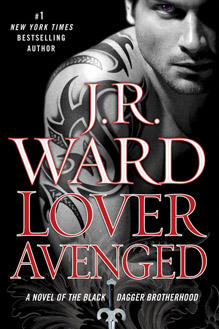
jrw-cover-lav-big    J. R. Ward’s Black Dagger Brotherhood vampires are these kinds. They are a society, brothers in arms as they defend their race against soulless creatures which threaten their existence. They use weapons – swords, guns, anything they can lay their hands on. They drive fast cars with reckless abandon. You can see the human side of these vampires and at the same time appreciate that Ward keeps them on track. Whilst stories and characters overlap in the series’, these vampires hunt and live for the night. They are damaged by the sun’s light, forcing them to have tinted cars and metal blinds in their homes. They drink blood from humans when they need to and often the Brothers drink from the loves of their lives, who are not always human, not always vampire.

The vampires connect to basic human emotions – struggling with addiction, their own inner psychological issues and finding a true place in the world.

Either way we look at the argument, vampires are still heavily popular. Books like the Twilight series and the Black Dagger Brotherhood connect and bring readers together from all over the world, from all walks of life. Readers emphasise with characters, find their own desires and learn things about themselves that they have never learnt before. For example, in Anne Rice’s novel, Interview with the Vampire, readers see a side to bonds of friendship and love. It is often insinuated that the time that Louis and Lestat spent together, they became lovers. In further novels, Lestat is unabashed in this belief. The bond they shared went deeper than the connection of creator and subservient, and this represents the belief that homosexuality is not a curse.

Bloggers and reporters alike will argue about these books places in society, but what they have to remember is that vampire fiction has been around for years, and will continue to sell years later, as the young and old alike continue to read them.

Bestselling Author Zoe Adams
 
Crushing Hearts and Black Butterfly Publishing
Hot Ink Press
Vamptasy Publishing
 
Facebook     Twitter     Amazon
IN THE SHADOWS, A VAMPIRE LURKS… by Megan Cashman

13 Thursday Mar 2014

Posted by D.A Lascelles in Musings, Vampire Month

≈ 2 Comments

Tags

books, guest posts, Lestat, Megan Cashman, Vampire, Vampire Month, Vampires


Today we have a guest post from Megan Cashman, author of The Dark Proposal. Here she speaks about the social isolation of vampires.

IN THE SHADOWS, A VAMPIRE LURKS…

                Vampires are often portrayed as living apart from the human world. They have to avoid sunlight, and humans are their blood source. These creatures of the night tend to rarely interact with humans on a personal level, and if they do, their motivations may not be so kind.Image

Which makes one wonder: how would a vampire see the human world? They live detached from it, sometimes for many centuries. Even a newborn vampire would have to eventually let go of their emotional connection to humans so they can adjust to their new existence.

So what does the human world mean to vampires, aside from being sources of nourishment? I would think they obviously see us as being physically weaker, and maybe that would inspire a vampire to see themselves as superior, at least physically. That doesn’t seem avoidable.

What about our intellectual level? If a vampire has been around for ages, then it has consumed enough knowledge and possibly intelligence to outdo many smart humans. Now if that vampire is a dimwit, then it is a question if that can be cured after many centuries.

How about our emotions? I’m sure vampires feel empathy for their own, but it will be hard for a vampire to have much empathy for its source of blood. How many of us think of cows or pigs when we eat beef or pork? You might if you were a vegetarian or vegan. But if a vampire drinks from humans, then it could have the same attitude that we have toward the animals we eat.

This is why vampires can be such frightening creatures. They are definitely stronger, possibly smarter, and less emotionally inclined towards us. Depending on the vampire’s age, there’s a chance that spending centuries living apart from humans has decreased any empathy levels the vampire might have. It certainly doesn’t help if humans are its source of blood, and it certainly doesn’t help that a vampire has more strength and life experience to likely look down at humans. So, I would not be so surprised if a vampire is callous and even brutal towards humans.

If it were compassionate toward humans, I would wonder its age. Is it a few years into its vampire existence? Then it’s still holding on to its humanity. A few decades old? Then its probably being nostalgic. A few centuries? I would say that compassion is an act and I would advise anyone to think twice of ever spending a few minutes with that vampire. Unless, of course, it has enough age and experience to trick anyone into thinking it is not a vampire, and one with ulterior motives.

If you are interested in learning more about Megan, feel free to explore the following links:

Blog: megancashmanbooks.wordpress.com
Twitter: @MeganCashman
Facebook: Facebook.com/megancashmanbooks
Goodreads: https://www.goodreads.com/author/show/6519000.Megan_Cashman
Kindle: http://www.amazon.com/dp/B009AL4RKE
Smashwords: https://www.smashwords.com/books/view/276775

[Vampire Month] Doing what you love by Isabella Favilli

06 Thursday Mar 2014

Posted by D.A Lascelles in Musings

≈ Leave a comment

Tags

art, Bites, books, Fine art, graphic designer, guest posts, horror, Isabella Favilli, Last of the Blood, Ninfa Hayes, Vampires


My name is Isabella Favilli and I was born in Rome in 1973, I moved in UK in 1999 and after spending nine years in Manchester I moved in Yorkshire with my boyfriend, my daughter and my pooch and lived there since. Isabella

I like to think about myself as born with a pencil in my hand, as I cannot recall a moment in my life in which I didn’t like drawing.

I can remember myself drawing as early as back to my first childhood memories; all I wished for were colours and sketch pads, I loved nothing more than to spend hours drawing the fantasy stories I created in my head.

I used to copy Manga cartoons, as they were incredibly popular in Italy back in the 80s and 90s.

At school I truly excelled in Artistic subjects so it seemed like a natural step when it came to my education to pursue my love for drawing too.

I always thought that I would have ended up attending Art Lyceum and then Art Academy, but when the time to make the choice came, I was advised to go for Graphic Design instead, because at the time it was a very sough after job and many schools in Italy were creating courses to be trained to such a career.

Nataliya_human I must admit, when I graduated I did leave with a much more refined hand and more expertise in various techniques but with hindsight, my first idea would have suited me best.

After spending a year working in a Graphic Design studio it became clear to me that Graphic Design was not my passion at all and that Fine Art was what I truly loved.

There was no room for an artist in the employment world, especially in Rome, where you are lucky if you get a cleaning job with recommendation. For many years I didn’t know what to do with myself but never stopped drawing just for the pleasure of it.

Eventually I gave up on making my talent a bread winner and left it for my pleasure only, I would just grab whatever job I could, and at some point I moved in UK.

I think I never really put the pencil/brush down for a long time, until I moved to Yorkshire and I became a stay at home mom.

I suppose I was too immersed in my new role that I felt like I really didn’t have time for myself, in fact at some point I felt like I forgot who I was.

I could feel I was unsatisfied with my life but could not really grasp why, until one random evening one year ago I found myself talking to a total stranger on Twitter.

This person had just spoken of how they totally moved from one career to another, doing what they really loved, they had described their feeling before deciding to become who they really wanted to be, and I saw myself in them: deep inside I was unsatisfied with who I was just like them had been.kiSS

So, I told them that, I told them I was feeling that way and I didn’t know anymore where I was going; they asked me what I enjoyed to do, and it came out as easy as a breath “drawing”, and I haven’t done it in ages.

Their reply to me was very simple and to the point “Then draw, do whatever makes you happy”.

It’s strange how sometimes, a random person can give you more insight to your true self that your own self, but that’s how I came back to my first love.

Together with drawing there is always been another passion/obsession, and that was vampires, so it is really no surprise my first subject after my re-awakening happened to be the character of Ninfa Hayes’ novel The Last Of The Blood.

KatrineI am currently working to turn the novel into a comic/manga, but I have noticed how  this subject seems to find me when I am planning to draw something else  too.

There is something incredibly sensual in drawing by hand, I cannot find the same feeling when I use a computer tablet or a graphic software. It is in the holding of your pencils, the brushing through the paper or the feeling of the colour, it is a physical sensation just as intense as a vampire kiss, not that I have ever been kissed by a vampire, but I guess the idea that I have of it mirrors sometimes my art: while consuming the graphite, squeezing the colour and spreading it on a piece of paper I create a new, strange immortal life, a bit like a vampire kiss.

I put my whole soul in any drawing I do, because most of all I draw for the love of it, and if it becomes my bread winner jolly good.


[Guest Post] Paige Dearth – write what you know.

18 Sunday Aug 2013

Posted by D.A Lascelles in Guest posts

≈ Leave a comment

Tags

Believe Like a Child, books, guest blogging, guest posts, Paige Dearth, Thriller, When Smiles Fade, Write what you know, writing


Making Connections Paige Dearth

Today we focus on the work of Paige Dearth, author of Believe Like a Child and When Smiles Fade.

In her debut novel, Believe like a Child, the main character Alessa is the victim of child abuse from her uncle. The story is one of redemption and of a woman taking control of her own life.

In When Smiles Fade, her latest novel released this year, the main character Emma is also abused as a child as you can see from this synopsis:

Emma was unloved from the moment she was born. Her earliest memory is being severely beaten by her father, Pepper Murphy, when she was just eight-yearsold. Seething with resentment over the sacrifice of his dreams for a woman he cares little about and children he never wanted, Pepper chooses to blame his older daughter. Her mother, Valerie, makes matters worse with her verbal abuse, leaving Emma isolated with a man that had no boundaries in punishing his daughter, taking his abuse to unimaginable levels. Emma’s father’s coldblooded beatings and the ultimate abuse to which he subjects her, lays the foundation of the person she becomes. As she matures into a resourceful teenager, she is unwilling and unable to stifle her desire for revenge. Reaching her breaking point she can no longer control the impulse to fight back and finally takes matters into her own hands. Having learned the art of hatred from her father and the mastery of manipulation from her mother, young Emma now sets out to make a better life for herself, leaving the memory of the abused child she had once been behind her. Hardened by the heartless brutality she encounters and the dangerous situations she must overcome in the course of her journey, she faces every challenge that comes her way in her quest for a normal life for herself and for those she loves. Finally a person emerges from within that guides her toward a better life until she learns of a secret that sets her on the path of ultimate redemption.

Both stories contain inspiration taken from Paige’s own life. She herself was a victim of child abuse at an early age and spent her childhood not believing that she had the potential to much in the way of ambition. When she finally went to college at the age of 29, she did not even believe that she was capable of passing the college level courses and yet she finally left college with an MBA 8 years later and a feeling that she had conquered her fear of learning. There followed a successful career in corporate America and finally a writing career that has seen her earn a finalist place in the thriller category of the National Indie Excellence Book Awards. Paige’s own life is an example of someone seeking to improve their lot.

So, both novels mirror events in Paige’s life, she has used her real life to inspire her writing. This ties in with the common author’s adage of ‘write what you know’. This saying is often mocked, especially in fantasy and SF, because you cannot ‘know’ what it is like to be a Dragon or an Orc or a wizard. However, this is applying an ad absurdum argument because there are still elements of a person’s life which will apply to any fictional character. Likewise in a suspense thriller, there are almost certainly going to be things in there that an author has not experienced but the trick is to take the things that have happened to you and apply them. Writing what you know is all about adding a level of emotional veracity to the writing that is conveyed to the reader. The use of the term ‘what you know’ is actually a misnomer as it really is not about knowledge at all. Knowledge is what you get from books and, these days, from the internet – whether by looking something up on Google or (as commonly happens) asking a question on a forum populated by experts in that area. Instead it is all about the experience – the emotional and physical impact that this has on you as an individual. I believe that this level of veracity is important. You don’t need to necessarily add emotional context to every event in your story but it does help if you have some personal life experiences you can call upon if needed. They may not be as traumatic as those described here, I would not wish such things on anyone if it could be at all avoided, but any life event can be useful – the tastes of food, the smell of the inside of a car, what it feels like to spend all day in a library reading ancient books. An author should be prepared to reflect upon their experiences and consider what they can learn from them and what they can use to improve their writing.

You can find out more about Paige on her website: www.paigedearth.com.

You can buy her books on the following links:

Believe Like a Child (US)

Believe Like a Child (UK)

When Smiles Fade (US)

When Smiles Fade (UK)

Later this year she also plans to release her third novel so please keep an eye out for that.

Dianna Hardy Giveaway!

26 Friday Jul 2013

Posted by D.A Lascelles in Giveaway

≈ 8 Comments

Tags

books, Cry of the Wolf, Dianna Hardy, entertainment, Fur and Fangs Giveaway, Giveaway


Yesterday you were treated to an extract from Cry of the Wolf. Today you are to be treated to a giveaway of swag related to all things Dianna Hardy. This swag bag contains goodies such as a fangs and fur fridge magnet and quote bookmarks.

Tameside-20130725-00291

To enter this giveaway, click on the Rafflecopter link below and perform each of the tasks listed to gain extra entries. If you comment on this post below you also gain an entry into the big giveaway on Dianna’s own blog as well. You only have a week to enter this giveaway so you had better get clicking before the timer runs out!

a Rafflecopter giveaway

← Older posts

Twitter Updates

Tweets by areteus

Like me on Facebook

Like me on Facebook

Enter your email address to follow this blog and receive notifications of new posts by email.

Join the Lurkers

  • Alex James's avatar
  • D.A Lascelles's avatar

Enter your email address to follow this blog and receive notifications of new posts by email.

Join 909 other subscribers

Recent Posts

  • I’m (apparently) a cover designer!
  • Release day! Coch a Gwyn
  • Cyberpunk look
  • Eastercon Artshow
  • Interview: Gillian Polack

Create a free website or blog at WordPress.com.

  • Subscribe Subscribed
    • Lurking Musings
    • Join 129 other subscribers
    • Already have a WordPress.com account? Log in now.
    • Lurking Musings
    • Subscribe Subscribed
    • Sign up
    • Log in
    • Report this content
    • View site in Reader
    • Manage subscriptions
    • Collapse this bar
 

Loading Comments...