• …
  • About
  • Vampire Month Alumni
  • World Book Night

Lurking Musings

~ Musings of a newly published writer

Lurking Musings

Author Archives: D.A Lascelles

[Vampire Month] Rose Jones interview

22 Tuesday Mar 2016

Posted by D.A Lascelles in Musings, Vampire Month

≈ 1 Comment

Tags

A word in your ear, Ann Rice, Bath, Dracula, Greek Myth, guest posts, HG Wells, House of Lillith, Moonlight, Paul Gallico, Prague, Randall and Hopkirk (deceased), Rose Jones, Rose Senior, Shades, Snow Goose, White Thorn


Our next victim is Rose Jones, author of the Shades series among other things. Rose is currently the fourth and therefore last victim our vampiric interviewer has lined up this year, though there were rumblings of a fifth person who had caught our attention… whether our interviewer manages to catch that person before the end of the month remains to be seen… if not we can leave them hanging in the pantry for next year.
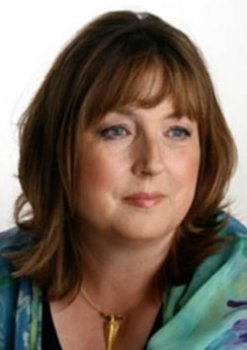
41toqhyyppl-_ux250_


  • What is the earliest memory you have of writing? What did you write about?


I still have notebooks from my Primary School days where I wrote stories about time travel at about age seven. My first published piece was a poem in a school magazine when I was eleven, about rainbows and thunderstorms.

  • When did you decide to become a professional writer? Why did you take this step?


I’ve spent too much time keeping my writing to myself. I think at some point to have to publish somewhere, just to stop tweaking and re-tweaking a project. Like a painter, if you spend too much time messing with the composition you can ruin it. Besides, I like to share. Story telling is all about sharing isn’t it? Making some money out of it would be nice too, but that’s not why I write.

  • What would you consider to be your greatest strength as a writer? What about your greatest weakness? How do you overcome this weakness?


As a teenager around 13, I wrote two scripts for my then favourite TV show (Randall & Hopkirk Deceased) – I thought I could do as well, if not better than one particular scriptwriter on the show. I think that ever since then my main strength has been in dialogue. I hate writing long exposition and tedious descriptions and I prefer not to dump long words that make you reach for the dictionary! I like to keep things simple and put in just enough to let the reader form their own world from my words.

I think my greatest weakness is dwelling on criticisms and procrastinating too much. Writing is a very personal thing; well it is for me; but I have learned to harden myself to at least constructive criticism. We need to understand how others see our work and it’s an important part of the writer’s journey. We can’t grow unless we learn and we can’t learn unless we can accept criticism. Procrastination is something I’m still working on!

  • Tell us about the place where you live. Have you ever derived any inspiration from your home or from anywhere you have visited?


I live in a small town between Bristol and Bath in the UK. I haven’t really used my home environment as inspiration, but I have used past experiences and places where I have been on holiday. Sometimes I pick a location just because I want to get some spatial awareness of it for a project – such as Prague for my current project, White Thorn. I’m looking forward to seeing if it got it right in Savannah, for my Shades plotline. As a geographer and a historian I think it’s important to maintain spatial continuity and research your material well enough to avoid the major faux pas. Quite often I find that researching a place or a time gives me ideas to advance the story I’m working on. It’s one of the good reasons to side track and procrastinate!

  • Which book, if any, would you consider to be your greatest influence and inspiration?
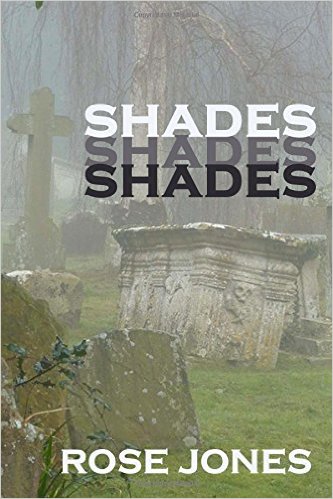
 

51cc7ly30ol-_sx331_bo1204203200_Difficult question as there isn’t just one. As a child I absorbed the Greek myths and Arabian Nights and the various fairy stories. I also loved the Trigan Empire strips, which probably spurred on my interest in Science Fiction – along with Thunderbirds and Star Trek. My favourite book is probably Paul Gallico’s The Snow Goose and my favourite Science Fiction book is HG Wells’ The Invisible Man. When I write SF, it tends not to be hard science, but soft, psychological issues. I like using mythology and SF to play with ideas that plague us in the modern world. It gives you a different perspective.

  • What drove you to write about Vampires?


I’ve always been interested in mythology and the supernatural and I went through a phase in my youth where I read everything I could about ghosts and spirits. Liminal spaces and metaphysics fascinate me. Playing with ideas in fiction is a way to try and get a handle on these slippery issues.

As for vampires, I woke up one morning with a cracker of an idea involving a character who might be seen as one. I wrote it down real quick as the detail of dreams tend to vanish like a will o’the wisp and it’s still in my box of futures. It’ll be a cracker when I finally get round to it, but it still needs a lot more work.

I was never really interested in vampires in fiction though until the short-lived TV series Moonlight. I enjoyed the different take on the genre as I was never into horror and gratuitous bloodletting. This is still the case. In my opinion, there always has to be a reason for someone to behave the way they do. When the show was cancelled, I decided to try my hand at writing in the genre with a similar sympathetic vein (!) and in the process of research, got stuck in to all the vampire fiction out there to see where mine might fit and to try and provide something different. I read the good, the bad and the atrocious, the classical and the modern, but in the absence of much ‘factual’ evidence, I found out how writers had manipulated the mythology for their own purposes. I have now followed suit and done the same myself.

  • What do you think is the attraction for Vampire fiction? Why is it such a popular topic?


It’s the lure of immortality and how we might cope with it. It’s how we deal with otherness and the scope of time. In some areas, like the JR Ward Black Dagger Brotherhood, and its knock offs, it’s definitely the sex. For me it’s how you cope with desire and how you learn to fit in with a world that is different from you. The genre appeals to young adults because for teenagers, it’s a time of change in their lives, of feeling alienated, of having feelings and emotions they might have difficulty controlling or expressing. They also feel as if they’re immortal.

I personally like the vampire novels that have a historical flashback element. You can see the past through their eyes, as well as their present. A previous favourite show/film was Highlander, which did this really well. The immortals in that are similar to vampires, but they’re not bloodsuckers. Another current favourite is the Outlander series (books and TV – no vampires, but the person out of time trope and the history hopping is similar)

  • In a fight between all the greatest Vampires of fiction, who do you think would come out on top?


In the literary realm, I still don’t think you can beat Dracula, but Marcus in Ann Rice’s books, rates up there, as does Yarbro’s Count St Germain. I also like Matthew in Deborah Harkness’s All Souls trilogy, Henry in Blood Ties and the Charlaine Harris books (but not the TV series). TV it has to be Mick St John and Eric Northman (So sue me, I made an exception to the True Blood, but then he was my favourite in the books too).

  • What about in some other contest such as sexiness or dress sense? Who would win that one?


Are we talking vampires or me here? As Mick St John said in Moonlight ‘perpetual coolness is the vampires’ curse’. I just dress for comfort, but try to be quirky where I can. Sexiness – that’s none of your business! As for sexy vampires, it’s Mick and Eric for me.

  • How well do you think one of your characters would fare against the winner(s) of the above?


They’d definitely kick ass whoever they were up against. After all, some of them have managed to survive for thousands of years. My male protagonist is a newbie, but he’s learning and being taught by the best. He has a conscience, but that’s not going to stop him surviving and protecting the people he loves.

  • Tell us the basic premise behind your latest novel. 51linlhvlal-_sx258_bo1204203200_


White Thorn is the third novel in the Shades series, the first two being Shades and House of Lilith. The first two books interweave the story of the main protagonist and his associates with the story of the characters they play on the TV show they are making. This means that you get two completely different novels between one set of covers, linked by the actors. This gave me an opportunity to write two different versions of the vampire genre. Flashbacks with a difference! In the third book, my protagonist is still acting, but the Shades TV series is over, so the storyline is concentrated just on the problems he has to face in real life. I am hoping to eventually write the story of the film he is making, but it will be a standalone Noir novella.

At the beginning of this third novel, my protagonist, Alex Keating, is still coming to terms with the fallout from events in House of Lilith, as well as with his new life as a vampire. The story picks up from the end of the last book which ended with him and his ancient vampire wife, Lilith going to visit the others of her kind. He then comes back to a new filming project and has to get back to pretending he’s a normal human. He and his assistant, Annabel, go off to Prague to film a cold war drama.

Alex hopes that his life will settle down after the excitement of his first year as a vampire, but it seems trouble can be found in Eastern Europe, not least from his mortal co star, who seems determined to get him in her bed. The filming does not run smoothly and he is running out of blood supplies, due to delays on the production and a rogue vampire who seems to have an agenda of his own. This results in Alex being staked by a vampire-killing priest and rescued by another of his kind who is known for writing historical fiction. Together they hunt for a vampire serial killer who is murdering women in the city. Alex finds that real life seems determined to overshadow his acting yet again. The denouement of the story happens with a fight to the death on a rain soaked night on the roof of St Vitus Cathedral. There are flashbacks in this novel, but this time they give the reader the back story of the serial killer.


Bio:

Rose has been putting pen to paper and fingers to keyboard all her adult life. She lives near Bath, UK with her ‘rocket scientist’ husband and a house full of books and quirky stuff. She considers herself to be a recorder of moments in time and is a keen photographer as well as a writer. The picture for the covers of her books were taken by her. She has a Masters in Cultural Astronomy and Astrology and a love of all things mythological, paranormal, really ancient and really futuristic. She loves to travel, both in body and mind. She doesn’t really mind where, so long as it’s interesting and there’s something to learn.

Listen to two of Rose’s short stories as performed by actors from Word in Your Ear  in Bath at these links:

http://www.awordinyourear.org.uk/storyfridayarchive/story-fridays-harvest/

http://www.awordinyourear.org.uk/storyfridayarchive/black-sheep-2/


[EasterCon] Panel discussion

20 Sunday Mar 2016

Posted by D.A Lascelles in Musings

≈ 1 Comment

Tags

Deansgate, EasterCon, Jacey Bedford, Justina Robson, Kate Soley Barton, Manchester, Mancunicon, Romance, Ruth Frances Long, SF&F and Romance


 Taking a brief break from Vampire Month while I talk to you about what I am doing over EasterCon…

The programme for the weekend is now live and can be seen and downloaded here:

https://www.mancunicon.org.uk/whats-on/programme/

On there you will see the following:cuv8kshxiaakb4a

True Love and Trophies (Panel) 19:00 (1 hour) in Room 6

Ruth Frances Long (m), Jacey Bedford, D.A. Lascelles, Justina Robson and Kate Soley Barton

The link between SF&F and Romance. Romance may be the ultimate crossover genre, found in everything from horror to hard SF, urban fantasy to space opera. But it can be a two-edged sword — nothing makes the audience happier than True Love Winning Against All Odds, but few things can make a reader wince as much as the Shoehorned In Love Story, The Girl As Reward, or the Completely Inappropriate Time To Declare One’s Feelings. Join our panel for a discussion about what SF and fantasy can learn from the romance genre, how speculative narratives are changed by the female gaze, and how to craft a believable love story in the most extraordinary settings.

So, yes… this is where you can definitely find me over the weekend, in room 6 at 7pm talking about romance. With some pretty awesome folks by the looks of it. The rest of the weekend I will be in and out, checking out other panels and generally meeting people. It is looking like it might be a  very interesting weekend.

If you are already a member of the conference then make sure you pop along to see me in my panel (and please take photos!¬ No one ever seems to get photos of me on panels and stuff).. If you are not a member of the conference already then you may be out of luck as the places are now all filled. Though you may get lucky…

If you see me around the conference make sure you say hi. I may be carrying a stock of Tea Society and Lurker badges…

I also plan to do a blog post of the weekend here, with my own photos. So check back here to see what I did and where I went and who I talked to…

Now, we can return to our scheduled programming… with our next Vampire Month victim lined up ready for Tuesday…


[Vampire Month] Mixing fact with fiction: with The Beatles, Religious Cults and is the truth out there? by Martin Tracey

17 Thursday Mar 2016

Posted by D.A Lascelles in Musings, Vampire Month

≈ Leave a comment

Tags

author, conspiracy theory, cult, Dan Brown, Fact, Fiction, Football, Illuminati, King Henry VIII, Martin Tracey, secret society, serial killer, Sutton Park, The Beatles, Vampire Month


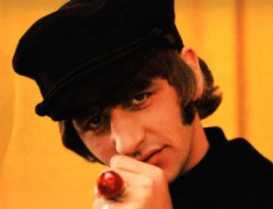
ringo65When John, Paul, George and Ringo appeared in the films A Hard Day’s Night and Help! they basically played themselves – the four cheeky lads from Liverpool – quick witted, dressed in collarless suits performing the best music of the day (and beyond actually) crafted by their own fair hands. But of course the plots that entwined the Beatles in those movies were fictitious: Paul’s fictional grandad in the form of Wilfred Brambell accompanying the boys on the train journey in A Hard Day’s Night and Ringo’s ring being sought after by an exotic cult in Help! Because they maintained their characters in fiction as in real life it opened up a door for their fans to somehow get an authentic insight of their idols, and no matter how absurd the storyline may be, it became a believable journey for the viewer (except perhaps the pursuit of Ringo’s ring!).

103_0397The first time I personally took note of a firm intention to mix fact with fiction in the literary world was through Dan Brown’s novels featuring the fictional character Professor Robert Langdon, a Harvard University professor of religious iconology and symbology. Brown’s novels Angels & Demons, The Da Vinci Code and The Lost Symbol introduces us to mind opening themes such as a bloodline of Jesus Christ, secret societies, the Masons, Opus Dei, the Illuminati and the Knights Templar. Some of these exist or existed. Fact. But as one reads Brown’s undoubted page turners it is often difficult to fathom exactly which is fiction and which is fact. And there you have it – suddenly the story is believable no matter how extreme the journey may take us. The reader can connect on an emotional level yet still be wildly entertained.

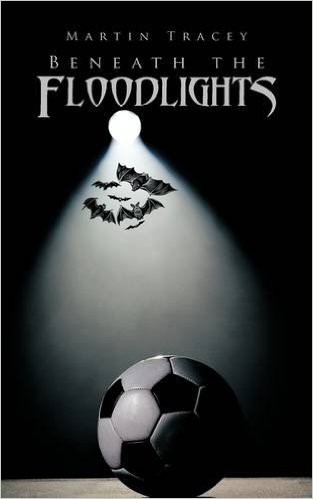
I write novels in the hope that they too are page turners. I like to stretch the boundaries ofmind guerilla-revised reality and I weave in facts with fiction to assist with that journey remaining believable. In Beneath the Floodlights I introduce the concept of vampires merging with a football team. Pretty random huh? One injection of fact I use in that particular novel is setting much of the book in Sutton Park, 2000 acres including ancient woodlands. Sutton Park is the seventh largest urban park in Europe and it is soaked in history. By the 10th century Sutton Park was established as a Royal Forest by the Anglo Saxon kings of Mercia and by the early 12th century, the Normans used it as a deer park. The land was then given to the people of Sutton Coldfield by King Henry VIII in 1528 and it had been used by that very same king for hunting. A bonafide roman road also cuts through a section of the park. So by using these facts, straight away I had a solid foundation to create a gripping tale.
In my latest book Mind Guerrilla, I perhaps put a toe in Brown’s water by introducing the perfectly legitimate Institute of Noetic Science, but also the ‘secret’ activities of mind control programmes, groomed assassins and murders of famous people. Much already speculated in the public domain, often coupled with compelling evidence – yet often unproven in a court of law – dismissed as far-fetched conspiracy theories. Or, perhaps there really does exist a hidden force or hierarchy that are simply untouchable controlling such matters. Do societies and protocols really exist that never see the light of day for the unassuming Joe Public? There’s a lot of thought provoking stuff out there, take a look via google and You Tube, but I’ll let you be the judge. But again what a great basis for my story. My hero Detective suffers from a very real illness in Multiple Sclerosis yet he can perform acts of mind over matter – again not something we come across everyday yet acts of telekinesis are documented as long ago as 1890 by Russian psychical researcher Alexander N. Aksakof. My serial killer, ‘The Crucifier’, is likened to a number of well-known serial killers. Charles Manson and his Family is likened to my Religious Cult, the Adonijah Truthsters, and Manson’s fictional offspring in the form of two evil twins continue his vision of interpreting Beatles songs as a green light to perform acts of evil.

So when mixing facts with fiction it provides a conundrum for the reader. The crossover of the two worlds doesn’t altogether provide clarity of what is fiction and what is truth, which means that the page turning and engaging story could… just could…happen.

And when an author can connect with the reader his/her work is done.

Both Beneath the Floodlights and Mind Guerrilla can be found at my Amazon author page:

http://www.amazon.co.uk/Martin-Tracey/e/B009ANTBWG/ref=sr_ntt_srch_lnk_1?qid=1456774555&sr=8-1

Martin’s Blog: https://martintracey.wordpress.com/

Twitter: @MartinTracey1

Email: martinpaperbackwriter@yahoo.co.uk

www.martintracey.co.uk


[Vampire Month] Martin Tracey interview

15 Tuesday Mar 2016

Posted by D.A Lascelles in Musings, Vampire Month

≈ Leave a comment

Tags

Ann Rice, Beneath the Floodlights, Birmingham, Brad Pitt, Bram Stoker, Dracula, Lestat, Martin Tracey, Sutton Park, Tom Cruise


The third victim for Vampire month this year is Martin Tracey, author of Beneath the Floodlights, a book combining Vampires with Football (that’s Soccer for our American readers). Here he answers the questions and Wednesday he entertains us with a blog post.

1) What is the earliest memory you have of writing? What did you write about?

As a young schoolboy I won 2 back to back national story writing competitions, one was about the dangers of playing on building sites and the other was keeping safe when crossing the road. The latter saw me creating a magic ice cream van which appeared like a superhero offering safety advice, so from an early age I was destined to write about supernatural elements.103_0397
2) When did you decide to become a professional writer? Why did you take this step?

My debut novel Beneath the Floodlights was released in 2011 and it was vampire themed. Building on my answer to question 1, my writing creativity evolved into song writing and becoming a pop star was more on my agenda than becoming an author. I had some musical success via supporting the Fine Young Cannibals & securing my song Raging Bull on the album Old Gold Anthems – The Songs of Wolves, but then as ‘stardom’ seemed to be passing me by as I reached the ripe old age of 30 plus, I remembered the story writing success of my younger years and that famous cliché ‘everyone has a book inside them’. However, I haven’t stopped at one book because I simply love the novel writing process.

3) What would you consider to be your greatest strength as a writer? What about your greatest weakness? How do you overcome this weakness?

My greatest strengths are: working within a framework rather than a rigid plan which enables me to explore many twists and turns and subplots in order to keep the reader engaged; writing in a style that comes over as honest and therefore believable even when writing about the paranormal – I have a knack of telling great stories as opposed to being a literary genius like the ‘classic’ writers of yesteryear. My weakness is definitely trying to devote enough time to my craft. Other writers are far more prolific with their output than I am, and I find juggling life with writing extremely challenging. I am trying to discipline myself to find more time.

41grui6y21l-_sx311_bo1204203200_4) Tell us about the place where you live. Have you ever derived any inspiration from your home or from anywhere you have visited?

I live in Birmingham and Birmingham and the surrounding areas feature heavily in my books. In Beneath the Floodlights I use Sutton Park as the training base for the footballers and I have the world’s first vampire buried there. Sutton Park is centuries old and soaked in history. It is amazing to think that this piece of unspoilt land is in Birmingham, but such historical points to note are King Henry VIII using the land to hunt deer and a Roman road still exists within the park. Both references are utilised in Beneath the Floodlights.

5) Which book, if any, would you consider to be your greatest influence and inspiration?

That’s a tough one. Not the book itself but more the concept around the book and its character has inspired me which is Dracula by Bram Stoker. Sorry to be a bit obvious there but if writing about vampires its influence can’t be ignored, much like the influence of The Beatles can’t be ignored in the music world. A vampire book that I also found inspiring is The Travelling Vampire Show by Richard Laymon. In terms of inspiring authors, I like Peter James as he manages to weave supernatural elements into very believable and entertaining stories, Martina Cole for her straight-talking style and Dan Brown for leading the way for mixing fact with fiction. All of these authors can be seen as inspiring my work.
6) What drove you to write about Vampires?

Since an early age I’ve always been fascinated by werewolves, ghosts and of course vampires. My original idea for Beneath the Floodlights was to use werewolves but then I felt that vampires had more scope with the plot and the two films of The Lost Boys and From Dusk till Dawn were a huge inspiration

7) What do you think is the attraction for Vampire fiction? Why is it such a popular topic?

That’s a great question and perhaps a very subjective debate could be had. However, for 000_0003 (2)me I think it opens up temptation in the mind. ‘Lust’ and even ‘Love’ seem to always be connected to the ‘sexy’ vampires and the reader falls into that world of, ‘well I shouldn’t but I probably would!’ There is a magnetic quality about vampires -they have the X Factor.
8) In a fight between all the greatest Vampires of fiction, who do you think would come out on top?

Count Dracula. Bram Stoker’s creation set it all in motion so respect is due.

9) What about in some other contest such as sexiness or dress sense? Who would win that one?

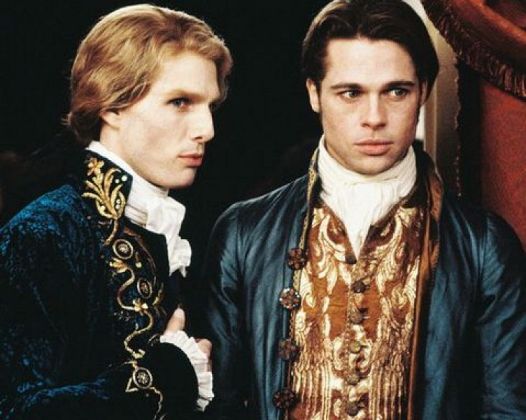
I think Anne Rice created something a bit different with her vampires so her vampires win in that department for me. After all Tom Cruise and Brad Pitt played her vampires in Interview with The Vampire. Le Stat is a cool creation. Enough said!

10) How well do you think one of your characters would fare against the winner(s) of the above?

Professor Cezar Prodanescu would give the Count a run for his money. Cezar is from the bloodline of original master vampires. He is wise, cruel, manipulative, magnetic and good at what he does – killing for blood and recruiting for his vampire nest.

11) Tell us the basic premise behind your latest novel.

I’m giving vampires a rest for now. The project I’m currently working on is a haunted house novel. A failing rock star buys a haunted house in the Peak District. Mind you I may yet weave a vampire into the mix!

Biography:

Martin Tracey is an author who likes to push the boundaries of reality. Weaving fact with fiction he likes to explore elements of the supernatural but aims to keep his novels relatable, ensuring that he is able to connect with the reader in a gripping fashion. Martin has had several interviews to showcase his work on BBC radio and attended several book signing events. A short story, Divine Inspiration was published in Words magazine. Martin’s first novel Beneath The Floodlights remarkably brought together the worlds of vampires and soccer. Martin Tracey lives in Birmingham and is married with 2 daughters.

Website:

www.martintracey.co.uk

Blog:

https://martintracey.wordpress.com/

twitter:

https://twitter.com/martintracey1

Facebook:

https://www.facebook.com/Martin-Tracey-Author-162311767171904/

Amazon page:

http://www.amazon.co.uk/Martin-Tracey/e/B009ANTBWG/ref=sr_ntt_srch_lnk_1?qid=1456595773&sr=1-1

Beneath the Floodlights on Amazon:

http://www.amazon.co.uk/BENEATH-THE-FLOODLIGHTS-MARTIN-TRACEY-ebook/dp/B005FQK84M/ref=pd_sim_sbs_351_1?ie=UTF8&dpID=413Swz0eCuL&dpSrc=sims&preST=_AC_UL160_SR100%2C160_&refRID=03AJDW4AZYEPXYMXEEHR


[Vampire Month] Blood Secrets cover reveal

12 Saturday Mar 2016

Posted by D.A Lascelles in Musings, Vampire Month

≈ Leave a comment

Tags

Blood Secrets, Cover reveal, Cranberry Blood, Elizabeth Morgan, G.R.R Martin, R.A Smith, Vampire Month


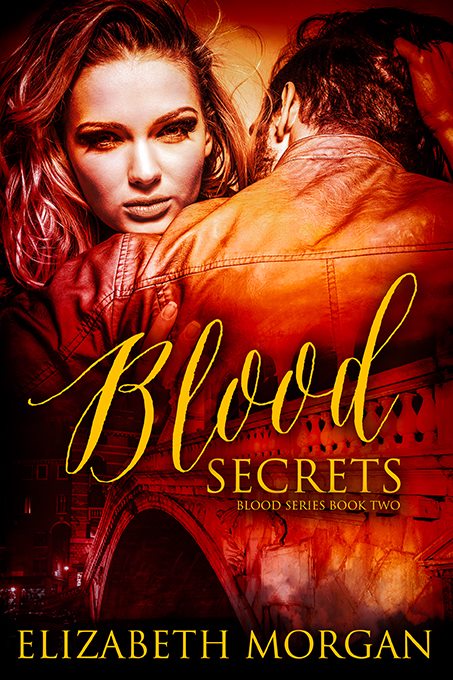
You may remember Elizabeth Morgan from a previous Vampire Month… Well, she has (finally*) managed to get round to finishing the sequel to the excellent Cranberry Blood… And this weekend she has revealed the cover! So here it is…12799081_1023635497696916_1922083712313817560_n* Still not as bad as R.A Smith who is still working on Winter Storm and he is not as bad as G.R.R Martin who I am sure is only delaying his latest novel to troll the universe…

[Vampire Month] Mythic Proportions and Howling Voids by Ambrose Hall

10 Thursday Mar 2016

Posted by D.A Lascelles in Musings, Vampire Month

≈ 1 Comment

Tags

Achilles, Ambrose Hall, Chandler, emotions, epic tales, Kafka, Love is the Cure, Vampire Month, Vampires


Ambrose Hall is here now to talk about his favourite stories and how they have influenced his writing… Be prepared for sticky ends and maggots.

I’ve always enjoyed stories told on a grand scale, with the emotions writ large, the stakes high, and the amp cranked up to eleven. That’s why I enjoy the gangster genre in film—because everything is so big, so extreme, so much larger than reality. The emotionsBFD Wool Exchange and the motivations have the quality of myths; they have that do or die edge to them. It’s possibly why The Wire is one of my favourite TV shows, and Omar my favourite character in it. With a clear nod to Achilles, he pushes his revenge to the edge of insanity for his Patroclus. Characters in these stories tell themselves they have a code, that their world is run according to rules, but in the end, no one else is playing their game, and they meet tragic ends. It’s a hyper-real, exploded version of reality, of our emotions thrown up against the nonsensical blocks of existence. If we delude ourselves that there are rules, that we can feel so strongly without compromise, we’ll come to a sticky end.
At the other end of the scale, I like stories with big gaping holes at the heart. Like Conrad’s Heart of Darkness. I like stories that leave the horrors of the world unspoken, but still let you know that they’re there. Like Kafka, where the protagonists throws themselves against an unmoving horror of bureaucracy, over and over, until they slowly wilt and fail. I like characters who lose themselves amongst the labyrinth of existence, and never quite find themselves again. And those everyday scenes, in everyday cities, like Chandler’s LA, where you know if you chip away the first layer of the sun-bleached stucco, there’ll be nothing but maggots writhing there.
loveiscrowtreeI realised, when I started writing my vampire story, that there’s the potential to do either, or both. That writing gothic fiction can provide a larger than life mythic edge. But that, in the ambiguous potential of eternity, there could be one hell of a long time spent staring into the void.
Biography – Ambrose Hall

Ambrose Hall is a speculative and literary fiction writer who currently lives in the South East of England. He originally comes from Bradford, in West Yorkshire, where he fell in love with gothic decay and wild moors. Ambrose has had flash fiction published in Crannog and A cappella Zoo magazines, and recently published a gothic vampire novella, Love is the Cure, available on Amazon. You can find out more about his work, and read some free short stories here: https://mrvolpone.wordpress.com/

[Vampire Month] Ambrose Hall Interview

08 Tuesday Mar 2016

Posted by D.A Lascelles in Musings, Vampire Month

≈ 4 Comments

Tags

Albert Camus, Ambrose Hall, Ann Rice, Dracula, Joseph Conrad, Lestat, Love is the Cure, Narnia, Raymond Chandler, Robin Hood, Vampires, Wuthering Heights


Our second victim in the Vampire Month interrogation chair is Ambrose Hall… find out more about their life in the questions that follow…

  • What is the earliest memory you have of writing? What did you write about?


I did a lot of writing and drawing as a kid. I think most of my writing was fantastical orBFD Wool Exchange magical in some way. I remember being obsessed with witches, as well as Narnia and Robin Hood. I think I was a bit of a goth, even then. I had a secret magic club in my mum’s garden shed, which I shared with my friend. I wrote a lot of poems as a kid, and in my teens, but I’ve lost my bottle for it as an adult.

  • When did you decide to become a professional writer? Why did you take this step?


I studied English and media with the intention of writing professionally, in journalism or political communication, but graduated during a recession, so I ended up teaching instead. By my mid-thirties, I’d done a lot of jobs that I hadn’t really found very rewarding. I wanted to do something that was creatively and intellectually stimulating. Then I had a family crisis, which caused me to take stock of a lot of things. As I needed to take a break from working anyway, I had a chance to reassess what I wanted to do with my life, and I started putting a lot of time into my writing. It’s still early days. Hopefully this will work out, as I feel like I’ve finally found something I love.

  • What would you consider to be your greatest strength as a writer? What about your greatest weakness? How do you overcome this weakness?


I’m good at coming up with ideas, and I can be very focused when I want to be. In the past, I was a terrible perfectionist, and found it very difficult to get useful critical distance from my work. I joined an online writing community, which has helped me a lot with learning to revise and edit my work, and getting that critical perspective I need.

  • Tell us about the place where you live. Have you ever derived any inspiration from your home or from anywhere you have visited?


I live in Letchworth Garden City in Hertfordshire at the moment. I’ve not really lived here very long, so I don’t think it’s had a chance to get under my skin yet. I originally come from Bradford, in West Yorkshire. Being surrounded by post-industrial decay, and the remains of a Victorian boom, has definitely influenced my gothic tendencies. I’m fairly obsessed with the idea of decay, and write dystopian fiction, as well as gothic. I worked on a dystopian noir novel last year, set in Bradford. I’m just trying to shop it round agents at the moment. I’d say the Yorkshire countryside has influenced me as well: the ruggedness of it, and of course, people going mad on moors, Wuthering Heights style.

Love is the Cure is set in London. I’ve got a bit of a love/hate relationship with the city, as a northerner, but I’ve spent a fair amount of time there over the years. It’s a place of extremes, which suited this story.

  • Which book, if any, would you consider to be your greatest influence and inspiration?


loveiscrowtreeI’ve taken influences from a lot of places. I’m a pretty avid reader. My biggest influences are probably Chandler, Camus and Conrad. Heart of Darkness is definitely an important one for me. I love empty spaces, howling holes and rotten hearts in stories, and characters that are strangers to their emotions.
  • What drove you to write about Vampires?


I played a lot of vampire roleplay games in my late teens and early twenties, so the genre is one I’ve always been interested in, but I avoided writing vampires for a long time, for fear of churning out something derivative. Then a friend in my writing group suggested a Halloween vampire challenge, so I thought I’d give it a go. It was great fun seeing all the very different takes on vampires. I started out with a short story, but it kept growing. Soon enough I had a six part novella, told from different points of view. I got really into the challenge of portraying the very different voices, with their different historical influences and personalities.

  • What do you think is the attraction for Vampire fiction? Why is it such a popular topic?


I suppose, as gothic monsters, they represent our fears and desires, and those can come out in different ways, depending on the writer. The idea of human monsters is a fascinating one—vampires allow us to explore a lot of different facets of humanity and morality. They tend to be larger than life characters, so you can amp everything up to an almost mythic level of intensity. Immortality is both attractive and tragic, and something that people have written stories about as long as people have written stories. One huge advantage of these potentially very old characters is it gives writers an excuse to plunder history for goodies.

  • In a fight between all the greatest Vampires of fiction, who do you think would come out on top?


I have a feeling it would be Dracula. He’s the original badass, and he’s so steeped in violence. He’s also completely ruthless.

  • What about in some other contest such as sexiness or dress sense? Who would win that one?


Anne Rice’s Lestat. He’s a pretty irresistible bad boy.

LestatandLouis-1

Ann Rice’s Bad Boy, Lestat De Lioncourt


  • How well do you think one of your characters would fare against the winner(s) of the above?


I have two very ancient vampires in Love is the Cure, and they’re both powerful. Bren, who is first introduced as the Crow King, reads others’ minds like they’re open books. He’s amoral, and takes whatever he wants from people without much thought. He embodies death and decay, and patriarchal arrogance. His one time lover, Ena, is very different. She’s the spirit of fire and anarchy. She’s more moral than Bren, but she’s trapped in a cycle of vengeance. I think either of them would give Dracula a run for his money, if they stopped fighting each other.

Only one of my vampires, Sebastian, is concerned with appearance, but he’s also a little stuck in the 1920s. His mortal days represent a golden time for him. Based on reader feedback so far, he seems to be most popular character. I had a lot of fun writing him. He’s a bit of a fop, extremely arrogant, and with a taste for re-enacting Hellenic myths.

  • Tell us the basic premise behind your latest novel.


Love is the Cure is a six part novella, told from different points of view. Although the different fragments fit together to tell a story, it’s unified more by common themes. I explore how the very different vampires cope, or don’t cope, with immortality, as well as ideas about power and consent. At the heart of the story is Kerrick, a vampire created in the late Victorian period. He had a particularly violent creation, and still bears the emotional scars from that. He’s desperately lonely, but his own violent nature always acts as a barrier to finding companionship. In trying to keep his newly created child alive, he stumbles into an ancient feud between Bren and Ena.

There were a few things I wanted to do with the story. I wanted to explore the idea of these creatures all being monsters of one kind or another, however human they were, or appeared to be. I was interested in the idea of them being locked in cycles of behaviour, determined by their creation. I wanted to be conscious of the way their power is exorcised, as a few people had said to me that one of the things which made them uncomfortable about some vampire fiction is that vampiric powers are used as a way to override or dismiss the need for consent. So I decided to try and confront that idea head-on. One of the main bones of contention between Bren and Ena is that he takes without asking.

It’s not all serious. I’ve played around with ancient mythology, and history, in some pretty cheeky ways. Although it’s not paranormal romance, it’s very homoerotic. Most of the characters are unambiguously gay or bisexual, which I guess is my antidote to the lack of pay-off during my teenage years reading Anne Rice. It’s definitely larger than life. I wanted to show extremes, from petty criminals and rent boys, to baroque splendour and depraved aristocracy. One of my early readers said the story made them think of Caravaggio. I guess that’s a win.

Biography

Ambrose Hall is a speculative and literary fiction writer who currently lives in the South East of England. He originally comes from Bradford, in West Yorkshire, where he fell in love with gothic decay and wild moors. Ambrose has had flash fiction published in Crannog and A cappella Zoo magazines, and recently published a gothic vampire novella, Love is the Cure, available on Amazon. You can find out more about his work, and read some free short stories here: https://mrvolpone.wordpress.com/

This is the link to my book on Amazon UK: Buy Love is the Cure on Amazon

[Vampire Month] Image is everything by Angela Lockwood

05 Saturday Mar 2016

Posted by D.A Lascelles in Musings, Vampire Month

≈ Leave a comment

Tags

Angela Lockwood, Cliquot the cat, Cute cat photos, Vampire Cat, Vampire Month, Writing advice


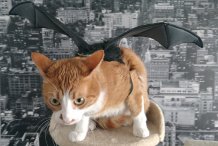
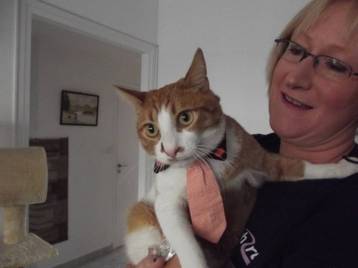
I mentioned in my interview that I’m not very comfortable with self-publicising. It was about two years after publishing my first book that I decided to put a headshot on my author page. If I can give one piece of advice to a new writer, it’s to be conscious of your and your book’s image. Readers want to know who you are, what you look like and preferably what your pets look like too.vampire cat

So here is a picture of Clicquot the cat, and me, reluctantly venturing into the limelight. He was also reluctant to dress up as a vampire bat, but mummy’s career demanded it.

Before you shout ‘animal cruelty!’ I’ll tell you that the wings and tie only stayed on a few seconds; just long enough for the photo.

It’s my little revenge for him getting us up at 4am most mornings.

The biggest mistake I made early on is trying to do everything myself. (Except editing, I knew I needed help there!) This is no problem if you’re good at everything book related. If you decide to go the self-publishing route there are so many jobs you then need to do. Graphic designer, web-page designer, blogger, editor, marketing and advertising expert are just a couple of skills you’ll have to learn.

catI soon realised I was out of my depth. The best decision I’ve made, probably, is joining an independent writers’ group. This group was very open with sharing their experiences and when I saw some of the covers my colleagues were using I knew I had to change mine. My group recommended several avenues and after a few emails I went with Paradox Book Covers. If you shop and ask around you’ll find that professional is not always expensive. People really do judge a book by its cover, so make sure yours stands out.
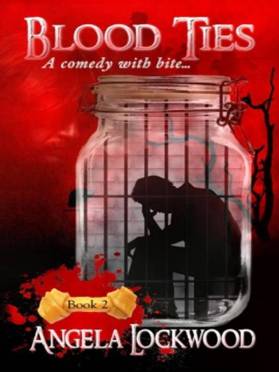
I’m next hoping to tackle my website, because you’re not just a writer, you are a brand. If your reader loves your books they want to know more about you, so make sure you present you, the writer, in the best light.

Amazon author page: Author.to/authorpage

Blog: http://languageintheblood.blogspot.fr/

Facebook: https://www.facebook.com/CruftsloverAkaCameronBlair/?ref=hlSlide1

Twitter: @LitBCameronB

Webpage: http://www.cruftslover.adzl.com/


The Bio

Angela Lockwood-van der Klauw was born in the Netherlands. She learned her trade as a jeweller and gemmologist at the Vakschool Schoonhoven before moving to Edinburgh as an apprentice jeweller. There she met and later married her husband Adam. Angela ran her own jeweller’s shop in Edinburgh for ten years before she and her husband moved to the south of France in 2011. Like her vampire character Cameron, Angela prefers the climate there, but often thinks about the town she left behind and its people. Cameron’s story was born in the spring of 2013, a very wet spring during which Angela found herself climbing the walls, frustrated that she couldn’t go out and have her usual long walks along the seafront. Seeing his wife’s frustration, Adam suggested ‘Why don’t you write a book?’ Angela thought about it for a few days, then switched on her laptop and started writing Language in the Blood. Blood Ties is the second book in the series and Angela has also published a collection of short stories Something Short with her friend, Elspeth Morrison.


[Vampire Month] Angela Lockwood interview

03 Thursday Mar 2016

Posted by D.A Lascelles in Musings, Vampire Month

≈ 1 Comment

Tags

Aidan Turner, Angela Lockwood, Blood Ties, Cameron Blair, Côte d’Azur, Interviews, Language in the Blood, Netherlands, PG Wodehouse, South of France, Vampire Cat, Vampires


YesterdayYesterday you were introduced to Angela and her books. Here we get a deeper insight into her as we subject her to the gruelling Vampire Month interview…vampire cat

1) What is the earliest memory you have of writing? What did you write about?

Unfortunately, my earliest memories of writing weren’t good ones. I remember getting very excited about writing a short story in primary school and then getting it back covered in red pen corrections. I was eventually diagnosed with mild dyslexia. It took me a long time to start writing again, but with my husband’s encouragement, a computer that spellchecks and a great editor, I’m once again enjoying writing. I’m still a little bitter about the lack of encouragement by my teachers who must have spotted that I enjoyed reading and writing.

2) When did you decide to become a professional writer? Why did you take this step?

I’m not a professional writer. I would like to be, but at the moment I have to work to pay the bills.

3) What would you consider to be your greatest strength as a writer? What about your greatest weakness? How do you overcome this weakness?

I think I’m a strong story teller with a dark sense of humour. I can see the ridiculousness in all situations and I don’t take life or myself too seriously. I think that not taking myself seriously is also my greatest weakness. I feel uncomfortable about self-promotion. Taking part in Vampire Month is a nice bit of therapy; I’m here promoting my books! I’ve had some great reviews so I know my books are worth reading, so expect to see more of me.

4) Tell us about the place where you live. Have you ever derived any inspiration from your home or from anywhere you have visited?

I’m very lucky to live in the south of France, but unlike a lot of ex-pats I’m not of retirement age. Work is seasonal and in the winter of 2013 I found myself unemployed and very frustrated by an unusually wet January. To stop me from climbing the walls, my husband suggested I write him a horror story. The tale got rather out of hand and grew into a two-book series – Language in the Blood. It’s a comedy about a young Scotsman, Cameron Blair, who goes off to fight in the First World War. Lying wounded on the battlefield, he is discovered by a vampire… with inevitable consequences. The story follows Cameron as he comes to terms with his new ‘life’, from his first days as a hapless vampire in war-torn France to the glamorous modern day setting of the Côte d’Azur. Along the way, he develops a distinctive taste for the finer things in life: jewels, yachts, small dogs and champagne-infused human. I’m Dutch, but lived most of my adult live in Scotland. These places and my current abode are huge inspirations.Slide2

5) Which book, if any, would you consider to be your greatest influence and inspiration? 

It wasn’t a particular book, but I’m a big admirer of PG Wodehouse and his irreverent humour. I hope I created in Cameron Blair a vampire that in some small way captures some of his British wit and eccentricity.

6) What drove you to write about Vampires?

It all started with a friend telling me about the theft of a mirror from the lift in her building. My first thoughts were: it’s obviously a vampire setting a trap for his victim; he removes the mirror to avoid early detection. I used it as the scene that forms the turning point in the first book. Also my husband wanted me to write a zombie story, but we all know that vampires are way more interesting.


7) What do you think is the attraction for Vampire fiction? Why is it such a popular topic?

For a writer, it is a great genre as it gives you an enormous freedom to take the character anywhere you want. Readers enjoy being taken to a different world which can be dangerous, sexy, frightening or in my case amusing. The genre takes us away from our everyday lives and personalities. I think vampires appeal to our darker side.


8) In a fight between all the greatest Vampires of fiction, who do you think would come out on top?

I think Dracula. Bram Stoker’s masterpiece has been reworked so often for good reasons. Dracula is the daddy of them all.


9) What about in some other contest such as sexiness or dress sense? Who would win that one?

If I say anything other than Cameron here, he will come and bite me. He prides himself on his dress sense and sexual attractiveness. But I must say I’ve had a bit of a soft spot for Aidan Turner who played the vampire in Being Human.Slide1


10) How well do you think one of your characters would fare against the winner(s) of the above?

Again I have to declare Cameron the winner otherwise I’ll be in trouble. He and Aidan do share their dark, Celtic good looks.


11) Tell us the basic premise behind your latest novel.

Not about a vampire I’m afraid. My cat, Clicquot, is my main inspiration at the moment, but to be honest he is as much a hindrance as a muse. Despite his best efforts, I’m putting the final touches to my third book, a romantic novel for cat lovers called Conversations with Tom.

You can learn more about Angela on the links below. Next up is her guest post…

Blog: http://languageintheblood.blogspot.fr/

Facebook: https://www.facebook.com/CruftsloverAkaCameronBlair/?ref=hl

Twitter: @LitBCameronB

Webpage: http://www.cruftslover.adzl.com/

[Vampire Month] Angela Lockwood

02 Wednesday Mar 2016

Posted by D.A Lascelles in Musings, Vampire Month

≈ Leave a comment

Tags

Angela Lockwood, Blood Ties, Edinburgh, First World War, Netherlands, Vampire, Vampire Cat


Meet Angela Lockwood, our first Vampire month victim for this year. She will be interviewed in the next post and will provide a guest post later in the week.

Here you can find details of all Angela’s publications and her bio and other links.

Slide1Language in the Blood 

Until the outbreak of the First World War, young Cameron Blair would have liked nothing better than to stay in Edinburgh and marry his childhood sweetheart. As the call to arms goes out, Cameron and his pals sign up to fight for their country. They are soon delivered into the nightmare of war, and there Cameron more than meets his maker. The story follows Cameron as he comes to terms with his new ‘life’, from his first days as a hapless vampire in war-torn France to the glamorous modern day setting of the Côte d’Azur. Along the way, he develops a distinctive taste for the finer things in life: jewels, yachts, small dogs and champagne-infused human…


Language in the Blood is FREE via the following sites:


Amazon worldwide: myBook.to/LanguageintheBlood


Smashwords: https://www.smashwords.com/books/view/583826


Nook books: http://www.barnesandnoble.com/w/language-in-the-blood-angela-lockwood/1122788669?ean=2940152402995


Ibooks: https://itunes.apple.com/fr/book/language-in-the-blood/id1048212406?l=en&mt=11


Blood Ties (Language in the Blood book 2)

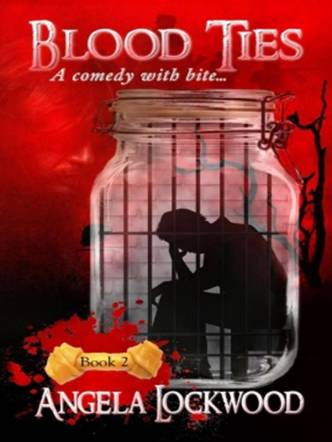
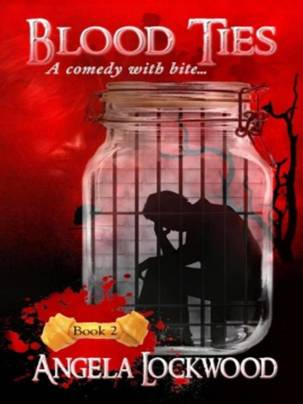
After meeting his maker on the battlefields of the First World War, Cameron Blair has spent almost Slide2a century coming to terms with his new vampire identity. Along with a taste for human blood and lapdogs, he has acquired the linguistic skills of his victims and learned to survive in the shady underbellies of Europe’s great cities. The end of Language in the Blood sees Cameron facing a dilemma when blame for one of his kills gets laid at his best friend George’s feet. Cameron discovers a deeply buried vestige of humanity and surrenders to the French authorities – a decision he soon regrets as it becomes clear they don’t have quite the same heroic role for a vampire agent in mind that his own vivid imagination does. Locked up, his needs denied, misunderstood and plagued by an unhealthy obsession with his friend’s daughter, the bored vampire edges close to insanity. Before long, Cameron starts plotting his escape.


Amazon worldwide: http://www.hyperurl.co/u6nkfg


The best thing about writing is connecting with other writers who have taken the independent publishing route. Their advice and the shared experiences have been invaluable. Being a member of the Independent Author Support and Discussion group (IADS) has spurred me to write several short stories and I’m proud to be part of several anthologies: Holes, You’re not Alone and (with my friend Elspeth Morrison) Something Short. The last two were published for charity.


Something Short

Amazon universal link: mybook.to/SomthingShort


You’re not Alone

Amazon.com: http://www.amazon.com/Youre-Not-Alone-Author-Anthology-ebook/dp/B00Y5RCOOE/ref=sr_1_4?s=books&ie=UTF8&qid=1452522591&sr=1-4&keywords=you%27re+not+alone


Amazon.co.uk: http://www.amazon.co.uk/Youre-Not-Alone-Author-Anthology-ebook/dp/B00Y5RCOOE/ref=pd_sim_351_2?ie=UTF8&dpID=61soH3zEgEL&dpSrc=sims&preST=_UX300_PJku-sticker-v3%2CTopRight%2C0%2C-44_AC_UL160_SR101%2C160_&refRID=1NF5VEM6HKC4EA2JGBVP


Holes

Amazon.com: http://www.amazon.com/Holes-Author-Anthology-Angela-Lockwood-ebook/dp/B01633DFPY/ref=sr_1_1?s=digital-text&ie=UTF8&qid=1452522406&sr=1-1


Amazon.co.uk: http://www.amazon.co.uk/Holes-An-Indie-Author-Anthology-ebook/dp/B01633DFPY/ref=pd_sim_351_3?ie=UTF8&dpID=41TFQ516mQL&dpSrc=sims&preST=_AC_UL160_SR100%2C160_&refRID=1NF5VEM6HKC4EA2JGBVP


Amazon author page: Author.to/authorpage


Blog: http://languageintheblood.blogspot.fr/

Facebook: https://www.facebook.com/CruftsloverAkaCameronBlair/?ref=hl

Twitter: @LitBCameronB

Webpage: http://www.cruftslover.adzl.com/


The Bio

Angela Lockwood-van der Klauw was born in the Netherlands. She learned her trade as a jeweller and gemmologist at the Vakschool Schoonhoven before moving to Edinburgh as an apprentice jeweller. There she met and later married her husband Adam. Angela ran her own jeweller’s shop in Edinburgh for ten years before she and her husband moved to the south of France in 2011. Like her vampire character Cameron, Angela prefers the climate there, but often thinks about the town she left behind and its people. Cameron’s story was born in the spring of 2013, a very wet spring during which Angela found herself climbing the walls, frustrated that she couldn’t go out and have her usual long walks along the seafront. Seeing his wife’s frustration, Adam suggested ‘Why don’t you write a book?’ Angela thought about it for a few days, then switched on her laptop and started writing Language in the Blood. Blood Ties is the second book in the series and Angela has also published a collection of short stories Something Short with her friend, Elspeth Morrison.


← Older posts
Newer posts →

Twitter Updates

Tweets by areteus

Like me on Facebook

Like me on Facebook

Enter your email address to follow this blog and receive notifications of new posts by email.

Join the Lurkers

  • Alex James's avatar
  • D.A Lascelles's avatar

Enter your email address to follow this blog and receive notifications of new posts by email.

Join 914 other subscribers

Recent Posts

  • Lady Catherine De Berg
  • Gods of the Deep 10th Anniversary
  • I’m (apparently) a cover designer!
  • Release day! Coch a Gwyn
  • Cyberpunk look

Blog at WordPress.com.

  • Subscribe Subscribed
    • Lurking Musings
    • Join 129 other subscribers
    • Already have a WordPress.com account? Log in now.
    • Lurking Musings
    • Subscribe Subscribed
    • Sign up
    • Log in
    • Report this content
    • View site in Reader
    • Manage subscriptions
    • Collapse this bar
 

Loading Comments...