[Review] Primal Storm

Tags

, , , , , , , , ,


Primal Storm (Book 2 of the Grenshall Manor Chronicles)
By R.A Smith
Published by Xychler Publishing

This sequel sees the aftermath to last year’s Oblivion Storm and our heroes Mary, Jennifer and Kara are adjusting to their new lives. Mary has taken full possession of Grenshall manor and has spent most of her time learning about her new found abilities over ghosts and nursing the almost fatally wounded Jennifer. Kara has been finding her skills as a paranormal expert becoming more in demand.

Then, Jennifer, feeling trapped by her status as an invalid and needing to stretch her legs, sneaks out to exercise and stumbles onto a very well organised robbery of the British museum run by a crack team of supernaturals. Her intervention in this and her resemblance to a figure in a work of art known as ‘The Face of War’ leads her into a conspiracy of secret societies, supernatural artefacts and a confrontation with her own past and true nature.

Unlike Oblivion Storm, which focussed on Mary and her connection to the realms of shadow, Primal Storm is almost entirely Jennifer’s show. As such it is a very different story that veers away from the spooky events occurring between an atmospheric Victorian London and the modern day and into an action orientated plot. Several scenes come across as more like an X Men movie than a paranormal horror as Jennifer Winter tears into her enemies Wolverine style. Likewise, the flashbacks are not to Victorian London but to Jennifer’s childhood where a history of abuse and accusations of murder lead her to becoming the woman she is and explain her connection to the mysterious and vibrant Primal realm. Meanwhile, Mary and Kara travel Europe on a mission to rescue Jennifer and encountering a variety of characters on the way including the very same supernaturals that Jennifer is involved with and someone with the very same abilities Mary has.

The loss of spooky atmosphere could have been a weakness here but it is more than made up for by the change of pace, including the dark and violent nature of Jennifer’s past. The flashback scenes are brutal and honest and reveal a woman who has risen from extreme adversity into her eventual greatness. However, one weakness that is apparent is Smith’s presentation of some characters. While all the female characters come across as strong, three dimensional creations his male characters seem to lack depth. Having said that, at least one of them showed a lot of promise and if he is to return for book 3 it can be hoped that there will be a chance to develop him some more. This would be a good thing as it is nice to see a character of colour represented in a non clichéd way.

Overall Primal Storm is an enjoyable read. It holds onto enough elements of Oblivion Storm to make it a familiar setting but then takes off into new directions that explore and expand on that setting a great deal. According to Smith himself, the plan for book three (as yet unnamed but I am guessing the word Storm will be in there somewhere) is to focus on Kara – the one non-supernatural member of our trio of heroes. I for one am intrigued to see how she develops in this final instalment. If her back story is anywhere as interesting as Jennifer’s we are in for one hell of a finale.
Cover reveal: Lurking Miscellany

Tags

, ,


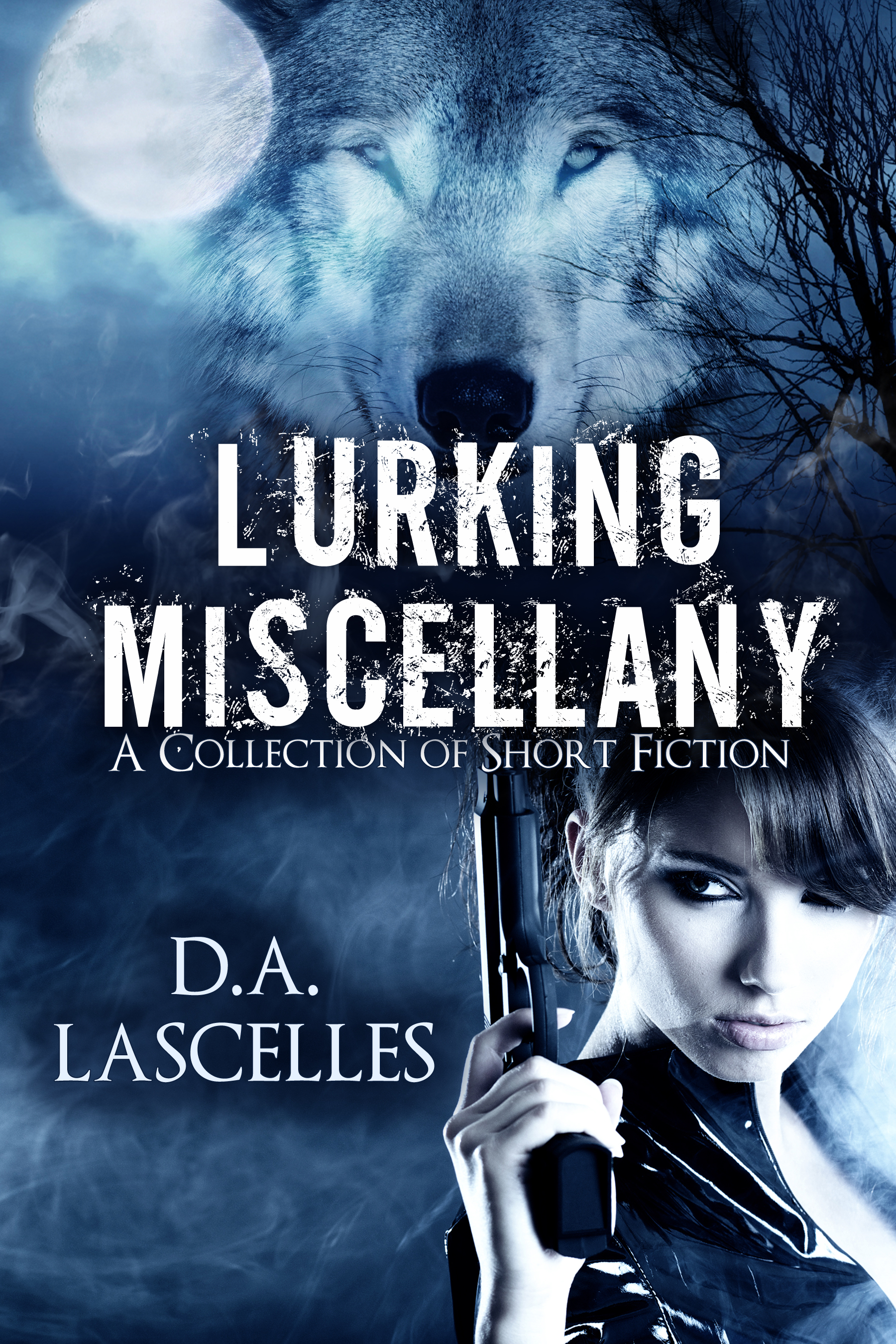
For the last month or so, I have been working on putting together a collection of short stories for publication. This collection is called Lurking Miscellany and brings together several shorts that have basically been sat on my hard drive for a while not doing anything. It includes a couple of stories based on the Waypoint universe, my own attempt at Urban Fantasy and the sequel to my BBW Paranormal Romance novella, Transitions.

As things stand, the stories are in the hands of a crack team of specialist ninja Beta readers being given a final polish before publication. I have an ISBN registered and a gorgeous cover produced by the ever wonderful Skyla Dawn Cameron who is also known by the name of Indigo Chick designs.

LurkingMiscellany-lg

The goal is to have print copies of the collection available for their first, exclusive launch sales at the Leeds Waterfront festival as part of the Leeds Steampunk market on the 28th June. After that, copies will be available from other sources, including Amazon, in print and ebook formats.

Hope to see many of you as can make it in Leeds on that day.

Exit pursued by a Dalek… A tale of a fashionably late World Book Night

Tags

, , , , , , , , , , , , , , , , , , , , , , , , , , ,


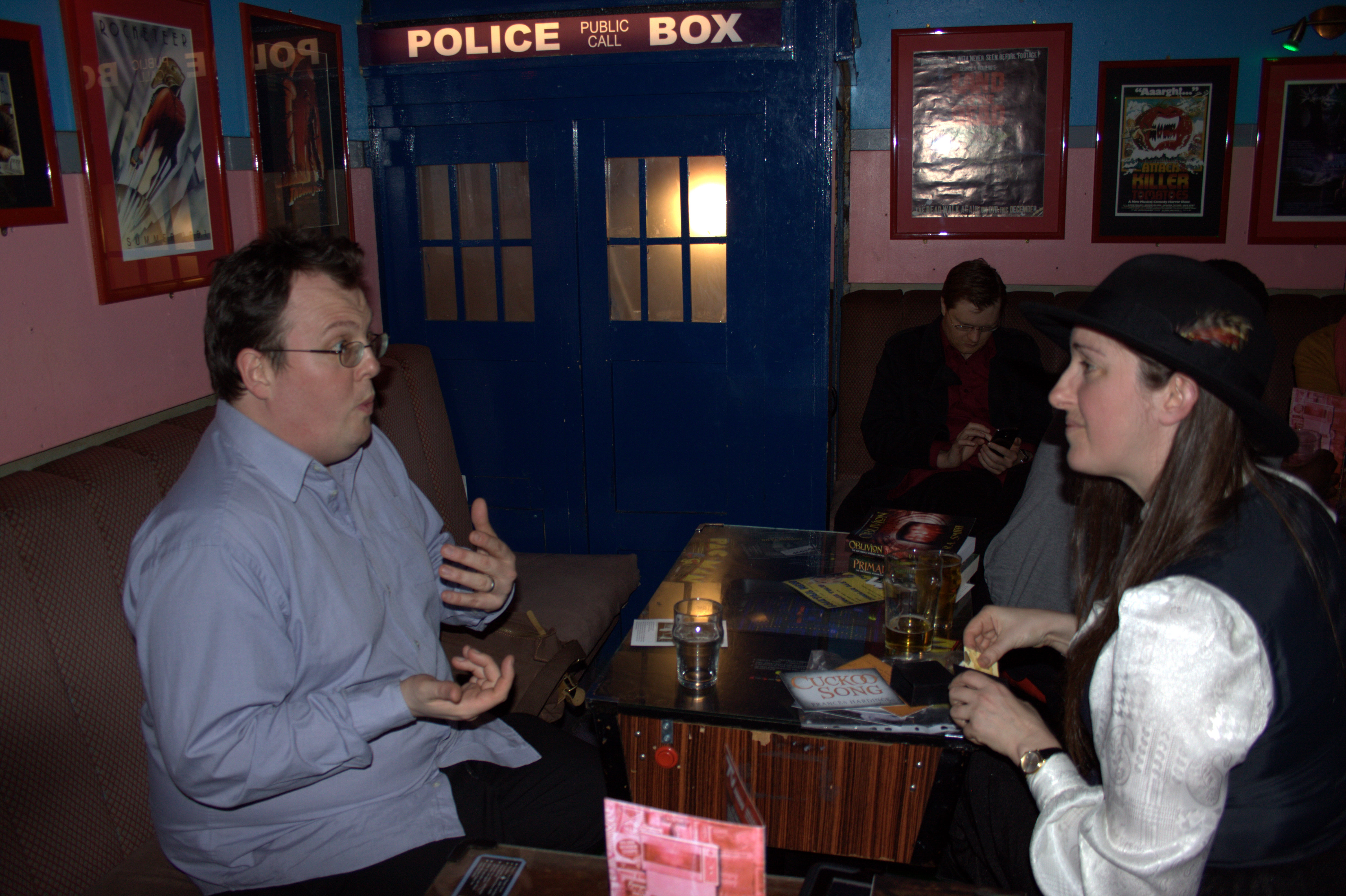
Myself and Ed Fortune sat in front of a TARDIS. Picture taken by Frances Hardinge

Myself and Ed Fortune sat in front of a TARDIS. Picture taken by Frances Hardinge

World Book Night happens annually on the same day as Shakespeare’s Death, the 23rd April. On this day, volunteers give out free books in order to encourage reading in those who do not read much. Being a World Book Night giver I was of course giving out books on that night…

Except I wasn’t. Because I was giving them away on the 24th April. A day late… Damned temporal distortions again.

That was the base concept behind the Fashionably Late World Book Night party at the Fab Café in the city centre of Manchester. To be fashionably late in giving away our books. So, I turned up at a Geek themed basement bar with a bag full of books and author Frances Hardinge in tow for a night of poetry, prose and free books.

And there were a lot of free books:

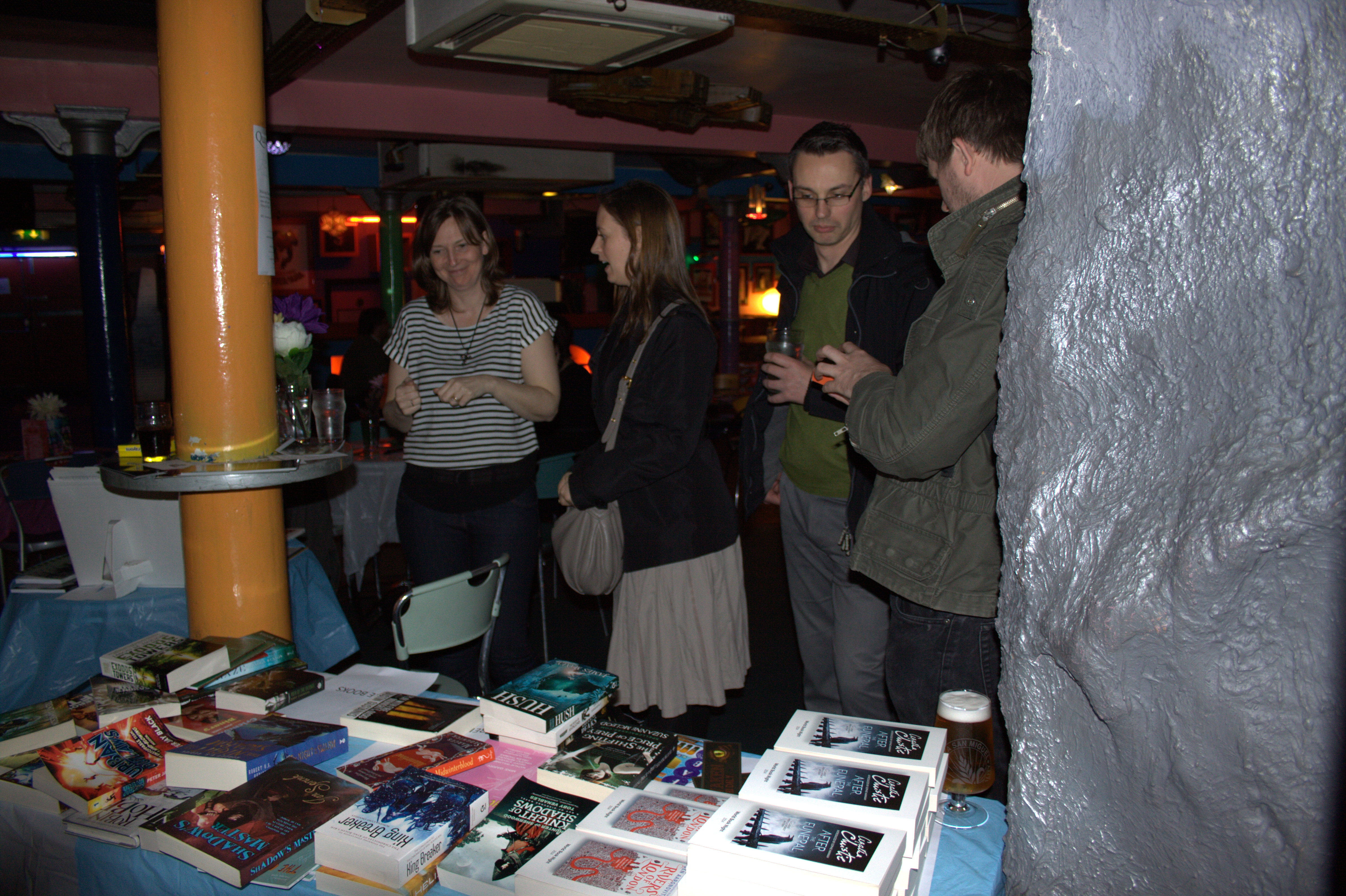
freebooks6

Not only were there the 18 copies of Ben Aaronovitch’s Rivers of London and the 36 copies of Agatha Christie’s After the Funeral provided to our givers by the World Book Night charity but also a large collection of ex review copies of books that had been sent to the Starburst offices and which were now no longer needed. This meant that any SF or fantasy fan could walk out with quite a haul if they so chose and the murder mystery fans were not ignored either. The books proved very popular with the crowd in the venue. Some of them had come here just for the books, some of them had been drawn by the promise of readings by local writers and poets and the chance to hob nob with them. Many more had come because it was a Thursday night and they always went to Fab on a Thursday.

The readings and guest writers were also popular. Everywhere you went there were conversations between writers, poets and their fans in topics ranging from their latest books to why it is not possible to do a decent film version of Lovecraftian horror. The bar was doing a roaring trade and the atmosphere was friendly and open. The SF theme decorations added to the unique nature of the venue and had at least one contributor (who shall remain nameless) running around gleefully with a camera taking shots of Daleks, Cybermen and TARDIS’s left right and centre. I was also taking photos, of course, but in my case it was, um, for professional reasons.


hobnobbing7interview2


Even the presence of some of TVs most intimidating and scary villains did little to dampen the mood.


There was only one critic present at the event but he was notoriously brutal...

There was only one critic present at the event but he was notoriously brutal…

Though they did seem to lurk menacingly off stage whenever a writer was up doing their reading…

reading6

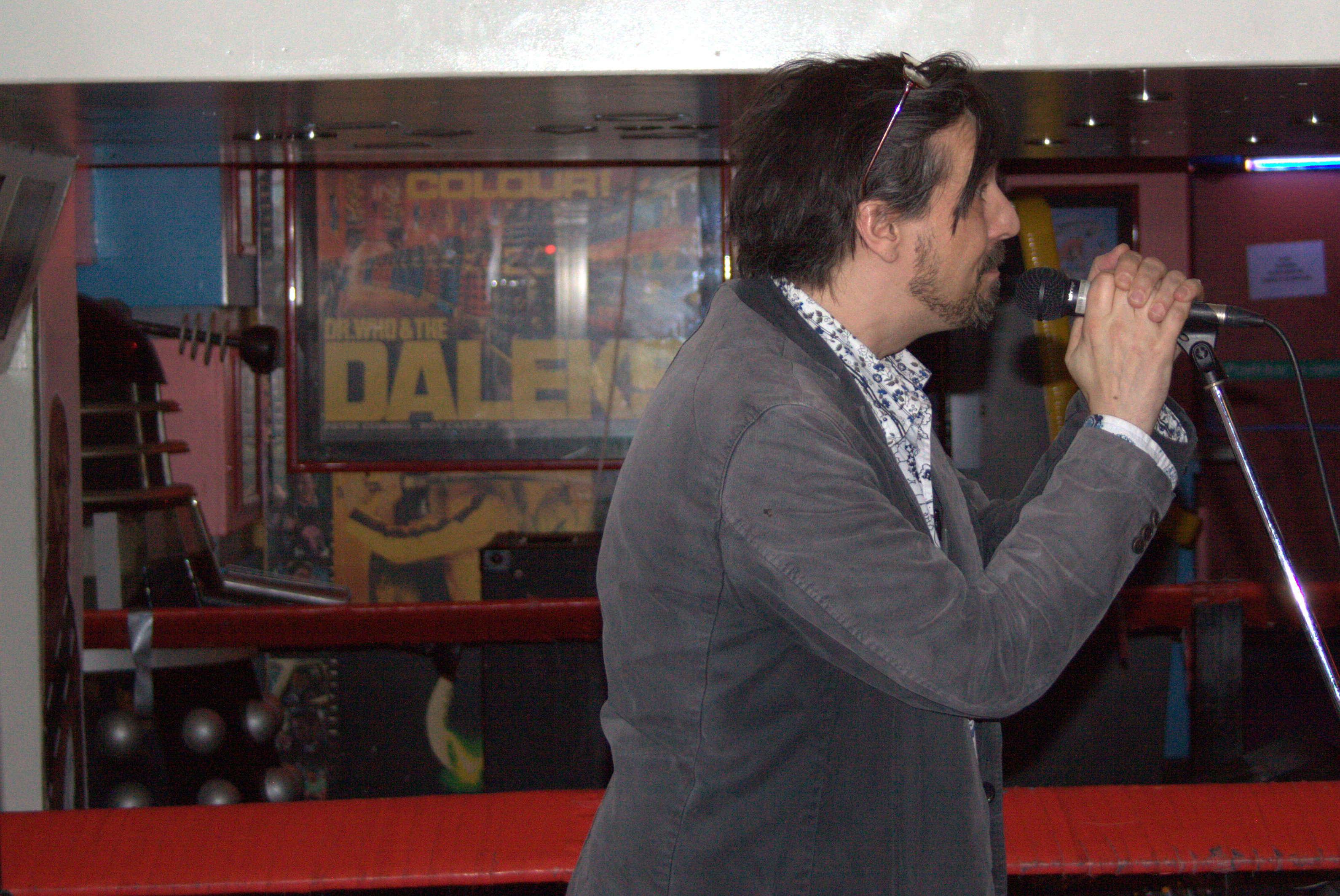
reading3However, the presence of the resident critic from the Skaro evening Chronicle (tagline ‘News to exterminate to’) did little to deter the performers. We opened with R.A Smith who read an extract from his debut novel, Oblivion Storm. It went down well, he got applause and was not exterminated.

This was followed by, um, me… reading an extract from Transitions. This was my first ever public reading and I was petrified. Yeah, I know, I’m a teacher as well as a writer and yes speaking in public (sometimes in front of very hostile audiences) is part of the job. It’s practically all the job (well, apart from the planning, marking, admin and occasional public appearances for publicity) so I shouldn’t have been so scared. Shouldn’t but I was. You see, there is a difference between standing there and talking freely about a topic you know a lot about and reading something out loud. With the former there is room for improvisation and the chance to have discussions and take questions from the audience – to get them involved and active in the process. Reading aloud is more static and you have to stick to the script. It is not the time to start subconsciously editing your own work and reading out this new edited version instead of the published one (which I may have done a little bit). Also, the lack of light made reading difficult (thankfully the representative of Flapjack Press was able to supply a reading light to those who came after me to solve this problem). Despite all these issues I managed to struggle through the section where Gaius Lucius meets the mad old man in the cave and got my own round of applause and absence of extermination.

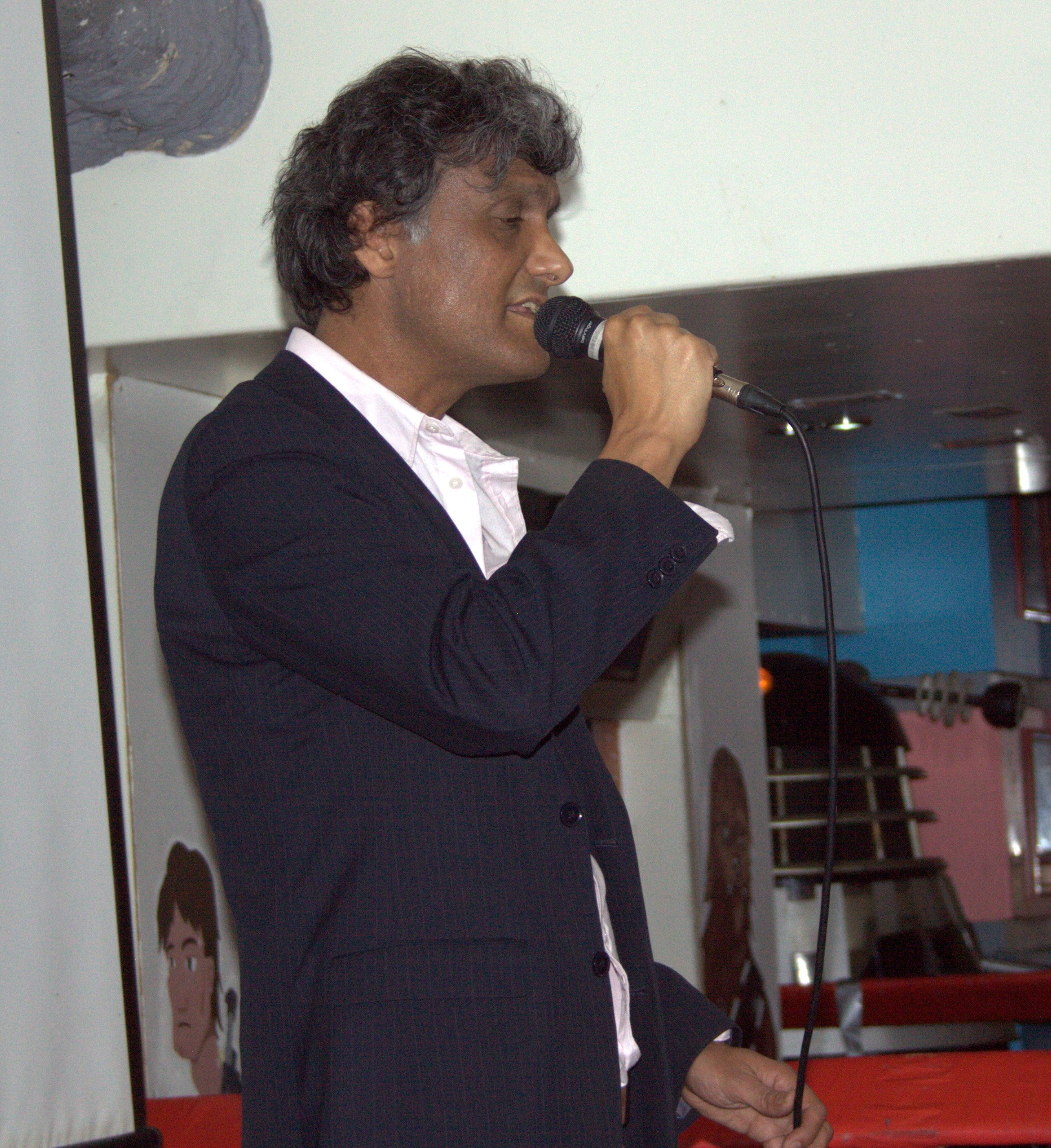
The poets and writers of Flapjack Press then took the stage in turns and wowed the audience with their poetry and prose. They included Tony Curry who read out poems relating to what it was like to be a man and Sarah Grace Logan whose poetry contrasted nicely with its more feminist vibe and her works based on the objects she sees daily in her work at the Manchester Museum.

reading10 reading11This was followed by Frances Hardinge who read out a chilling extract from her latest and as yet unreleased novel, Cuckoo Song. It was unfortunate that due to a postal service snafu there were no copies of this book available for sale or signing. If the expected parcel from her publisher had actually arrived that night would have been the first time and place that book would have been on sale in the reading15world – a true exclusive.

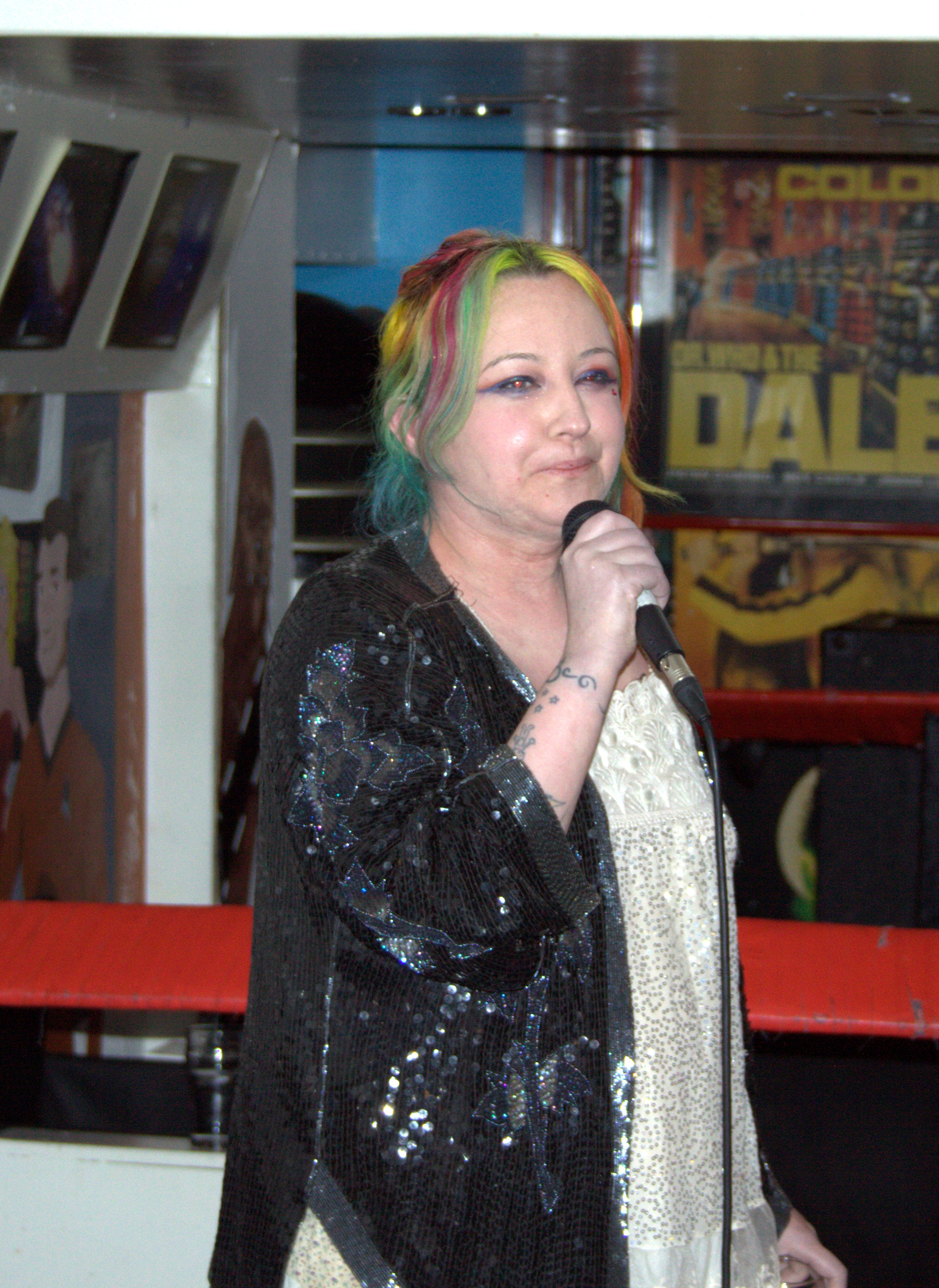
There was then a short break before the second half of the evening, this compered by another local poet, Anna Percy who also performed her own poetry. She was joined by Dermot Glennon, Zach reading25Roddis and the wonderfully anarchic comedy poetry of Jackie O’Hagan making this night a truly North Western literary occasion. All performers were well received by the audience and did sterling sets that ended in applause. More importantly, none of them were exterminated by the resident critic, for which I am sure they were all grateful.

Unfortunately we had to leave before the end, though I hear that the evening ended with dancing to nineties classics which I am sorry we missed. On the free book table as we left there were no more copies of Rivers of London and only a handful of copies of After the Funeral. The Starburst review copies were also much reduced, presumably meaning that there is now much more room in their offices for future ARCs. I grabbed a handful of the Agatha Christies as we said our final goodbyes to Anna Percy and the other contributors. Those copies were offered to students at my college the next morning and one was gifted to the college library.

Shown here are only a handful of the photographs I took that evening. I’d try to cram more in but I fear this blog post would be an endless sea of photography. If you want to seem more of them, you can go and look at my Flickr account. If any of the poets or writers who were there wish to  make use of any of these for their own web pages or blogs you may feel free. Contact me and I can send you the original copies. I’d appreciate an acknowledgement in return.

With such a successful night I am not sure how we can beat it next year but I am sure we will have a damn good try. There may have to be ballet dancing elephants.


Writing process questions

Tags

, , , , , , , , , , ,


Neelima Vinod tagged me in the Writing Process Blog Tour. You may remember Neelima from Vampire Month a few years back and she has since been doing rather well for herself. This meme is an interview meme about the writing process so those of you who are interested may find out more about how I do things… maybe…

 What am I working on?

Well, the official answer has to be ‘shaping the minds of the next generation in the hope of getting them into university’ because at the moment I am mostly working on my day job of teaching. However, you want the writer answer and for that I am doing two things. One is working on the final stages of Gods of the Deep, the sequel to Gods of the Sea. That is with an editor and I have a cover waiting to be revealed which is awesome. The other is editing a selection of my short stories for publication in a collection I am calling Lurking Miscellany in honour of this blog. In addition to those two writing based things, I also have something I only found out about yesterday which I am not allowed to talk about. Which is ironic as it will involve me talking…

 How does my work differ from others of its genre?

I am not sure I am qualified to be able to say my work is different to any others. I’d like to think that it is but I consider that to be a question that readers should answer rather than me. If pushed to answer I would like to say that Transitions differs from many other romance works because of the BBW element. However, there is a whole genre of romance fiction based on that concept. I could also say that Gods of the Sea was either a pirate story set in a fantasy universe or a fantasy story set in something other than the Tolkienesque fantasy setting – either way a slight deviation from cliché. However, many of my influences (such as Barbara Hambly) are writers who have done similar. There is a lot of fantasy out there now which is veering away from the Tolkien influences of my youth and I consider this to be a very good thing.

Why do I write what I do?

I started writing while in school and found that I enjoyed it a lot. However, I never really considered what I wrote as worth publishing and so I mainly did it for fun. Of my current published works, I wrote Transitions because of an interest in both Roman history, specifically the history of the town of my birth, and in the paranormal. Gods of the Sea I wrote because there was a call for submissions for a pirate themed anthology and I had an idea for it which I thought might work.

 How does my writing process work?

Chaotically. In the terminology of the Absolute Write forum, I am definitely a Panster (someone who writes by the seat of their pants) rather than a plotter (someone who carefully plans out the sequence of events in their story). Whenever I tried to write like a Plotter I found I could not do it and I actually think that everyone has their own preferred way of working which fits how their own mind works rather than there being any ‘one true way’. I often get ideas when my body is doing one thing (walking, tidying, etc.) and my mind is free to wander, the only problem is that I rarely get time to sit down and get those ideas down on paper. However, any idea that survives in my mind until I get time to write about it is likely to be one worth keeping while those that don’t I am probably better off losing. I also tend to be encouraged by necessity. Both of my published works have come about because there was a pressing need to get something submitted to a project I wanted to be involved in so I stopped wallowing in uncertainty and just got on with it.

I’ve also worked in different ways for different projects. For Gods of the Sea I basically sat down over Christmas and splurged out most of the story over a couple of days. I was not even aware of what I was writing until I reviewed it later. For Transitions, however, it was a more careful process and for that I had actually started out with the beginnings of two very different stories (an historic romance about a Roman soldier and his dying wife and a contemporary romance set in Birmingham) which I then realised could be merged into one.


Thank you Neelima for tagging me! You can read about her process here.

As part of the game, I’m tagging two writers for you to blog hop to.:

R.A Smith is the author of the wonderful Oblivion Storm and its sequel Primal Storm. You can find him on Facebook here.

Ninfa Hayes is the author of Bites and Nannies Inc . You can find her on Goodreads here.

[Vampire Month] Vampire art by Lauren C Waterworth

Tags

, , , , , ,


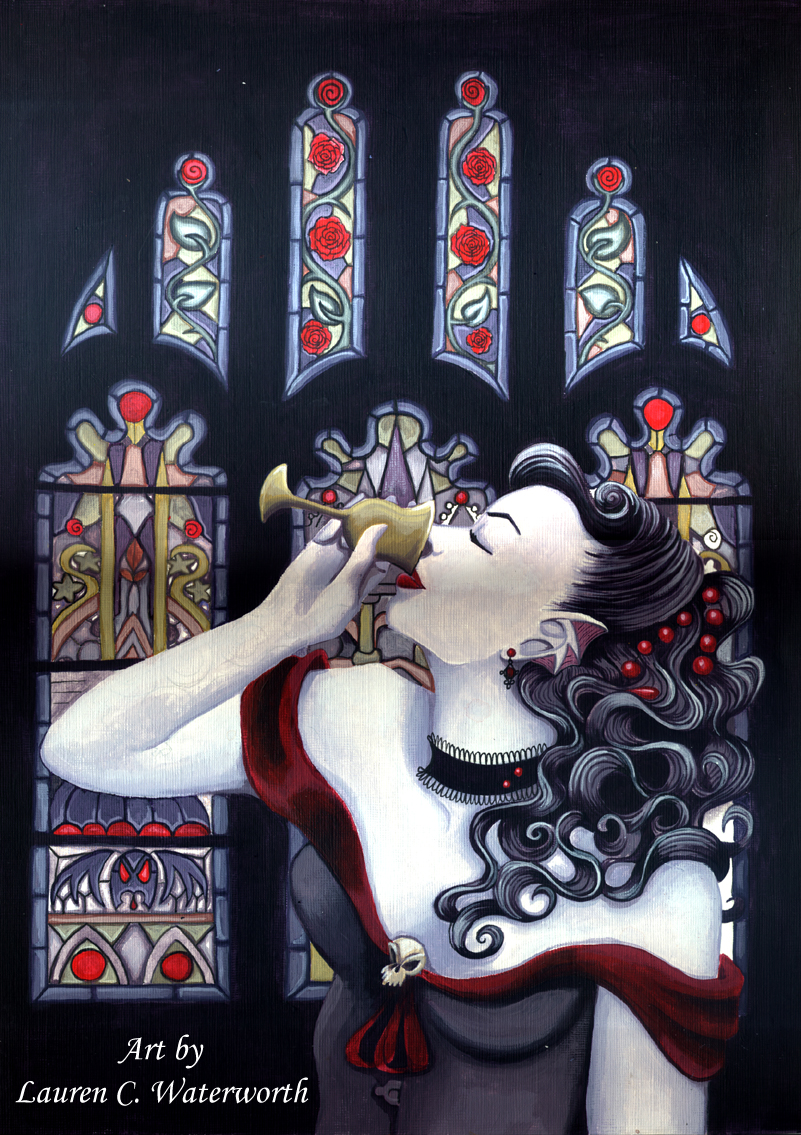
Our final submission for Vampire month is this wonderful piece of artwork that has been kindly donated by artist Lauren C Waterworth. Expect to see more of her work in the near future as she has recently completed a commission for me to do the cover for Gods of the Deep which I will be showing sometime soon. You can also enjoy a piece of flash fiction by Lauren’s partner, Adam Tomlinson, that accompanies her work.

2014_Vampire

“The natural light from the stars by the window were eclipsed while the beauty of her moonlight skin shone brighter than any candle in the hall.  As she drank from her goblet it was hard to tell if her lips were blood red from decoration, or from the liquid which she consumed.

While her features where the same as any woman, they were more perfectly structured, if not for her almost bat like ears she would have been the most attractive woman you had ever seen. Yet while any other woman would hide this unnatural aspect of her looks, this one pulled her raven hair back, insisting that any who wished to gaze on her should see everything, laid bare like a banquet for you to devour. Though like any banquet in a strangers home, you must beware of on what you dine. Be gracious, but keep you wits about you.”


Facebook Page

DeviantArt

Redbubble

Flikr


[Vampire Month] Vampire Fiction in the 21st Century by Zoe Adams

Tags

, , , , , , , , , , , , , ,


Our last Vampire Month guest post for this year is from Zoe Adams. Here she talks about Vampires in the 21st Century.

I’ve read a few vampire books over the years. I essentially got hooked on them when I started secondary school, finding a group of friends who didn’t think I was weird because I read fantasy books. It was through these friends I found a love of rock music and found some lyrics Gothic, connecting to vampires – mainly during those teenage years it was Aiden, Marilyn Manson and My Chemical Romance.FacebookHomescreenImage

Listening to those bands now makes me want to write vampire fiction. Sadly, I’ve never got round to it, but it hasn’t stopped me dreaming or throwing imaginary barriers up against myself.

The main barrier in writing about vampires is the angle on which to approach them.

Young Adult vampire fiction very much follows a love triangle. Usually, the novel follows a female protagonist who meets a strange and alluring young man, who reveals that he is a vampire. Of course, this is forbidden love and we root for them to be together. Occasionally, a new breed of creature is thrown in, expanding the paranormal world entirely, and these type of books end up as a trilogy or a long lasting series.

Another take on it, is that our heroine, aware of the existing world of supernatural beings, falls in love with the vampire, and then has to choose between him and another supernatural, or the occasional human. Blood taking is usually involved and by the end of the series, love has won out. A cure has been found and they are happily human, or they are living together, forever youthful.

This is a common style of plot in the Young Adult paranormal fiction market, but it brings its problems with it. Mainly that these vampires are not real at all. The common debate is what self-respecting vampire would choose to spend time back at school, masquerading as a sulky teenage boy or girl? How does he or she manage the time at school – surely they must have to go into sunlight? What do they feed upon?

The Twilight Saga by Stephanie Meyer made young adult vampires her own, giving them sparkling skin in sunlight, and moving into a town that is nine times out of ten, gloomy, dull, dark and wet. This allows these shining beautiful creatures to walk in the daytime and interact with humans. The night still gives them the cover they need to chase animals, to drink their blood to sustain them.

Whether it’s my age, but I seem to be straying away from Young Adult vampires. I’m finding the plots predictable and the heroines dull and lifeless. The vampires aren’t even attractive to me anymore.

All these thoughts, opinions and impressions make me doubt my ability to write a new and stunning vampire novel, for young adults.

My other option would be to write an adult novel.

Whilst we have similar plot lines, the vampires are an entirely new breed. They are hunky, well built, dark, brooding creatures who have no qualms about drinking from a live human source. The vampires have been around for centuries and have learnt tricks of the trade – mainly that if they drink blood, they are able to flood it to a certain part of the body for pleasurable acts. More often than not, these carnal acts of love and lust are with humans, who find the act themselves sensual and a little bit scary.

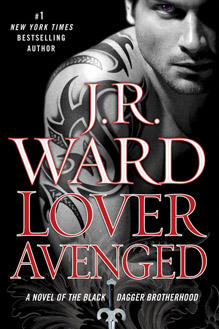
jrw-cover-lav-big    J. R. Ward’s Black Dagger Brotherhood vampires are these kinds. They are a society, brothers in arms as they defend their race against soulless creatures which threaten their existence. They use weapons – swords, guns, anything they can lay their hands on. They drive fast cars with reckless abandon. You can see the human side of these vampires and at the same time appreciate that Ward keeps them on track. Whilst stories and characters overlap in the series’, these vampires hunt and live for the night. They are damaged by the sun’s light, forcing them to have tinted cars and metal blinds in their homes. They drink blood from humans when they need to and often the Brothers drink from the loves of their lives, who are not always human, not always vampire.

The vampires connect to basic human emotions – struggling with addiction, their own inner psychological issues and finding a true place in the world.

Either way we look at the argument, vampires are still heavily popular. Books like the Twilight series and the Black Dagger Brotherhood connect and bring readers together from all over the world, from all walks of life. Readers emphasise with characters, find their own desires and learn things about themselves that they have never learnt before. For example, in Anne Rice’s novel, Interview with the Vampire, readers see a side to bonds of friendship and love. It is often insinuated that the time that Louis and Lestat spent together, they became lovers. In further novels, Lestat is unabashed in this belief. The bond they shared went deeper than the connection of creator and subservient, and this represents the belief that homosexuality is not a curse.

Bloggers and reporters alike will argue about these books places in society, but what they have to remember is that vampire fiction has been around for years, and will continue to sell years later, as the young and old alike continue to read them.

Bestselling Author Zoe Adams
 
Crushing Hearts and Black Butterfly Publishing
Hot Ink Press
Vamptasy Publishing
 
Facebook     Twitter     Amazon

[Vampire Month] Zoe Adams interview

Tags

, , , , , , ,


Today we have an interview with our final Vampire month victim and it matches this year’s theme of looking into the past as we welcome back Zoe Adams. You may remember Zoe from last year… let us see how things have changed for her since then.

1) The last time we spoke you were just finishing a course in Creative Writing. How do you think that course has helped you?FacebookHomescreenImage

I collected my degree in October – it was a really exciting day! I really think the course has helped me in numerable ways. I’ve got a much more thorough grasp on the world of publishing, how planning really helps. I’ve got a much more level head on my shoulder, and my work ethic has completely changed around. – much more disciplined now!


2) You have had a year out in the big bad world of publishing, is it different to how you expected it to be?

It’s scary knowing I’ve been around a year with my publisher, it’s quite scary. It’s extremely different. I have an amazing publisher and it’s more like a family. Everyone is supportive of each other and I’ve had the chance to see how others work. Whilst I’m not making millions, I am stable. I feel incredibly lucky to be in this place.


this is what vampire romance heroes don't look like3) What advice would you give to anyone who wanted to start out as a writer now?

Read and write at all times. I think to be a better writer, you have to read broadly and as often as you can. Whether it’s a genre you like or one you haven’t really tried, you’ll find it helps. Crime novels, I’ve found, are great for looking into characters, their backgrounds and motivations.

4) It has been a whole year since we last interviewed you. What has changed for you in that time?

A lot of things have changed! I have a Ba (Hons), I have multiple eBooks out and I’ve been featured in several anthologies. I’m broadening my horizons in what I’m writing. I’m definitely not afraid of trying new things.

5) You have been published several times in the last year, what are your ambitions regarding writing now?

My ambitions are exactly the same as they were a year ago. To read more, write more and be published even more! I want to create new books and characters, find new worlds. I’m constantly learning more things about myself and gaining new experiences as a writer, and I cannot wait for more.

6) What are your opinions on the Vampire in fiction, do you think it is ever going to lose popularity?

I honestly don’t think vampires will ever lose their popularity. I’m still an advocate of the genre and will avidly read anything with vampires in it. People will always be attracted to them. They may wain in popularity once a genre pops up and has its time in the best sellers chart, but vampires will always sell. People still want to believe in them and their powers.

7) Which writer do you regard as your greatest influence?

I’ve been influenced by a wide array of authors but Kelley Armstrong has definitely touched a part of my soul. A contemporary author, Armstrong has headstrong female characters who are so very human. She has a way with not only adult fiction, but young adult as well. She has multiple series, and I feel she is a very talented woman. I’d love to meet her one day.

Oh, and she has a vampire called Zoe too!

8) Which writer do you feel you most resemble in the way you work?

Oh that’s a tough question! I have no idea who I’d resemble in my work ethic. At times I’m very strict with myself, but sometimes I’mten silver bullets very lax. Gosh, I really don’t know!

9) Where do you feel you get most of your inspiration from?

Inspiration comes from anywhere and everywhere for me. Song lyrics, video games, dreams, family and my own past.

A lot of my short stories are inspired by lyrics and titles. Examples being, I’m currently working on a fairy short, inspired by the Finnish band HIM, and their song, ‘Wings of a Butterfly’. An erotic piece is from the America rock band Falling in Reverse, and their song, ‘The Drug In Me Is You’. Things just click and poof – I write.


10) What are you working on at the moment?

I’m currently working on a Young Adult trilogy – the Twisted Series. They focus on a young girl who is connected to a demon. The first book, ‘Twisted Minds’ introduces our heroine, Talia, and her demon, Devlin. They are taken into a Care Home, where she learns she’s not so different to those around her. I’m really excited with how the book is progressing and what I plan to do with it. It’s a new change for me, working on YA fiction, but I’m really enjoying it, and I hope my readers will too!

Bestselling Author Zoe Adams
 
Crushing Hearts and Black Butterfly Publishing
Hot Ink Press
Vamptasy Publishing
 
Facebook     Twitter     Amazon

[Vampire Month] Vampire Killing Kits – Real or Fake? by Jonathan Ferguson

Tags

, , , , , , , , , , , , , , , , , ,


In today’s guest post, Jonathan Ferguson of the Royal Armouries in Leeds discusses the authenticity of the Vampire Killing kits.

 
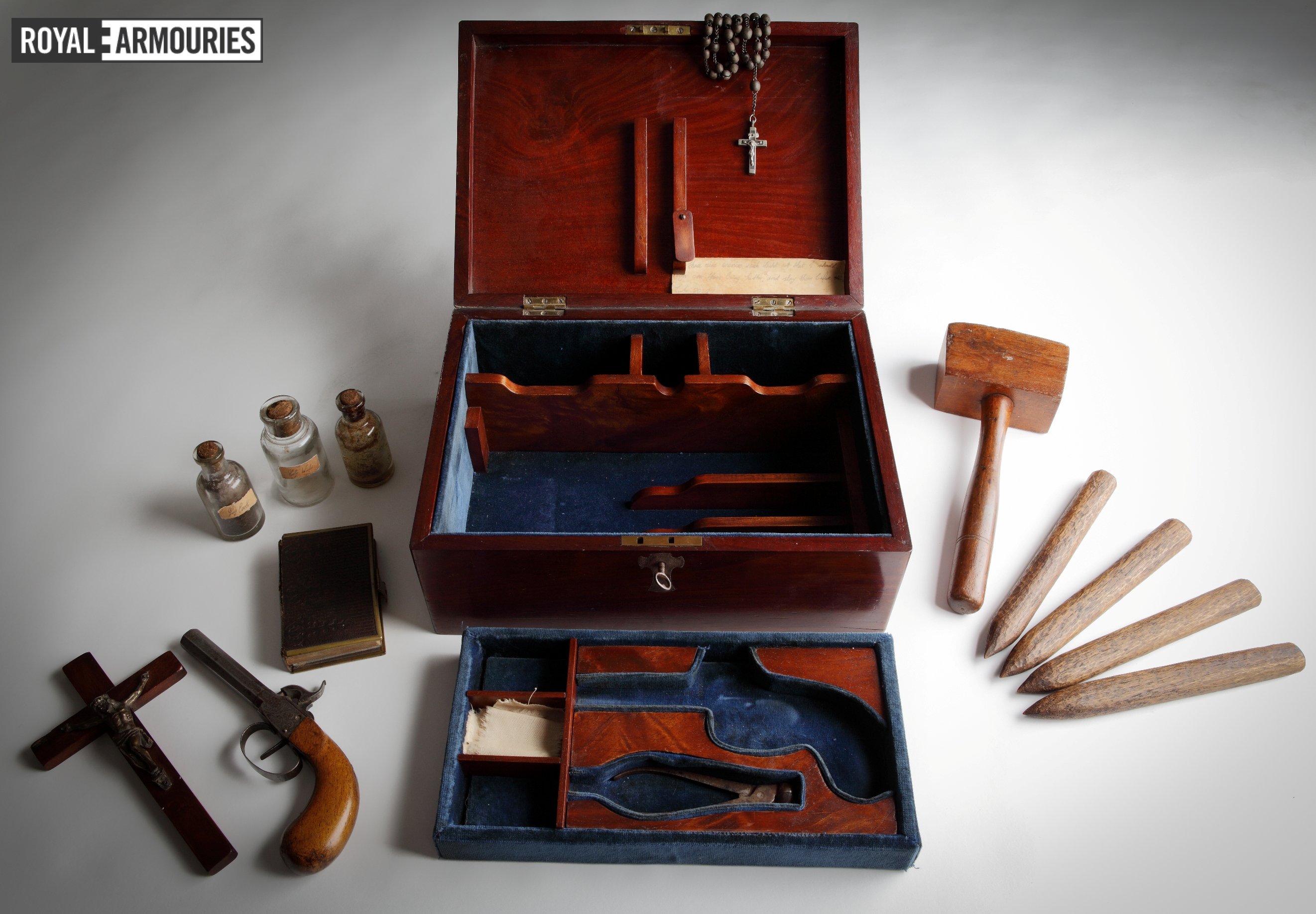
In 2007 I wrote a blog post pretty much scoffing at the very idea of a ‘vampire killing kit’. During 2012, I published the definitive article on the subject in Fortean Times (#288), was interviewed for US TV about them, and found myself sitting at the back of an auction house in Yorkshire, actually bidding on one for the Royal Armouries collection. Why the change of heart? It’s not because I’ve gone from sceptic to believer. Let me explain. VKK-2
If you’ve never come across one, vampire killing kits are what they sound like; boxed sets of tools for self-defence against the undead. One thing we know for sure is that they are not rare. So far, I have documented the existence of 100 kits that either purport, or appear to be, real. What do we mean by ‘real’? Well, ‘real’ can be a tricky concept, but most would probably suggest that it means ‘old’. Some might also say that it would include genuine purpose, as in kits created to actually slay vampires. As all evidence points to an American or western European origin some time in the twentieth century, it’s unlikely that they were made by, or for, believers in vampires. The vampire is a Slavic monster, and belief in it was roundly scoffed at by the English-speaking world as soon as stories from the east began to emerge in the 18th century. We also know from folklore that vampires were killed with improvised weapons like gravedigger’s spades, not expensive specialist tools like this, and that historical ‘slayers’ don’t really fit the profile of the professional, pseudoscientific vampire hunter created by Bram Stoker.

The most common claim, often made by auction houses, is that they are period novelties, something to buy a friend before a trip to eastern Europe. This is certainly plausible, but even this is lacking in evidence. I have yet to come across any advertisement, letter, diary, or other connection to any known retailer or purchaser, though I live in hope! The only physical evidence we do have are the kits themselves, and it is remarkably easy to take an antique box, refurbish it with antique innards, and fill it with antique objects. Only invasive scientific techniques could begin to tell you how old the result really was. As each kit is different, for every kit ‘debunked’ there would be dozens of others to which the same conclusion couldn’t be applied.
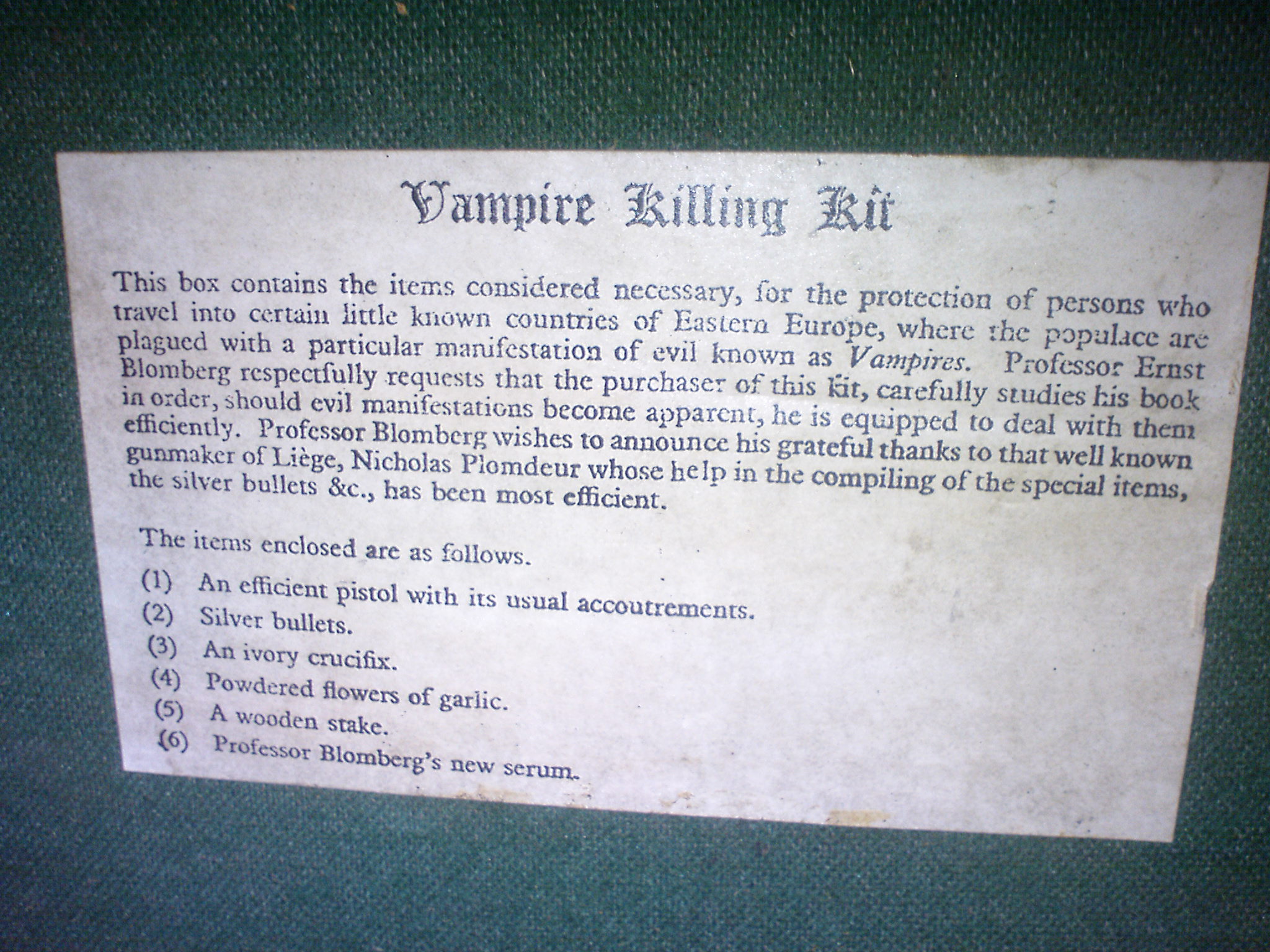
To overcome this difficulty, I did two things. Firstly, I selected the most high-profile subset of kits and the first to be spotted ‘in the wild’; those supposedly made by ‘Professor Blomberg’. These kits come with a label and a more-or-less standard set of contents. Whilst the gunmaker mentioned on the label did exist, the good Professor was a fabrication. In itself, this didn’t point to a later date; these could easily be DSC01380Victorian or Edwardian novelties as suggested by those in the antiques industry.

The second weapon in my toolbag to assess the likely date of this group of kits was vampire lore. Whenever they were produced, the design of the kits would have been informed by the type of vampire and vampire hunter current when they were made. To sell to any customer, they would have to have recognition factor, to include tools known to the public. For this reason, I embraced fiction as well as folklore. I assessed each component, from stake to silver bullet, and determined when it first appeared in print or film. The most useful features proved to be the pistol, and the cross-marked silver bullets. Whilst firearms were recorded in folklore as a viable weapon against vampires, it was little known in fiction until the Hammer movies of the 1970s. Meanwhile, the earliest written reference to silver bullets against vampires was somewhat earlier, in 1928 (Montagu Summers), but no-one was talking about marking them with a cross until 1965 (an issue of ‘Penthouse’!).
This agreed with the historical and scientific evidence. The Mercer Museum in the U.S. had their kit tested and determined it to be no later than 1945. A London man, Michael de Winter, claimed online to have created the first kit in 1972 as a way to draw people to his antiques stall; I contacted him by post to confirm his story, though of course he may not have been the first. Finally, I researched the first written reference to a VKK1vampire kit, which turned out to be a militaria catalogue from 1986. This version of the kit was small, with all the usual ‘ingredients’, but the pistol was clearly the main feature. The kits seem to have become more elaborate in their casing over time. All of the dates I could come up with were late 20th century. I discovered that even some of the auction houses were selling kits as pieces of modern art, or reserving judgement on their antiquity, yet they were still selling for thousands of dollars.

So are vampire killing kits real? That depends. No doubt some have been created and many more sold in order to deceive, but if there are indeed no ‘real’ vampire kits, then it is not technically possible to fake them. After seven years of exhaustive research, I still can’t tell you that there’s no such thing as vampire killing kits. There are various ‘non-Blomberg’ kits that could easily be older. I do suspect that all of them are late twentieth century in origin, but I think they are important artefacts regardless. At the Armouries, our kit, however old it proves to be, lets us represent and talk about the hidden history of self-defence weapons that we could not otherwise, and has been a big hit with visitors. The kits reflect the real weapons used to ‘slay’ vampires as much as they do the fictional versions that we have all now grown up with. The only physical evidence that we have for supernatural creatures like vampires are the ‘deviant burials’ of people that may have been seen as revenants of some kind, and the stones or rusty pieces of iron that were used to stop them coming back. This fascinates us, but fails to meet our fictional expectations of what a vampire-slaying weapon should look like, and so we as a culture have addressed this shortcoming.  I think kit creator Michael de Winter was right when he told me in 2011 that he was ‘not making a fake, merely inventing an item’. Inspired by our own folklore; the classic horror movies of the 60s and 70s, we have invented artefacts of our beloved monster, the vampire. That has to be worth preserving.
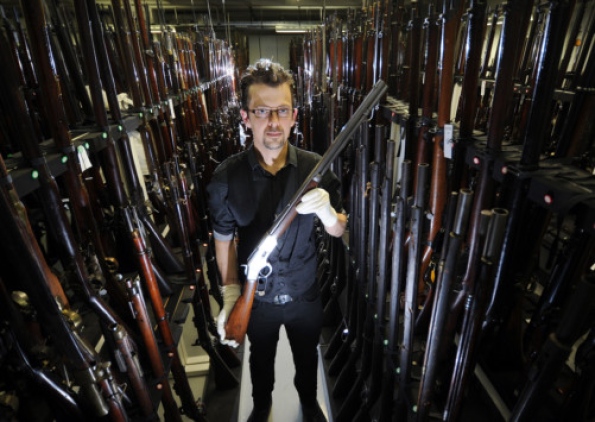
IMG_6068Jonathan Ferguson is Curator of Firearms at the Royal Armouries in Leeds. His research interests include their use, effect, and depiction in popular culture. His sceptical interest in the paranormal is more of a hobby, stemming from the gift of a Ladybird version of ‘Dracula’ at a young age. However, he is especially enthusiastic when the two things overlap! He has made several television and radio appearances, including National Geographic’s ‘How Sherlock Changed the World’, and BBC Radio 4’s ‘The Lifecycle of a Bullet’.

The Royal Armouries holds in trust for the public one of the finest collections of arms and armour in the world, from exquisite pieces of the gunmaker’s art, to the most functional military weapons, and from the medieval period to the present day.

Find the Royal Armouries on Facebook and Twitter:

https://www.facebook.com/pages/Royal-Armouries/215812575369
https://twitter.com/royal_Armouries


[Vampire Month] Jonathon Ferguson interview

Tags

, , , , , , , , , , , , , , , ,


Today we have an interview with Jonathan Ferguson, Curator of Firearms at the Royal Armouries in Leeds. He recently gave a talk entitled ‘How to kill a Vampire’ which I was lucky enough to attend and it was this talk which led me to approach him about a slot in Vampire month.

1) When the general public imagine a curator, I think they generally consider someone older and dressed in tweed. Have you ever found people surprised when you tell them your profession?
It happens less as time goes on, possibly because I’ve succumbed to a bit of tweed! But when I was an assistant curator at Edinburgh Castle I got that a lot.mug

2) What led you to study history and when did you decide to make it a career?
As far back as I can remember really. Indiana Jones was definitely involved! Along with a love of ancient Egypt and an interest in arms and armour, this led down the archaeological path rather than that of written history. It’s always been about the tangible, physical objects for me, though a couple of weeks in Somerset mud convinced me that museums were the way to go!

3) Who is your favourite personality from history?
Well, I should probably be referencing a firearms designer like Mikhail Kalashnikov, having been asked to comment on his recent death by the BBC. However, I think I’ll have to go with Harry Houdini, because whilst he ‘wanted to believe’ in the paranormal, but was also a sceptic and tireless exposer of frauds. I actually have a pet snake named after him!

Me pic with Winchester in Store 24) What is the most interesting exhibit you have handled?
I should probably choose something like a gun belonging to Henry VIII himself, our incredible combination axe/gun, or the experimental grenade launcher I’ve been looking at recently. But my inner geek says that it’s an original ‘Pulse Rifle’ from ‘Aliens’. Movie props can certainly be as valuable as antiques, and increasingly are being seen as important pieces of material culture in their own right. The vampire kit sits somewhere between the two, and certainly ‘up there’ in terms of interesting exhibits!

5) Curator of firearms handling a Vampire Hunting kit – how did that come about?
I began my research on vampire killing kits in my own time back in 2007, before I began to specialise in firearms. But they actually originate within my field, from the antique firearms world. I would categorise them with ‘firearms curiosa’, one of many weird and wonderful things like belt-buckle guns and flintlock rocket launchers (yes, those exist). But of course they are much more than that; a physical way to access the ephemeral world of superstition and the supernatural.IMG_6068

6) You’ve studied both the real world folklore and the fictional tales of Vampires – is truth stranger than fiction?
In terms of defying our 21st century, western logic, definitely. In western fiction, vampires are created by other vampires, or through some deliberate evil or magical act. Yet in folklore, you might be ‘turned’ simply by a cat walking over your dead body! Fiction tends to be a bit more consistent with its lore, even if it’s consciously trying to subvert it

What do you think is the attraction for Vampires? Why are they such a popular topic?
It’s probably the sheer number of themes that the subject lends itself to; threat, death, rebirth, consumption, power, and sex. All but the last are shared with other monsters that prowl our imagination, but only the vampire, particularly the fictional variety, gets to look good doing it!

Share your favourite Vampire story
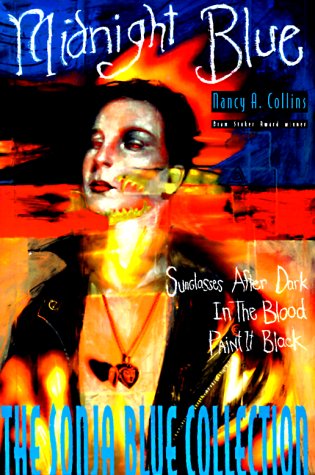
I have lots, but my all-time favourite has to be the ‘Sonja Blue’ series of books by Nancy Collins, partly because it was the first present my now-wife ever gave me, in the form of the ‘Midnight Blue’ book of collected stories. Though never mainstream, I think it’s been very influential. Dark, gritty, and ultra-violent; the antithesis of ‘Twilight’!

In a fight between all the greatest Vampires of fiction, who do you think would come out on top?
I like to think Sonja would be up there, but I’ve a feeling Dracula would still come out on top somehow. After all, he always comes back!

What about in some other contest such as sexiness or dress sense? Who would win that one?
Well, if we’re talking style, I think it’s Dracula again, as played by Gary Oldman. That’s thanks to those wonderful Eiko Ishioka costumes, from the fantastic red muscled wolf armour to the smart victorian suit and top hat..

Tell us about your latest work.
On the vampire front, I’m preparing for the ‘Seriously Staked’ vampire conference at Goldsmiths on March 8. In my day job, I am lead curator on the Armouries First World War project at Leeds. We’ll be providing more context and a more personal focus to the arms and armour of a conflict that defined modern warfare. There will be a physical exhibition and an online feature, both due to open in time for the August 4 centenary of the invasion of Belgium in 1914.

Jonathan Ferguson is Curator of Firearms at the Royal Armouries in Leeds. His research interests include their use, effect, and depiction in popular culture. His sceptical interest in the paranormal is more of a hobby, stemming from the gift of a Ladybird version of ‘Dracula’ at a young age. However, he is especially enthusiastic when the two things overlap! He has made several television and radio appearances, including National Geographic’s ‘How Sherlock Changed the World’, and BBC Radio 4’s ‘The Lifecycle of a Bullet’.

The Royal Armouries holds in trust for the public one of the finest collections of arms and armour in the world, from exquisite pieces of the gunmaker’s art, to the most functional military weapons, and from the medieval period to the present day.

Find them on Twitter and Facebook

https://www.facebook.com/pages/Royal-Armouries/215812575369
https://twitter.com/royal_Armouries

IN THE SHADOWS, A VAMPIRE LURKS… by Megan Cashman

Tags

, , , , , ,


Today we have a guest post from Megan Cashman, author of The Dark Proposal. Here she speaks about the social isolation of vampires.

IN THE SHADOWS, A VAMPIRE LURKS…

                Vampires are often portrayed as living apart from the human world. They have to avoid sunlight, and humans are their blood source. These creatures of the night tend to rarely interact with humans on a personal level, and if they do, their motivations may not be so kind.Image

Which makes one wonder: how would a vampire see the human world? They live detached from it, sometimes for many centuries. Even a newborn vampire would have to eventually let go of their emotional connection to humans so they can adjust to their new existence.

So what does the human world mean to vampires, aside from being sources of nourishment? I would think they obviously see us as being physically weaker, and maybe that would inspire a vampire to see themselves as superior, at least physically. That doesn’t seem avoidable.

What about our intellectual level? If a vampire has been around for ages, then it has consumed enough knowledge and possibly intelligence to outdo many smart humans. Now if that vampire is a dimwit, then it is a question if that can be cured after many centuries.

How about our emotions? I’m sure vampires feel empathy for their own, but it will be hard for a vampire to have much empathy for its source of blood. How many of us think of cows or pigs when we eat beef or pork? You might if you were a vegetarian or vegan. But if a vampire drinks from humans, then it could have the same attitude that we have toward the animals we eat.

This is why vampires can be such frightening creatures. They are definitely stronger, possibly smarter, and less emotionally inclined towards us. Depending on the vampire’s age, there’s a chance that spending centuries living apart from humans has decreased any empathy levels the vampire might have. It certainly doesn’t help if humans are its source of blood, and it certainly doesn’t help that a vampire has more strength and life experience to likely look down at humans. So, I would not be so surprised if a vampire is callous and even brutal towards humans.

If it were compassionate toward humans, I would wonder its age. Is it a few years into its vampire existence? Then it’s still holding on to its humanity. A few decades old? Then its probably being nostalgic. A few centuries? I would say that compassion is an act and I would advise anyone to think twice of ever spending a few minutes with that vampire. Unless, of course, it has enough age and experience to trick anyone into thinking it is not a vampire, and one with ulterior motives.

If you are interested in learning more about Megan, feel free to explore the following links:

Blog: megancashmanbooks.wordpress.com
Twitter: @MeganCashman
Facebook: Facebook.com/megancashmanbooks
Goodreads: https://www.goodreads.com/author/show/6519000.Megan_Cashman
Kindle: http://www.amazon.com/dp/B009AL4RKE
Smashwords: https://www.smashwords.com/books/view/276775